Sancheong, Uiseong, and Ulju Wildfires at Highest Alert Level... Containment Efforts Underway
Sparks from Lawn Mower and Other Human Causes Suspected
Hot, Dry Weather and Strong Winds Intensify Wildfire Spread
Since last weekend, wildfires have broken out across the country and spread widely, causing damage to an area exceeding 8,700 hectares. This is equivalent to the size of about 10,000 soccer fields affected nationwide. The fires have rapidly spread in the spring's hot, dry, and windy conditions, making firefighting efforts difficult. Most of the wildfires this time are believed to have been started by 'people,' rather than natural or electrical causes.
Wildfire Impact Area 8,732ha... 4 Deaths
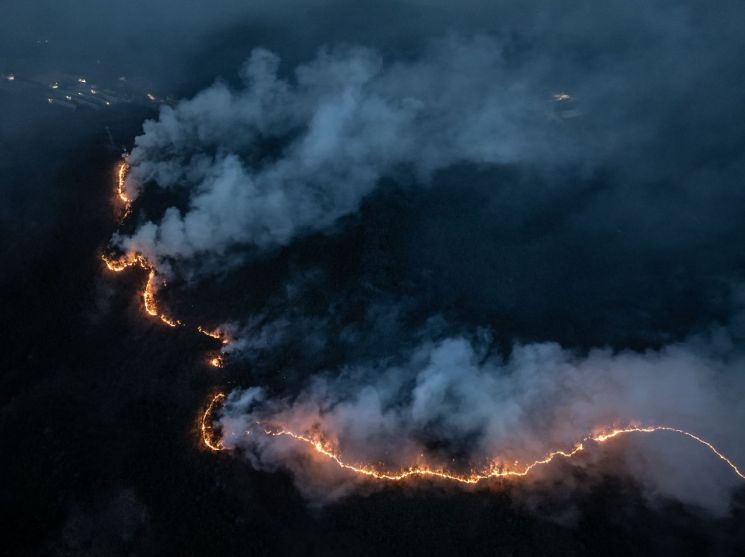
According to the Central Disaster and Safety Countermeasure Headquarters on the 24th, as of 6 a.m. that day, firefighting operations were underway for medium to large wildfires in four locations: Sancheong in Gyeongnam, Uiseong in Gyeongbuk, Ulju in Ulsan, and Gimhae in Gyeongnam. The containment rates were 70% in Sancheong, 65% in Uiseong, and 69% in Ulju. The fire initially broke out in Sancheong on the 21st and spread widely, followed by simultaneous wildfires in various locations.
The wildfires in Sancheong, Uiseong, and Ulju were declared at the highest alert level, 'Stage 3,' which is issued when the expected damage area exceeds 100 hectares. The affected area in Sancheong was 1,464 hectares, Uiseong 6,861 hectares, and including the wildfire in Okcheon, Chungbuk, where the fire was contained, the total affected area reached 8,732.61 hectares.
This wildfire caused significant casualties. Four people, including wildfire firefighters and public officials from Changnyeong County, died due to the Sancheong wildfire, and nine people sustained serious injuries in Sancheong and Okcheon. It is presumed that some were trapped on the mountainside due to strong backwinds while rushing to extinguish the flames.
Additionally, 46 houses in Sancheong and 116 houses in Uiseong were burned. A total of 2,742 residents were evacuated. Residents of Sancheong evacuated to eight temporary shelters after the wildfire approached the Korean Seonbi Culture Research Institute, which had been operating as an existing temporary housing facility. About 2,000 residents in Uiseong, Ulju, and other areas moved to nearby shelters.
What Fueled the Fire... 'Wind' and 'People'
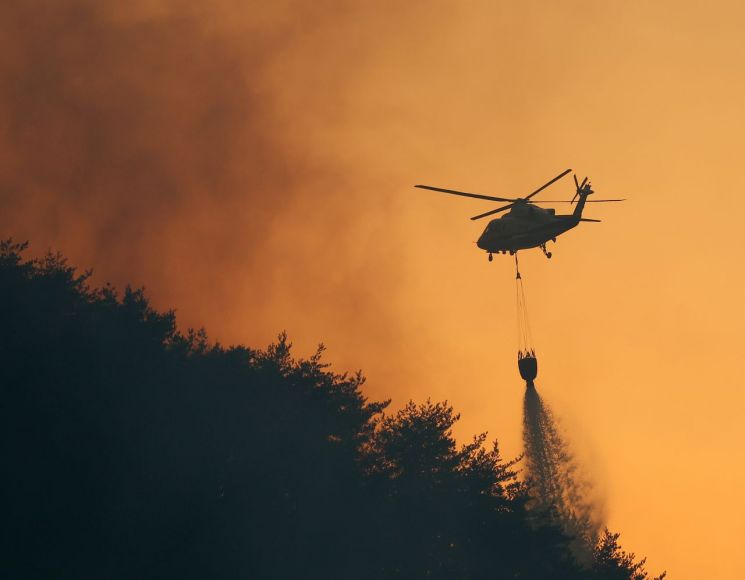
Most of the wildfires this time have been revealed to be caused by human negligence. The largest wildfire in Uiseong was caused by a grave visitor's careless fire. The Sancheong wildfire is also under investigation by authorities, believed to have started from sparks generated by a lawn mower. The Gimhae wildfire occurred during garbage burning, and the fires in Okcheon and Yeongdong, Chungbuk, are suspected to have been caused by field burning.
Firefighting and forestry authorities have been conducting publicity and prevention activities based on the fact that many wildfires occur due to burning in early March, but a large fire still broke out. The period from January 24 to May 15 this year is also the spring 'Wildfire Prevention Period.' Those who cause fires by arson may face legal responsibility. If forests are burned due to negligence, offenders can be sentenced to up to three years in prison or fined up to 30 million won.
Dry air and strong winds also played a role in intensifying the wildfires. As of 5 a.m. that day, dry weather warnings were in effect in the Gyeongbuk region, Ulsan, inland Gyeongnam, the eastern coast of Gangwon, and southern mountain areas. Bok Han-gyu, a forecaster at the Korea Meteorological Administration, said, "A high-pressure system is located south of the Korean Peninsula and a low-pressure system to the north, causing warm and dry westerly winds to flow in from China. These winds cross the Taebaek and Sobaek mountain ranges, making the air on the east coast and Gyeongsang region even drier." This pressure situation also intensified the winds. On this day, strong winds with gusts around 15 m/s were blowing across most regions nationwide.
This weather is expected to continue until the 27th, when rain is forecast, making wildfire containment difficult. Rain is expected to start late afternoon on the 26th in Jeju and spread nationwide on the 27th, falling until the afternoon in most areas. Professor Lee Yong-jae of the Fire Safety Management Department at Kyungmin University said, "In addition to the climatic factors of low humidity and gusty winds, about 40 wildfires have broken out in specific areas, leaving firefighting personnel exhausted, so fire suppression will be slow. With the increase in mountain visits during spring, fires can occur due to carelessness stemming from a 'it won't happen to me' attitude."
© The Asia Business Daily(www.asiae.co.kr). All rights reserved.


















