Characteristic of Penetrating Internal Organs and Migrating to Muscles
Cannot Be Treated with Medication If Infected
Recent Japanese media reports have revealed that a large number of Anisakis worms, which can cause food poisoning symptoms, have been found in mackerel caught off the East Sea.
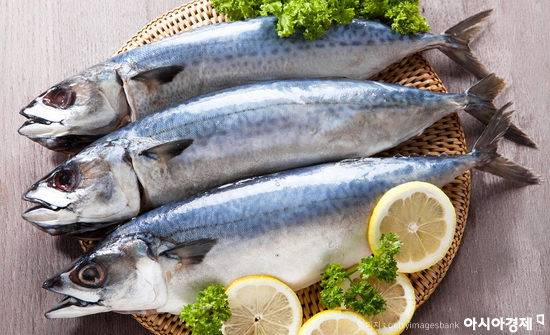
On the 21st, Japan's Nihon Keizai Shimbun (Nikkei) reported that from 2019 to 2021, the average number of Anisakis simplex (As) larvae found in the flesh of mackerel caught in the Pacific Ocean was 15.3 per fish, which was higher than the 2.1 per fish found in mackerel from the East Sea. However, recently, a large number of Anisakis worms have also been detected in mackerel from the East Sea, narrowing the gap. In 2022-2023, mackerel caught in two East Sea fishing areas showed average As counts of 13.6 and 9.7 per fish, respectively.
Anisakis worms that parasitize marine fish include two types: As, which easily migrate from the internal organs to the flesh, and Anisakis pegreffii (Ap), which have difficulty moving within the fish's body. In the past, mackerel caught in the East Sea had fewer As larvae, but this recent investigation confirmed that a large number of As larvae are now present in East Sea mackerel as well.
These worms are called Anisakis because their final host is known to be whales. They reach whales through the marine food chain involving fish and marine mammals. Anisakis eggs are widely dispersed in the ocean through whale feces. The larvae grow in the water, move to crustaceans, various fish, and squid, and eventually reach whales to mature and lay eggs. While the host is alive or fresh, the nematodes live in the internal organs. However, when the parasitized fish or marine mammals die, the larvae penetrate the internal organs and migrate to the muscles.
If ingested by humans through raw or undercooked fish such as sushi, these worms can cause symptoms similar to food poisoning. However, Ap is known to pose a lower infection risk than As if only the internal organs are removed.
Typically, when eating fish infected with Anisakis, symptoms such as abdominal pain, nausea, vomiting, and cold sweats appear 2 to 4 hours later. These symptoms resemble gastritis or gastric ulcers. Because Anisakis larvae tend to pierce the stomach wall, infection causes stabbing stomach pain and vomiting. It cannot be treated with common anthelmintics, and surgical removal of the larvae is the only treatment.
Hiromu Sugiyama, a visiting researcher at Japan's National Institute of Infectious Diseases, stated, "The risk of food poisoning symptoms from consuming mackerel caught in the East Sea has become similar to that from the Pacific side. Although the cause is unclear, it may be related to changes in seawater temperature or ocean currents."
To avoid Anisakis infection, fish should be heated in boiling water at 70°C or higher for more than one minute. If you want to eat fresh sashimi, it is better to slice it finely, as the thin and long Anisakis worms are cut and killed during the slicing process.
Freshwater Fish Also Pose Parasite Risks... Avoid Eating Raw
Attention is also required for parasitic infections through freshwater fish. Intestinal parasitic infections caused by eating raw wild freshwater fish from endemic river areas can lead to chronic biliary diseases and, in severe cases, bile duct cancer.
Last year, some endemic regions still showed a high infection rate of over 5%. The Korea Disease Control and Prevention Agency emphasized, "Wild freshwater fish must be thoroughly cooked before consumption."
© The Asia Business Daily(www.asiae.co.kr). All rights reserved.

















