"Excessive Legal Actions Against U.S. CEOs... Politically Motivated"
Frequent Surprise Regulations in Korea... Fair Trade Commission Also Problematic
Dissatisfaction with Ministry of Health and Welfare's Pharmaceutical Intellectual Property Policies
Cybersecurity Certification Standards Also Criticized... Platform Regulations and Network Usage Fees Mentioned
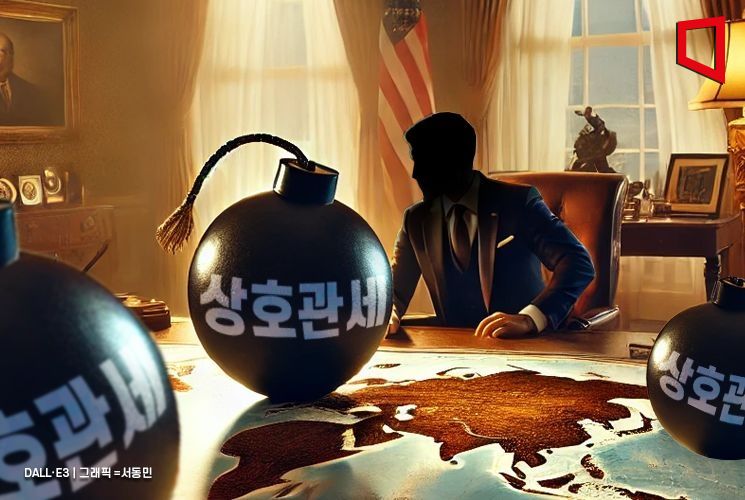
On the 2nd of next month (local time), ahead of the Trump administration's announcement of 'reciprocal tariffs' in the United States, the American industry criticized the Korean government's criminal penalties against corporate executives for illegal activities as excessive. They also argued that the sudden implementation of regulation-focused policies constitutes a 'non-tariff barrier' that is more disadvantageous to foreign companies. Among individual industries, the pharmaceutical and bio sectors expressed dissatisfaction, citing the passage of a law that blocks the extension of patent terms for medicines.
"U.S. CEOs face excessive legal actions... driven by political motives"
In a statement submitted on the 11th to the U.S. Trade Representative (USTR) regarding 'unfair trade practices' of trading partners, the U.S. Chamber of Commerce highlighted three major points related to Korea.
First, the U.S. Chamber claimed, "American corporate CEOs have frequently faced prosecution, travel bans, imprisonment, or deportation for regulatory violations ranging from labor law breaches to customs declaration errors." The Chamber added, "In other advanced countries, such violations are purely civil matters and target corporations rather than individuals," and asserted that "(legal actions such as prosecution and travel bans) are often driven by political motives," urging Korea to refrain from excessive or unfair criminal penalties against corporate executives.
Frequent surprise regulations in Korea... Fair Trade Commission also problematic
The Chamber also pointed out that Korean regulations and rules are often introduced without sufficient prior notice and are frequently created behind the scenes, citing these as potential 'non-tariff barriers' that are more likely to sacrifice foreign companies than Korean ones. They criticized the lack of sufficient analysis, impact assessments, consultations with industries, and inter-ministerial coordination during policy formulation. Public hearings are often conducted only formally and rarely reflected substantively. These issues were noted to occur during the legislative process by lawmakers.
They further claimed that the Korean government's interference in corporate affairs and the Fair Trade Commission's "arbitrary" investigations, decisions, and measures target American companies. The Chamber demanded that the Korean government hold regular public-private dialogues during policy formulation and implementation and ensure sufficient time for the business community to provide feedback on policies.
Dissatisfaction with Ministry of Health and Welfare's pharmaceutical intellectual property policies
The U.S. Chamber argued that Korea does not adequately recognize the value of patented products in pricing and intellectual property policies for pharmaceuticals and medical devices. Particularly, they expressed concern over recent legislation limiting the use of patent term extensions. The partial amendment to the Patent Act, which reduces the extension period for pharmaceutical patents, passed the National Assembly plenary session on December 27 last year. The amendment limits the maximum patent term, including pharmaceutical extension registrations, to '14 years after approval' and restricts the number of patents eligible for extension per approval to one. The Korean government enacted this legislation to reduce the national drug price burden.
As a countermeasure, they demanded the initiation of related discussions between Korea and the U.S., especially calling for the resumption of regulatory and reimbursement system reform talks through the Pharmaceuticals and Medical Devices Committee. They also urged active participation from the Korean government, including the Ministry of Health and Welfare, during this process.
Cybersecurity certification standards also criticized... platform regulations and network usage fees mentioned
The Chamber separately emphasized digital-related practical and customary areas. They pointed out that Korea's cybersecurity and cloud-related policies disproportionately disadvantage American companies, criticizing the Cloud Security Assurance Program (CSAP). They claimed the certification standards are designed favorably for Korean companies to provide services to public sector clients. Korea's cybersecurity regulations, including data storage and processing requirements, were also said to disadvantage U.S. companies.
The Chamber targeted the Fair Trade Commission's proposed 'Platform Fair Competition Promotion Act' aimed at dominant market platforms. This bill includes requirements for algorithm transparency and prohibits preferential treatment of one's own services. The opposition party, the Democratic Party of Korea, is also pushing a similar platform regulation bill through legislative initiatives. The Chamber noted that this could directly target U.S. companies in a manner very similar to the EU's Digital Markets Act (DMA).
Korea was also mentioned regarding network usage fees. The Chamber claimed that Korea, along with the EU, Colombia, and Indonesia, is pushing network usage fee legislation unfairly targeting U.S. companies. They added that the law targets large content providers and requires them to bear the costs of building wide-area network infrastructure.
Meanwhile, U.S. President Donald Trump, who has launched a 'tariff war' against the world, is scheduled to announce 'reciprocal tariffs' on the 2nd of next month, considering tariff rates and non-tariff barriers of various countries. Since the USTR is collecting opinions from domestic industries and stakeholders about unfair trade partner systems and practices ahead of this, the U.S. Chamber's opinions regarding Korea could potentially influence the determination of reciprocal tariffs against Korea.
© The Asia Business Daily(www.asiae.co.kr). All rights reserved.
![Clutching a Stolen Dior Bag, Saying "I Hate Being Poor but Real"... The Grotesque Con of a "Human Knockoff" [Slate]](https://cwcontent.asiae.co.kr/asiaresize/183/2026021902243444107_1771435474.jpg)















