Ministry of Education Announces University Innovation Support Plans
Up to 1 Billion KRW for Reducing More Than Unfilled Enrollment Slots
Bonus Points for No-Major Recruitment Raised from 10 to 15 Points
This year, financial support will be provided to universities that reduce their scale, including unfilled enrollment slots. Additionally, universities that have made efforts to expand the major autonomy system (no-major system) will receive up to 15 bonus points in financial support. This is an increase of 5 points from last year's maximum of 10 points.
The Ministry of Education announced the basic plans for the University Innovation Support Project and the National University Development Project on the 20th, which include these details. Through these two projects, each university has been steadily pursuing educational innovation according to its own development strategy tailored to its individual conditions and characteristics.
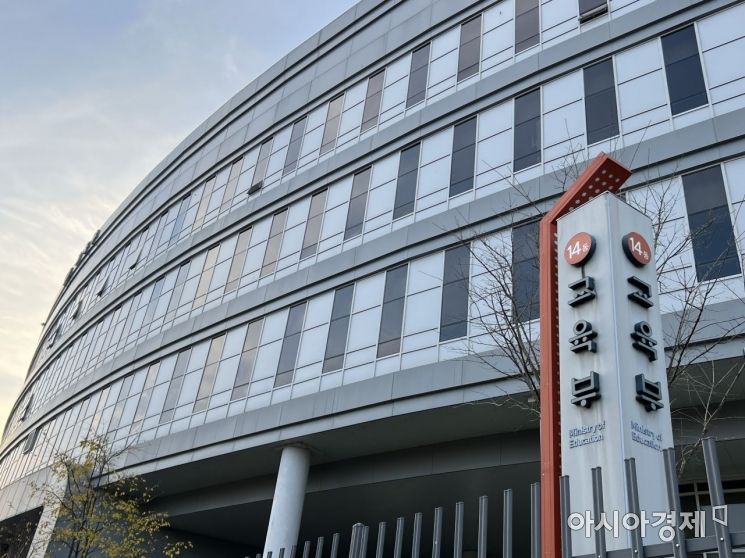
This year, 138 private universities will receive 795.5 billion KRW through the University Innovation Support Project, and 37 national universities will receive 424.3 billion KRW through the National University Development Project. Additionally, 118 colleges will receive 555.5 billion KRW through the College Innovation Support Project. Between 40% and 50% of the support funds are allocated to universities based on quantitative performance such as the number of enrolled students, while the remainder is distributed according to qualitative evaluations of each university’s innovation achievements.
First, as a proactive response to the decline in the school-age population, financial support will be given to universities that reduce their scale. Among universities receiving general financial support, 30 billion KRW will be invested to support general universities that have established a 'proper scaling' plan covering at least 90% of their unfilled enrollment slots. Universities that have set a proper scaling plan exceeding the unfilled enrollment slots for the 2024 academic year will receive up to 1 billion KRW per university, totaling 21 billion KRW, as 'proactive reduction support funds.' Universities that have planned within the unfilled enrollment slots will receive 9 billion KRW in support. For integrated national universities, project funds will be provided for four years after their integrated launch to ensure stable operation.
The proper scaling support funds are provided based on the actual reduction in admission quotas, and continuous support will be given within the third cycle from 2025 to 2027 once the quota reduction is completed. Universities receiving proper scaling support are not allowed to increase their admission quotas, except for Ministry of Education-approved advanced departments, during the support period.
From the perspective of educational innovation, bonus points for no-major recruitment will also be expanded. Last year, if the number of no-major recruits exceeded 25% of the total university recruitment, a maximum bonus of 10 points was awarded. This year, the maximum bonus has been increased to 15 points. Since the introduction of bonus points for no-major recruitment last year, the number of recruits increased from 9,925 last year to 37,935 this year.
In addition, universities that froze or reduced tuition fees this year will have their personnel expense execution limits raised. The limit has been increased from the existing 25% to a maximum of 30% for these universities. However, wage increases for existing faculty and staff through national project funds are not permitted.
Lee Ju-ho, Deputy Prime Minister for Social Affairs and Minister of Education, stated, "With the rapidly changing industrial structure reform such as generative artificial intelligence (AI) and the decline in the school-age population, creative and convergent talents with diverse capabilities are required. The Ministry of Education will actively support universities to become the center of nurturing core talents needed for future society through bold educational innovation."
© The Asia Business Daily(www.asiae.co.kr). All rights reserved.
![Clutching a Stolen Dior Bag, Saying "I Hate Being Poor but Real"... The Grotesque Con of a "Human Knockoff" [Slate]](https://cwcontent.asiae.co.kr/asiaresize/183/2026021902243444107_1771435474.jpg)















