Germany Announces Defense and Infrastructure Investment Plan Worth up to 1,590 Trillion Won
65% of Defense Spending to Be Covered by European Products
Need to Target Niche Markets to Reduce Dependence on U.S. Products
The European Union (EU) has taken a step towards standing on its own. While the decision to increase defense spending is expected to be a boon for 'K Defense Industry,' experts point out that the government needs to respond proactively before it is too late.
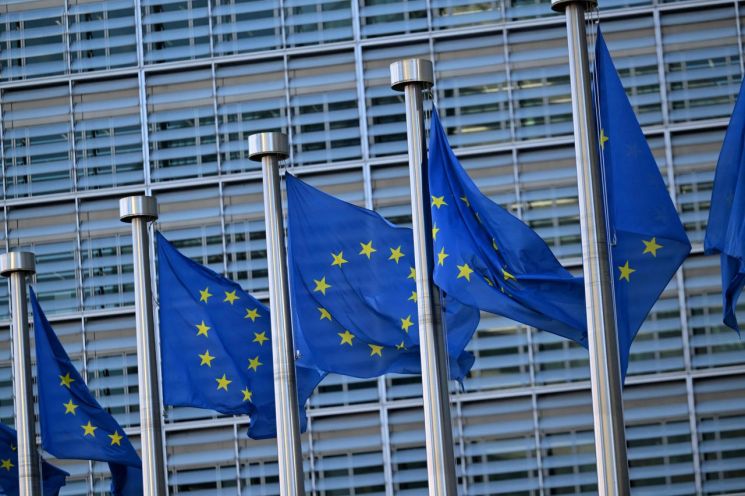
According to the EU's defense white paper "Readiness 2030," defense spending in Europe will increase by up to 800 billion euros (approximately 1,270 trillion won) over the next five years compared to current levels. This move is interpreted as an effort to strengthen security self-reliance following the second term of the Donald Trump administration in the United States, which strongly pressured NATO member countries to increase defense budgets.
Germany Announces Defense Investment Plan of up to 1,590 Trillion Won
A representative country is Germany. On the 19th, the German parliament passed a bill outlining a defense and infrastructure investment plan worth up to 1 trillion euros (approximately 1,590 trillion won). The bill exempts debt ceiling regulations, effectively allowing unlimited increases in defense spending. France is focusing on nuclear missiles, deciding to deploy an additional 40 Rafale fighter jets capable of carrying nuclear missiles. It also plans to invest 1.5 billion euros (approximately 2.38 trillion won) for military modernization. Poland and the three Baltic states (Estonia, Latvia, Lithuania) have announced their intention to withdraw from the Ottawa Treaty, the anti-personnel mine ban agreement signed in 1997, in response to Russia's military threats. This is interpreted as an effort to install mines along the border with Russia and Belarus to counter potential Russian invasion threats.
65% of Defense Spending to be Covered by European Products
The issue is the EU's so-called "Buy European" policy, which requires 65% of defense spending to be covered by European-made parts. This means that, for now, it could be a "pie in the sky" for Korea. The EU specifies that "EU applicant countries, candidate countries, and countries that have signed security and defense partnerships with the EU" can participate, and Korea has met the qualification requirements in principle by signing a security and defense partnership with the EU in November last year.
However, upon examining the detailed regulations, it seems difficult for Korean defense companies to secure contracts directly. A prerequisite is direct participation in joint purchases by third-country governments for supporting Ukraine or stockpiling weapons for EU member states. In the case of joint purchases among EU member states, more stringent requirements apply, stipulating that parts equivalent to 65% of the finished product price must be supplied within the European Free Trade Association (EFTA) area?which includes non-EU European countries such as Iceland, Liechtenstein, Norway, and Switzerland?or within Ukraine.
Need to Target Niche Markets to Reduce Dependence on U.S. Products
It is expected that defense companies from Ukraine and Norway will benefit significantly in the short term. This approach was devised to reduce Europe's long-standing vulnerability due to high dependence on U.S.-made weapons, but as a result, Korea has also been sidelined.
There is hope. In "Readiness 2030," the EU specifically mentioned Korea and Japan, stating that "opportunities for defense cooperation with Indo-Pacific partners should be sought." Although no specific methods were introduced, this formalizes the intention for defense cooperation.
Additionally, separate from the 150 billion euro loan support, the European Commission has decided to activate an exception clause to the EU fiscal rules that will not impose sanctions on member states exceeding their debt limits for the next four years to encourage increased defense spending. This could lead countries to accelerate stockpiling weapons competitively. The Commission expects that, with the activation of this exception clause, an additional 650 billion euros (approximately 1,034 trillion won), equivalent to 1.5% of the EU's total GDP over four years, will be mobilized for defense spending.
According to the Stockholm International Peace Research Institute (SIPRI) report "Trends in International Arms Transfers 2024," the proportion of U.S.-made weapons among NATO European members increased from 52% to 64% between 2020 and 2024. French and Korean weapons each accounted for 6.5%, followed by Germany (4.7%) and Israel (3.9%).
© The Asia Business Daily(www.asiae.co.kr). All rights reserved.
![Clutching a Stolen Dior Bag, Saying "I Hate Being Poor but Real"... The Grotesque Con of a "Human Knockoff" [Slate]](https://cwcontent.asiae.co.kr/asiaresize/183/2026021902243444107_1771435474.jpg)















