Strengthening Compensation and Indemnity Systems for Medical Accidents
Expanding Non-Prosecution Agreements to Include Moderate Injuries
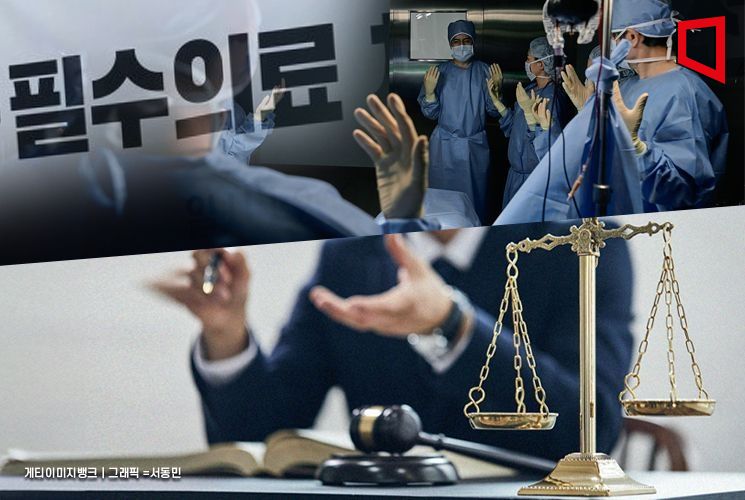
The government has decided to establish a 'Medical Accident Review Committee' to reduce the burden on essential medical personnel caused by prolonged investigations and trials in the event of medical accidents. If the committee determines that the medical professional's negligence is not serious, it plans to recommend that investigative agencies refrain from prosecution. Attention is focused on whether this will lead to legislation amid opposition from both the medical community and patient groups.
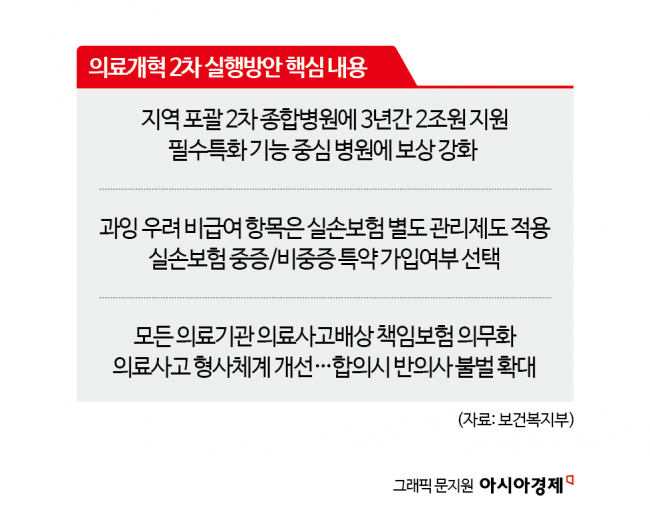
On the 19th, the government deliberated and approved the '2nd Medical Reform Implementation Plan' containing these details at the 8th Medical Reform Special Committee meeting. The core of this second plan includes reforming the non-reimbursable and indemnity insurance system, establishing a safety net for medical accidents, and fostering regional hospitals. Among these, the implementation measures for establishing a safety net for medical accidents include ▲ strengthening trust between patients and medical staff ▲ enhancing compensation and indemnity systems for medical accidents ▲ strengthening judicial protection for essential medical services.
First, the government pointed out that frequent summons and investigations following medical accidents increase the burden on essential medical personnel, and decided to establish the review committee to complete the review process within a maximum of 150 days. The committee, composed of about 20 members, will include 15 experts recommended by the medical community, consumers, and the legal sector?five from each group?as well as appraisal committee members participating in the current medical dispute mediation process and a newly established 'Patient Advocate.' The Patient Advocate is an expert assistance system designed to effectively restore damages for patients lacking legal and medical knowledge. Under the review committee, specialized subcommittees by type?such as internal medicine, surgery, and complex diseases?will also be formed and operated.
If the review committee judges, based on fact-finding and medical appraisal, that the medical accident was caused by gross negligence, it will recommend investigation and prosecution to the police and prosecution authorities. Conversely, if it is determined to be simple negligence, the committee will recommend 'refraining from prosecution' to investigative agencies to conclude criminal punishment. Simple negligence is specified by law to include errors such as wrong surgical site, transfusion, or medication errors, while deviations from duty of care or negligence causing harm will be individually judged by the committee to determine whether it constitutes gross negligence.
The plan also intends to broadly recognize non-prosecution agreements based on mediation and settlement between patients and medical staff. The scope of non-prosecution agreements, currently applied only to minor injuries, will be expanded to include moderate injuries, and application to fatal accidents will be considered limited to essential medical services. However, since this is a contentious issue, it will be decided through social consensus during the future legislative process in the National Assembly.
Regarding this plan, the Korean Medical Association criticizes the lack of expertise of the review committee, while patient groups question the scope of gross negligence that the committee will judge. A representative of the Medical Association said, "For the committee to function properly, it must be able to determine whether a medical accident is due to gross negligence or simple negligence, but it is doubtful whether the committee has the expertise to judge medical negligence." The Korea Patient Group Federation criticized, "They say prosecution will focus on gross negligence, but even if the committee makes individual judgments, most cases will be simple negligence," adding, "They are trying to grant excessive privileges by skipping doctor summons and issuing non-prosecution dispositions."
© The Asia Business Daily(www.asiae.co.kr). All rights reserved.
![Clutching a Stolen Dior Bag, Saying "I Hate Being Poor but Real"... The Grotesque Con of a "Human Knockoff" [Slate]](https://cwcontent.asiae.co.kr/asiaresize/183/2026021902243444107_1771435474.jpg)
















