RRP Benchmark Rate Held at 5.75%
Exchange Rate Drops to Asian Financial Crisis Levels
Financial Market Turmoil Amid Policy Uncertainty Over Free Meal Program
As the Indonesian Rupiah has been significantly shaken by policy uncertainty, the Bank Indonesia (BI) decided to keep interest rates unchanged and intervened in the foreign exchange market.
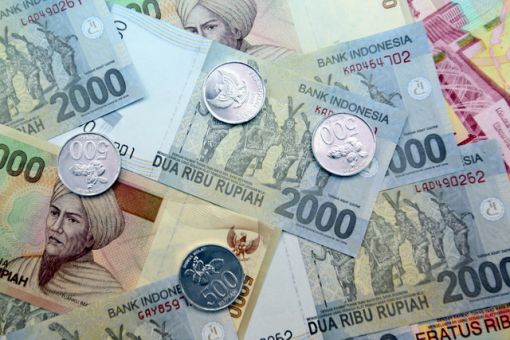 Indonesian Rupiah
At the monetary policy meeting held on the afternoon of the 19th, BI kept the 7-day reverse repurchase agreement (RRP) rate, which serves as the benchmark interest rate, at 5.75%. While the financial market had anticipated that BI might lower the benchmark rate to stimulate the economy and boost the stock market, it is interpreted that BI decided to keep the rate steady to focus more on stabilizing the exchange rate. BI Governor Perry Warjiyo stated, "BI will continue to monitor inflation and economic growth forecasts while considering the movements of the Rupiah."
In the foreign exchange market, the value of the Indonesian Rupiah against the US dollar is about 16,500 Rupiah per dollar. The Rupiah’s value had fallen to 16,800 Rupiah per dollar during the 1998 Asian financial crisis, so it is now approaching its all-time low level.
Recently, Indonesia’s financial market has been greatly shaken by policy uncertainty. The Indonesian government is implementing a free meal policy, providing one free meal per day to approximately 90 million children, infants, and pregnant women nationwide. Although the target group is planned to be gradually expanded until 2029, President Prabowo Subianto has instructed a budget restructuring to accelerate the project, and the Ministry of Finance decided to increase the free meal budget while reducing fiscal expenditures by 306.7 trillion Rupiah (about 27.5 trillion KRW) from central and local government budgets.
As a result, various government projects, including infrastructure projects, are being halted one after another. The launch of the new sovereign wealth fund Danatara, which manages state-owned enterprises, is also acting as a negative factor. State-owned enterprises under Danatara account for about 20% of the market capitalization of the Jakarta Composite Index (JCI), which represents the Indonesian stock market. Concerns are growing that excessive government influence on these companies could adversely affect their management.
Furthermore, the government’s plan to supply 3 million housing units annually has raised concerns in the financial market that a large amount of bonds will be issued through state-owned enterprises. The move by President Prabowo, a former military officer, to amend military law to expand the number of general government official positions that military personnel can concurrently hold?similar to the Suharto military dictatorship era?is also unsettling financial market investors.
There are also concerns in the financial market that the world’s three major credit rating agencies may downgrade Indonesia’s sovereign credit rating.
© The Asia Business Daily(www.asiae.co.kr). All rights reserved.
![Clutching a Stolen Dior Bag, Saying "I Hate Being Poor but Real"... The Grotesque Con of a "Human Knockoff" [Slate]](https://cwcontent.asiae.co.kr/asiaresize/183/2026021902243444107_1771435474.jpg)














