Expansion of Regulations Beyond Lifted Areas Amid Surge in Gap Investments
"Six-Month Temporary Measure, Re-designation to Be Reviewed Later"
Mapo, Seongdong, Gangdong Considered for Regulated and Speculative Overheating Zones
Stronger Household Loan Management and Enhanced Mortgage Oversight
Seoul City will re-designate the Gangnam 3 districts and Yongsan district as land transaction permission zones for six months, just over a month after lifting the designation. This early intervention comes as transaction volumes and gap investments surged, particularly in apartments along the Han River and in Gangnam. The city is also considering expanding the designation to include nearby districts such as Mapo, Seongdong, and Gangdong as regulated areas and speculative overheating zones if the overheating continues.
 Minister of Land, Infrastructure and Transport Park Sang-woo is holding a joint briefing on housing market stabilization measures related to real estate regulations, finance, and speculative transactions at the Government Seoul Office in Jongno-gu, Seoul on the 19th. Seoul Mayor Oh Se-hoon, Deputy Minister of Strategy and Finance Kim Beom-seok, and Vice Chairman of the Financial Services Commission Kim So-young attended the briefing. 2025.3.19 Photo by Jo Yong-jun
On the 19th, the Ministry of Land, Infrastructure and Transport, Seoul City, Ministry of Strategy and Finance, Financial Services Commission, Bank of Korea, and Financial Supervisory Service held a meeting of real estate-related agencies to discuss measures to stabilize the housing market.
On the same day, Seoul City decided to designate about 2,200 apartment complexes (totaling 110.65㎢) in Gangnam, Seocho, Songpa, and Yongsan districts as land transaction permission zones. The designation period is from March 24 to September 30, lasting six months. The regulation applies to new sales contracts concluded from the 24th onward.
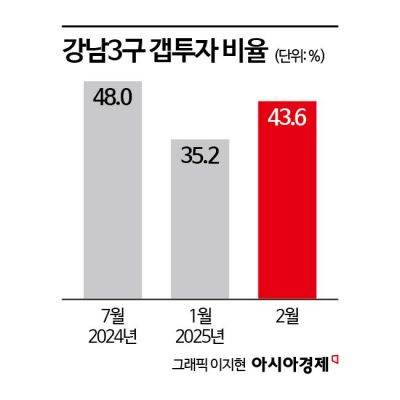
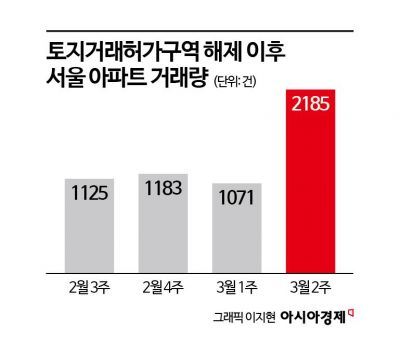
At a briefing held at the Government Seoul Office, Seoul Mayor Oh Se-hoon said, "Since March, the number of transaction reports surged, and it seemed highly likely to lead to price increases. In February, the ratio of gap investments increased mainly in the Gangnam 3 districts, signaling a rise in speculative transactions. We judged that policy responses were inevitable to preemptively block factors destabilizing the housing market."
Minister of Land, Infrastructure and Transport Park Sang-woo stated, "If the current upward trend in housing prices intensifies further or spreads to other areas, we will actively consider expanding the designation of regulated areas and speculative overheating zones currently applied to the Gangnam 3 districts and Yongsan district."
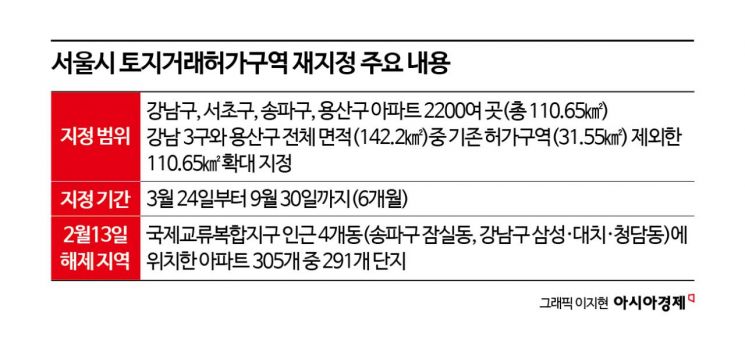
Seoul City expanded the land transaction permission zones to areas where transaction volumes have recently surged and price volatility is high to stabilize the market. This includes not only 291 apartment complexes near the International Exchange Complex Zone in Jamsil, Samsung, Daechi, and Cheongdam-dong, which were lifted from designation on February 13, but also the Banpo and Jamwon neighborhoods in Seocho district along the Han River and Yongsan district.
Regarding this, Mayor Oh explained, "One or two more interest rate cuts are expected this year. In such a situation, if we do not quickly stabilize the volatility in the real estate market, there is a high possibility that excessive transactions will spread widely later. I saw this as an opportunity to expand the land transaction permission zones to other areas that could rise, turning a crisis into an opportunity."
The current designation of the land transaction permission zones is for six months, but extensions will be actively considered if necessary. Extensions or re-designations will be reviewed depending on market conditions. Minister Park explained, "The land transaction permission system is an emergency measure. Various political and economic situations may change after six months. We will comprehensively consider variables such as real estate conditions, interest rates, money supply, and political circumstances and make a judgment then."
Mayor Oh responded, "We deliberated extensively on several options, including three months and six months. We judged that designating for about six months first and observing the situation before deciding on re-designation or extension is the most reasonable approach."
Nearby districts such as Mapo, Seongdong, and Gangdong are also showing signs of overheating but were excluded from this designation. Mayor Oh said, "If any areas benefiting from the balloon effect appear later, we will make the utmost efforts to stabilize prices." Minister Park added, "If necessary, we will expand the designation regionally and additionally designate speculative overheating zones."
Seoul City's reversal of its decision just one month after lifting the land transaction permission system is expected to cause considerable confusion in the real estate market. When asked whether discussions were held with the Ministry of Land, Infrastructure and Transport and the Financial Services Commission regarding the lifting of the land transaction permission zones, Mayor Oh explained, "Before lifting, we only had official discussions with the Ministry of Land, Infrastructure and Transport. The minister did not actively oppose it when answering in the National Assembly, and that is correct."
The land transaction permission zone designation plan passed the Seoul City Urban Planning Committee review on the 19th and will be fully implemented from the 24th. Regarding the approximately five-day delay before enforcement, Cho Nam-jun, head of Seoul City's Urban Space Headquarters, explained, "According to the Real Estate Transaction Act, the effect takes place five days after the public notice."
Once designated as a land transaction permission zone, transactions of apartments above a certain size require permission from the district mayor. Residential land must be used for actual residence for two years, during which sales and leasing are prohibited. If a land transaction contract is concluded without permission, penalties include imprisonment for up to two years or fines up to 30% of the land price.
With this measure, the land transaction permission zones in Seoul will expand to a total of 163.96㎢ (27% of Seoul's total area), including natural green areas in Gangnam and Seocho districts (26.69㎢), major reconstruction and redevelopment complexes in Apgujeong-dong of Gangnam district, Yeouido-dong of Yeongdeungpo district, Mok-dong of Yangcheon district, Seongsu-dong of Seongdong district (4.58㎢), and Moa Town and nearby roads (11.89㎢).
The government will monitor household loans by region, focusing on the metropolitan area, and strengthen inspections of mortgage loans in major Seoul areas. Loan regulations targeting multi-homeowners and gap investors will be applied more strictly through voluntary financial sector regulations, and the reduction of the guarantee ratio for jeonse (long-term deposit) loans will be moved up from July to May. Additional household loan management measures will be considered for areas at risk of overheating due to speculative demand, and if policy loans contribute to market overheating, loan interest rate hikes will also be pursued.
Kwon Dae-young, Secretary General of the Financial Services Commission, said, "The government has requested the financial sector to block any loans that disrupt the real estate market, such as gap investments centered in Seoul, multi-homeowners, and non-residents. We expect this to become visible in the financial sector by March."
Expanding supply is also an urgent task. The government aims to supply more than 110,000 households over two years and has activated a government-local government consultative body to expedite the start of new construction purchase agreements. It is also promoting the purchase commitment of unsold public land in the metropolitan area. On the 21st, LH will announce direct purchase of unsold houses after local completion. Additional purchases beyond the initially announced 3,000 households will be considered if necessary.
Kim Kyu-chul, Director of the Housing and Land Office at the Ministry of Land, Infrastructure and Transport, explained, "Supplying 110,000 new purchase rental homes over two years is the most practical way to supply housing early in urban areas along with redevelopment projects. Last year, more than 40,000 contracts were signed. This year, we are continuing consultations with local governments to simplify approval procedures and expedite construction and completion for contracted homes."
© The Asia Business Daily(www.asiae.co.kr). All rights reserved.
![Clutching a Stolen Dior Bag, Saying "I Hate Being Poor but Real"... The Grotesque Con of a "Human Knockoff" [Slate]](https://cwcontent.asiae.co.kr/asiaresize/183/2026021902243444107_1771435474.jpg)

















