Leap to Top 3 in Global AI...
Establishment of a Korea-Style Biohealth Cluster
Follow-up Support for the Semiconductor Special Act...
Development of Next-Generation Batteries
The government will invest 3.4 trillion KRW this year to promote three major game changers: artificial intelligence (AI), advanced bio, and quantum technologies. It plans to focus on securing AI competitiveness by fully establishing the National AI Computing Center and integrating AI into various fields. In the bio sector, efforts will be made to foster the ecosystem and activate investments, while in the quantum sector, the focus will be on developing a 1,000-qubit quantum computer.
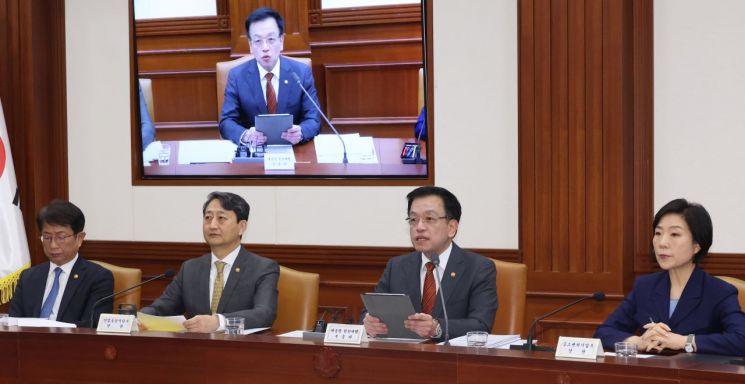 On the 19th, the Ministerial Meeting on National Issues, Economic Affairs, and Industrial Competitiveness Enhancement was held at the Government Seoul Office in Jongno-gu, Seoul, chaired by Choi Sang-mok, Acting Prime Minister and Minister of Economy and Finance. Photo by Yonhap News.
On the 19th, the government unveiled the 'New Growth 4.0 15 Major Projects 2025 Implementation Plan' at a meeting of ministers related to national affairs, economic affairs, and industrial competitiveness enhancement held at the Government Seoul Office in Jongno-gu, Seoul, chaired by Choi Sang-mok, Acting Prime Minister and Minister of Economy and Finance.
This implementation plan includes detailed strategies on how the government will advance the New Growth 4.0 15 Major Projects announced in 2022 throughout this year. It is characterized by presenting tasks in the three major game changers, key strategic industries, future promising industries, and global value-creating industries. Following last year, the government disclosed the related implementation plan early this year to provide a comprehensive overview of the year's initiatives at a glance.
An official from the Ministry of Economy and Finance explained, "The main theme of this year's implementation plan is that the government will focus not only on technological support but also on foundational support to strengthen the competitiveness of the three major game changers and key strategic industries." They also noted, "It is significant that the government will consistently pursue future growth sectors centered on the New Growth 4.0 15 Major Projects this year as well."
Leap to Top 3 AI Nation... Establishment of a Korea-style Biohealth Cluster
This year, the government will accelerate the implementation of projects related to the three major game changers to drive national innovation. Related investments will expand from 2.7 trillion KRW last year to 3.4 trillion KRW this year. The government plans to build the National AI Computing Center, continue supporting nationwide AI daily life integration, and secure 6G and satellite internet technologies. The goal is to elevate the global AI ranking from 6th last year to within the top 3 this year.
To this end, the government will promote the K-Cloud technology development project and fully establish the 'National AI Computing Center' during the expansion of AI computing infrastructure. A comprehensive AI computing infrastructure plan will also be formulated in the first quarter. Additionally, the government plans to build vertical AI datasets specialized in professional fields to enable domestic companies to capture the market for various generative AI-based application services.
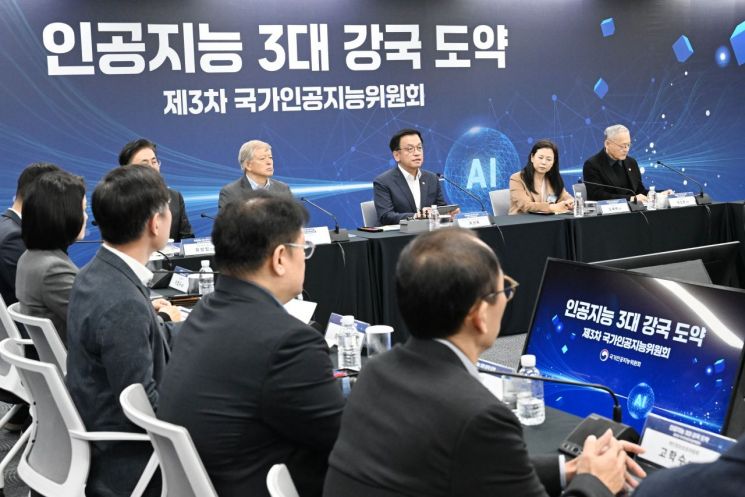 At the '3rd National Artificial Intelligence Committee' held last month, Choi Sang-mok, Acting Prime Minister and Minister of Economy and Finance, is delivering the opening remarks. Photo by Ministry of Economy and Finance
In the process of AI daily life integration, AI services will be expanded not only in the public sector and medical institutions but also smart technology dissemination will be broadened to small and medium-sized enterprises. To promote intelligent robots, the design of the National Robot Test Field infrastructure will be completed and construction will begin. Various research and development (R&D) will also be supported centering on highly scalable robot platforms. Furthermore, the government will secure commercialization-level next-generation 6G technology achievements and capabilities in low-earth orbit satellite communication technology.
In the bio sector, this year’s plan includes establishing a Korea-style biohealth cluster innovation strategy such as building the K-Bio Lab Hub. The government will promote the construction of a national integrated bio big data system and establish a training system for physician-scientists. During the expansion of K-Beauty, efforts will be made to strengthen the competitiveness of the cosmetics industry and diversify export markets by providing various information and expanding promotion and marketing support.
In the quantum technology sector, a public-private joint Quantum Strategy Committee will be launched swiftly, and a five-year comprehensive plan for systematic cultivation of quantum science technology and quantum industry will be prepared in the second half of the year. This year, the government will develop a 1,000-qubit quantum computer and officially launch a large-scale R&D project to expand the industrial base.
Follow-up Support for Semiconductor Special Act... Next-generation Battery Development
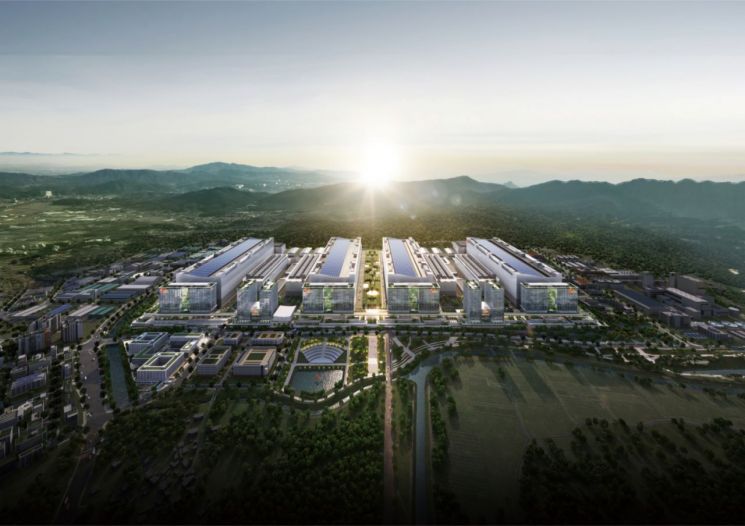
In key strategic industries such as semiconductors, secondary batteries, displays, and shipbuilding & shipping, the government will strengthen national and corporate competitiveness to maintain a super-gap. In particular, in the semiconductor sector, following the enactment of the Semiconductor Special Act, subordinate laws will be prepared simultaneously to enable enforcement within six months, ensuring swift follow-up measures. Additionally, reasonable and prompt compensation will be pursued for the development of the Yongin Semiconductor National Industrial Complex to advance the site development and construction schedule.
In the secondary battery sector, efforts will focus on policy finance, tax support, next-generation battery development, and commercialization. A battery recycling ecosystem will also be established. The government will develop mid-nickel batteries and sodium batteries to target the mid-to-low price market and invest 25.4 billion KRW by 2028 to develop small solid-state lithium polymer batteries for wearable devices, among other initiatives.
In the display sector, the government will solidify the OLED super-gap and secure core technologies for inorganic light-emitting diode (iLED) displays, as well as promote self-reliance in major materials, parts, and equipment. In shipbuilding and shipping, a plan to foster the next-generation shipbuilding industry will be prepared in the second half of the year, focusing on securing eco-friendly and autonomous navigation ship technologies. The 'Ship Materials, Parts, and Equipment Competitiveness Enhancement Plan,' which includes R&D, demonstration, and commercialization, will be prepared in the first half of the year.
In future promising industries, the government will strive to pioneer new technology future sectors through active national support. For future mobility, specialized models for urban air mobility regions will be identified and demonstrated in the metropolitan area. Infrastructure development will also be promoted, including the establishment of autonomous driving living labs and the creation of precise road maps. For independent space exploration, the government will continue the 4th launch of Nuriho and the second phase of the lunar exploration project while realizing a private-sector-led space aviation economy.
In securing new energy technologies, the government will advance next-generation nuclear power (SMR) and clean hydrogen production technologies and establish a testing system for solar tandem modules. Additionally, the first basic plan for carbon-neutral cities will be established in the second half of the year, and the target areas for the second phase projects to be promoted next year will be finalized in the second half as well.
© The Asia Business Daily(www.asiae.co.kr). All rights reserved.



















