Literature Blossomed in the Era of Forced Migration
Koryoin Village Hosts Special Exhibition of Hangeul Literature
"Standing at the edge of the field, with your sleeves rolled up, what kind of love will you present?"
The poetry of Kang Tae-su, who sang about the longing and lives of Koryoin in the forced migration lands of the Central Asian plains, has been unveiled to the public for the first time in over 80 years.
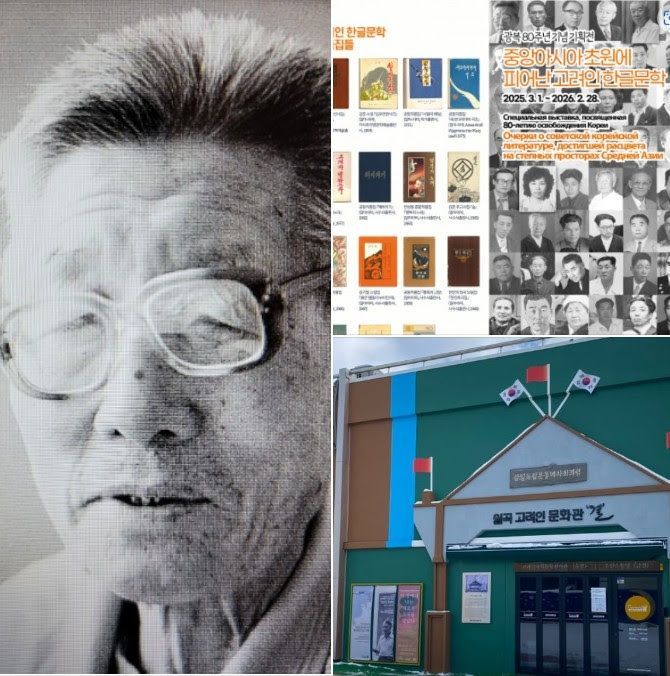 The Gwangju Koryoin Village is attracting attention from visitors with the "Koryoin Hangul Literature Special Exhibition," held at the Koryoin Cultural Center since the 1st to commemorate the 80th anniversary of Liberation Day. Provided by Koryoin Village
According to Gwangju Koryoin Village on the 19th, a special exhibition titled "Koryoin Hangeul Literature Exhibition" has been held at the Koryoin Cultural Center since the 1st of this month to commemorate the 80th anniversary of Korea's liberation. This exhibition reflects on the history of exile, oppression, and wounds contained in Koryoin literature, shedding light on the lives of poets and writers who lived through the era of forced migration.
In particular, this exhibition draws attention to the life and works of poet Kang Tae-su, who was a student of teacher Joseok Jo Myeonghui. After being forcibly relocated from the Russian Far East to Central Asia in 1937 under Stalin's regime, Kang studied literature in the Department of Korean Language and Literature at Koryo Normal School and wrote poetry.
However, after publishing his representative work "Lady Plowing the Field," he was arrested due to expressions longing for the Russian Far East. He subsequently endured 21 years of exile in Siberia and restrictions on his place of residence. Afterward, the Koryoin community entered an era where even mentioning words like "homeland" or "Russian Far East" was forbidden.
This exhibition introduces traces of various poets and writers, including Kang, who preserved Koryoin literature. Visitors can encounter the lives and works of those who never gave up their literary dreams despite surveillance and censorship under Stalin's regime, all presented in Hangeul.
A representative from Gwangju Koryoin Village stated, "Koryoin literature is not merely an art form, but the language of a people preserved even in hardship," and added, "We hope this special exhibition will provide an opportunity to reflect on the forgotten lives and spirit of the Koryoin."
© The Asia Business Daily(www.asiae.co.kr). All rights reserved.
![Clutching a Stolen Dior Bag, Saying "I Hate Being Poor but Real"... The Grotesque Con of a "Human Knockoff" [Slate]](https://cwcontent.asiae.co.kr/asiaresize/183/2026021902243444107_1771435474.jpg)















