Report on 'The Impact of Unemployment Benefits on Non-Regular Workers'
"Higher Unemployment Benefits Increase Moral Hazard Risk"
"System Changes Estimated to Add 240,000 Non-Regular Workers"
An analysis has revealed that the higher the level of unemployment benefits, the greater the proportion of non-regular workers among all employees. This is explained by the fact that non-regular workers are structurally more likely to receive unemployment benefits than regular workers, leading to an increase in cases utilizing these benefits.
In a report titled ‘The Impact of Unemployment Benefits on Non-Regular Workers’ published on the 18th by the Fighterchi Research Institute, an analysis of data from Korea and 20 European countries from 2005 to 2022 showed that when the level of unemployment benefits rises by 1 percentage point, the proportion of non-regular workers increases by 0.12 percentage points.
This means that the higher the ratio of unemployment benefits to the average wage before unemployment, the more non-regular workers there are.
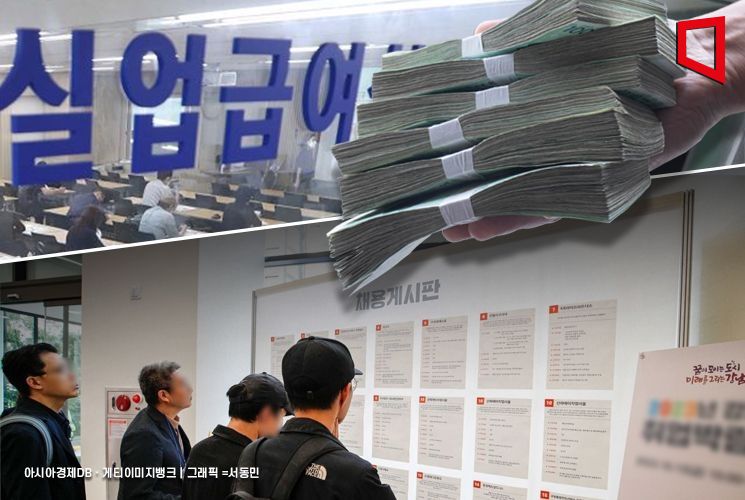
The Fighterchi Research Institute explained, "When unemployment benefits increase, job seekers are more prone to moral hazard, which is more likely to occur among non-regular workers than regular workers due to institutional conditions. Voluntary resigners cannot receive unemployment benefits, but non-regular workers with fixed contract periods can easily claim them."
The institute estimated that applying this analysis to the revised unemployment benefit system, the increase in unemployment benefits likely led to about 240,000 more non-regular workers. Compared to 2018, the level of unemployment benefits increased by 10 percentage points from 50% to 60% of the average wage last year, resulting in a 1.2 percentage point rise in the proportion of non-regular workers.
Jihyun Ma, senior researcher at the Fighterchi Research Institute, emphasized, "Since the increase in unemployment benefits leads to a rise in non-regular workers, the current level of unemployment benefit payments should be adjusted back to the previous level before the change, and eligibility requirements should be strengthened."
© The Asia Business Daily(www.asiae.co.kr). All rights reserved.
![Clutching a Stolen Dior Bag, Saying "I Hate Being Poor but Real"... The Grotesque Con of a "Human Knockoff" [Slate]](https://cwcontent.asiae.co.kr/asiaresize/183/2026021902243444107_1771435474.jpg)
















