Gumi's Contribution to Economic Development Raises Hopes for Historical Repositioning
Included in MCST's "Cultural Korea 2035"... Shedding Light on the History of Industrialization
Gumi City in North Gyeongsang Province has received a positive signal for attracting a national cultural institution that will shed light on the history of industrialization in South Korea.
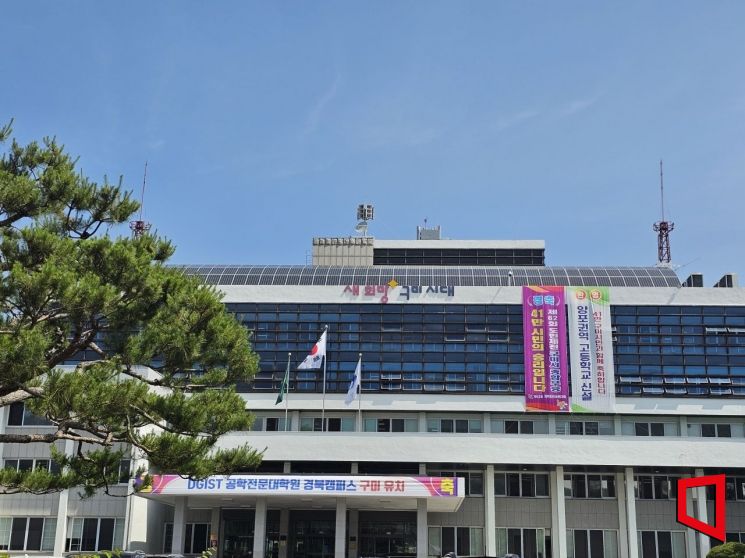
According to Gumi City on the 17th, the Ministry of Culture, Sports and Tourism (MCST) has included a plan to expand regional branches of the National Museum of Korean Contemporary History in its mid- to long-term policy, "Cultural Korea 2035." As a result, the "Gumi Industrialization History Museum," which will document the history of industrialization, is expected to be established in Gumi.
There has been a continuous call for the systematic organization and succession of the history of industrialization, which laid the foundation for South Korea's economic growth.
The Gumi Industrialization History Museum will be created as a space where visitors can get an overview of the process of industrialization and economic growth at a glance. It is also planned to feature exhibitions where science, technology, people, and art are harmoniously integrated, allowing various generations to relate and engage.
Since the establishment of the national industrial complex in 1969, the city has led South Korea’s export-driven economy. In particular, Gumi played a key role in the development of the Korean economy, achieving $30 billion in exports for the first time among basic local governments in 2005, and is considered the optimal location for storytelling as a center for industrial workforce training.
Since last year, the city has been working with local National Assembly members (Koo Jagun, Kang Myunggu) to continuously propose the necessity of building the museum to the MCST, the National Museum of Korean Contemporary History, and Gyeongsangbuk-do Province. With its inclusion in the MCST’s mid- to long-term policy, the project is gaining momentum.
Once the Gumi Industrialization History Museum is established, it is expected to create historically themed spaces within the industrial complex, shed new light on the process of South Korea's economic growth, establish the status of the nation's economic development, and develop tourism products linked to industrialization. Furthermore, it is anticipated to contribute to revitalizing the local economy by becoming a space where industry and culture are fused.
Kim Jangho, Mayor of Gumi, emphasized, "Through the establishment of the Gumi Industrialization History Museum, we will be able to comprehensively document the history of South Korea's industrial growth," adding, "Through this, Gumi will be reborn as a leading city where industry and culture coexist."
© The Asia Business Daily(www.asiae.co.kr). All rights reserved.
![Clutching a Stolen Dior Bag, Saying "I Hate Being Poor but Real"... The Grotesque Con of a "Human Knockoff" [Slate]](https://cwcontent.asiae.co.kr/asiaresize/183/2026021902243444107_1771435474.jpg)















