Incheon City has requested the government to designate Ganghwa and Ongjin counties as Opportunity Development Zones. On the 17th, the city announced that it urged the Ministry of Trade, Industry and Energy and the Local Era Committee to promptly establish criteria for designating the metropolitan area as an Opportunity Development Zone.
Opportunity Development Zones are areas designated under the "Special Act on Local Autonomy Decentralization and Regional Balanced Development" targeting non-metropolitan areas, population decline regions, and border areas. These zones aim to create local jobs and revitalize the economy through regulatory exemptions and tax and financial support.
The zones are designated by the Minister of Trade, Industry and Energy upon application by the provincial governor and after deliberation and resolution by the Local Era Committee. So far, 14 non-metropolitan cities and provinces have been designated as Opportunity Development Zones, but the metropolitan area has not even been able to apply because the Local Era Committee has not set specific criteria regarding designated areas or application size limits for the metropolitan area.
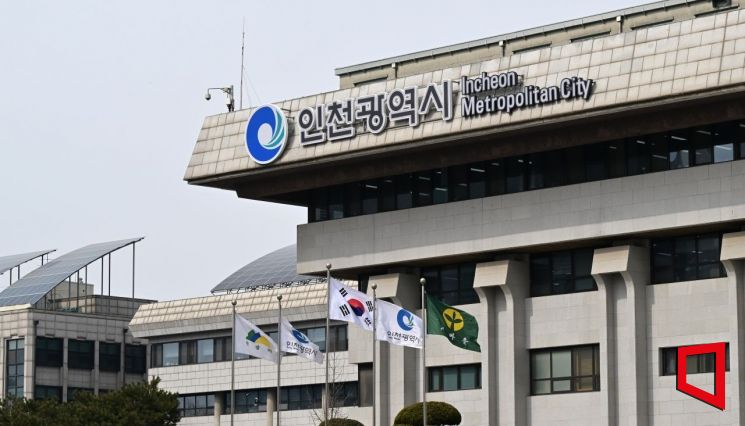
Incheon City stated that the delay in establishing criteria for the metropolitan area is due to a focus on balanced development centered on non-metropolitan areas, and emphasized that designation as an Opportunity Development Zone is urgently needed to build the economic and industrial base of Ganghwa and Ongjin and to promote population inflow.
Ganghwa and Ongjin counties, which are part of the metropolitan area and border regions, face land use restrictions due to military facility protection zones, the Metropolitan Area Readjustment Act, and agricultural promotion zones. They were also designated as population decline areas (by the Ministry of the Interior and Safety in October 2021), showing indicators such as aging index and underdevelopment levels similar to or more severe than those in non-metropolitan areas. According to a 2023 study by the Korea Institute of Local Administration titled "Mid- to Long-term Measures for Regional Balanced Development," Ganghwa and Ongjin counties were classified as level 2 and level 3 respectively in terms of local government underdevelopment (levels 1 to 5).
In particular, Ganghwa County faces even more severe living environment challenges. Since July last year, about 20,000 residents in the border areas of Songhae-myeon, Yangsa-myeon, Gyodong-myeon, and Ganghwa-eup have suffered day and night due to loudspeaker noise from North Korea. Residents complain of damage caused by continuous 24-hour siren sounds and harsh noises resembling metal grinding, leading to sleep disorders, headaches, and interference with their children's learning.
An official from Incheon City said, "Ganghwa and Ongjin counties, as border areas, have long been constrained by various metropolitan regulations, making local economic revitalization urgent. We hope the Local Era Committee will establish related criteria as soon as possible."
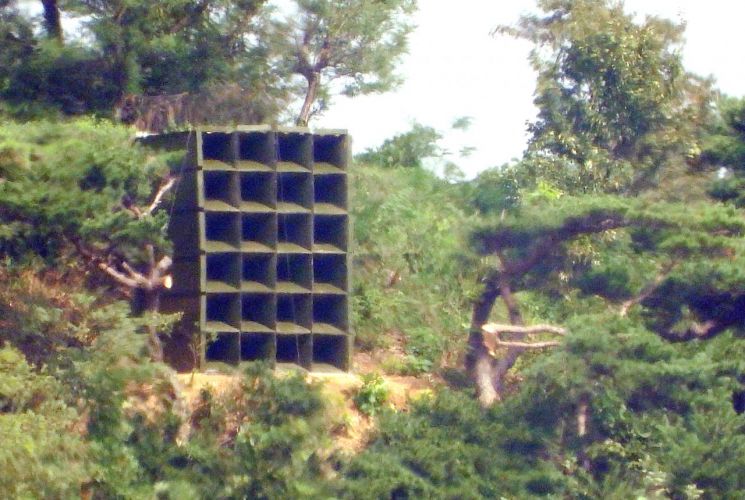 Loudspeakers installed on a hill in Kaepung County, Hwanghae Province, North Korea, as seen from Songhae-myeon, Ganghwa-gun, Incheon. Photo by Yonhap News
© The Asia Business Daily(www.asiae.co.kr). All rights reserved.
![Clutching a Stolen Dior Bag, Saying "I Hate Being Poor but Real"... The Grotesque Con of a "Human Knockoff" [Slate]](https://cwcontent.asiae.co.kr/asiaresize/183/2026021902243444107_1771435474.jpg)
















