Education for 2,000 Samsung Executives to Restore 'Samsung-ness'
"A Matter of Life and Death"... Strong Call for Executive Self-Reflection
Heightened Sense of Fundamental Crisis Beyond Performance Decline
Semiconductor Slump Deepens... Fierce Pursuit from Chinese and U.S. Competitors
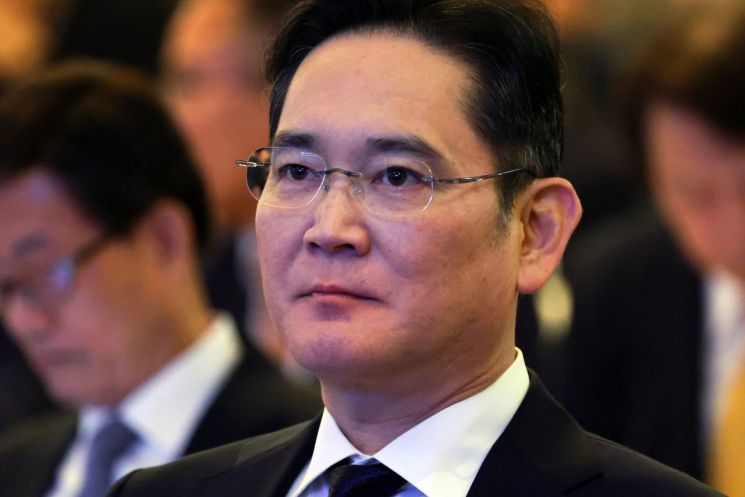
Samsung Electronics Chairman Lee Jae-yong recently strongly reprimanded executives, saying "Samsung has lost its resilience" and urged them to adopt a 'Sa-juk-saeng (死卽生)'?a determination that death means life. In the second half of last year, Chairman Lee had urged, "Let's acknowledge the crisis and face reality calmly" regarding the semiconductor business slump, but this time he raised the tone of his remarks to the level of survival.
According to the business community on the 17th, Chairman Lee shared the message at a recent seminar for Samsung executives that "Samsung is facing a matter of life and death. The management must deeply reflect." As Samsung Electronics' semiconductor business failed to show signs of recovery this year following last year's downturn and performance worsened, it is interpreted that he issued a strong message to raise organizational tension to the highest level. Since the end of last month, Samsung has been conducting 'Value Education for Restoring Samsung-ness' for about 2,000 executives below the vice president level across all affiliates, including Samsung Electronics.
This message came after videos containing the management philosophies of the late founder Lee Byung-chul and the late former chairman Lee Kun-hee, members of the owner family. It is said that the videos included some of Chairman Lee's previous remarks as well as content prepared as a New Year's message earlier this year. However, Chairman Lee did not appear directly in the video. Through the message, he emphasized, "What matters is not the crisis itself but the attitude toward dealing with the crisis," and "We must invest in the future even if it means sacrificing immediate profits." He reiterated the importance of technology. Chairman Lee has consistently emphasized, "We must uphold the tradition of prioritizing technology and making preemptive investments," "Let's create the future with technology that does not exist in the world," and "First technology, second technology, third technology."
The reason Chairman Lee issued such a strong message is not simply due to Samsung's recent performance decline. It is interpreted as stemming from a sense of crisis that fundamental competitiveness is deteriorating. Samsung Electronics posted lower-than-expected results in the semiconductor business due to a slowdown in demand for general-purpose (legacy) memory and delays in the supply schedule of high-bandwidth memory (HBM). The performance outlook for this year is also not bright following last year. According to an analysis by financial information firm FnGuide of reports from 18 domestic securities firms over the past three months, Samsung Electronics' operating profit forecast for the first quarter of this year averages 5.3724 trillion won, down 18.7% compared to the same period last year.
However, a bigger problem is that Samsung Electronics' position is gradually narrowing. Last year, Samsung Electronics' market share in key products such as memory semiconductors (DRAM and NAND flash), smartphones, and displays all declined compared to the previous year in the global market. In particular, after being overtaken by SK Hynix in memory, which had symbolized the 'super-gap,' Samsung is struggling against low-priced competition from Chinese companies such as Changxin Memory. Moreover, with intensified technological pursuit by U.S. company Micron and others, the 'sandwich' crisis theory is growing. In foundry (semiconductor contract manufacturing), the gap with Taiwan's TSMC is gradually widening. This is why the determination of 'Sa-juk-saeng' was emphasized.
External experts, including professors, also diagnosed Samsung's crisis at this event. Experts reportedly pointed out issues such as "Complacency in thinking it is enough to be just better than others, failing to develop capabilities" and "Obsessing only over relative rankings without achieving qualitative improvement." Executives attending the seminar reacted that it was rather fortunate that the head of the group directly mentioned the 'crisis of Samsung,' which had been taboo within the company. One executive said, "Since the crisis was acknowledged, it became an opportunity to confirm Samsung's resilience."
Samsung presented executives with crystal plaques engraved with their names. The plaques bore the phrase "A Samsung person strong in crisis, skilled in turnaround, and ruthless in competition." This is interpreted as a call for a more proactive attitude. Samsung Electronics plans to maintain an aggressive stance on research and development (R&D) and facility investment to secure future growth engines. Last year, it invested a record high of 35 trillion won in R&D and 53.6 trillion won in facility investment. Additionally, to fully launch future new businesses in the Device Experience (DX) division, the existing 'New Business Task Force (TF)' was upgraded to an official new business team.
© The Asia Business Daily(www.asiae.co.kr). All rights reserved.

















