Forming Empathy Through Universal Stories of Parents and Family
No. 1 in Korea, No. 6 Globally: The Popularity of a "National Drama"
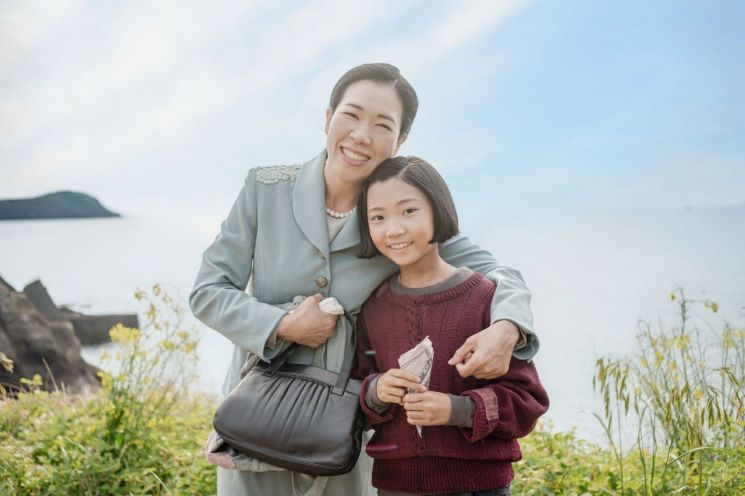
"Aesun, it's not you who is poor, it's mom who is poor. Don't be scared. Live abundantly."
In a seaside village of Jeju in the 1960s, 9-year-old Aesun (IU) heads to the front sea again today, worried about her haenyeo mother. Aesun's mother, Gwangrye (Yeom Hye-ran), rarely comes up from the water until she finishes picking abalone. Aesun cannot take her eyes off the water until her mother surfaces and whistles.
'That damn abalone that burns my fishing net. Baekhwan who sells abalone, I want to give and buy a day for the net. My fishing net that aches my waist.' This poem, pressed firmly by Aesun’s small hands, touches Gwangrye’s heart. Gwangrye, a literary girl, holds Aesun’s hand and tells her not to lose her dreams and to fly freely. Widowed, Gwangrye works hard diving but passes away at 29 from decompression sickness.
Aesun marries her childhood friend Gwansik (Park Bo-gum) and gives birth to their first daughter, Geummyeong (IU). Despite poverty, the young couple raises their daughter with determination and sends her to Seoul National University. Aesun gives everything for Geummyeong’s study abroad journey. Geummyeong cannot stop tears as she looks at the pocket money wrapped in newspaper from her mother. "I flew on their dreams. Holding my mother’s dream like a seed. My mother’s dream comes to me. Very heavy, very hot. It finally flapped its wings."
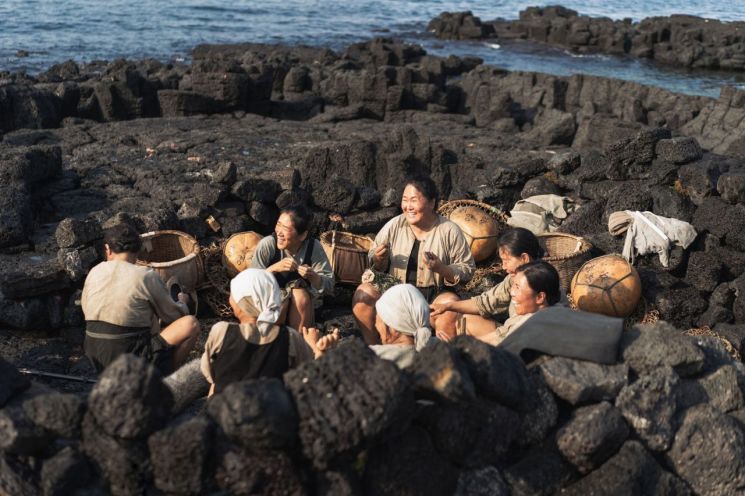
The Netflix drama Pokssak Soksassuda is set in the 1960s after the Korean War, telling the story of Aesun born in 1951, her mother, and her daughter Geummyeong born in 1969. It is a story of an ordinary family who lived in poverty but tried not to pass it on to their children. The daughter’s cry, "I won’t live like mom," is actually a confession that she cannot live sacrificing like her mother, which runs through the drama.
Pokssak Soksassuda means "You really worked hard" in Jeju dialect. Director Kim Won-sik introduced it at the press conference as "a tribute to the grandparent and parent generations and a cheer for the children’s generation."
Pokssak Soksassuda released its spring episodes (14 episodes) on the 7th, summer episodes (58 episodes) on the 14th, and will release autumn episodes (912 episodes) on the 21st and winter episodes (1315 episodes) on the 28th. Though it wears a romance exterior, it is closer to a family drama. It warmly and brightly portrays universal stories of parents and family, gaining viewers’ empathy. Amidst a flood of stimulating content like action, it is praised as a "wholesome content" that families can watch together. It is popular not only among the 10-29 age group but also among middle-aged viewers in their 40s and 50s. Since its release, responses such as "It reminds me of my hardworking mother" and "I kept crying thinking of my parents" have continued, receiving enthusiastic support.
Overseas reactions are also positive. According to OTT ranking site FlixPatrol, Pokssak Soksassuda recorded 3.6 million views (viewing time divided by the runtime of the work) within three days of release, ranking 4th in the global non-English top 10 series category. It ranked 1st in Netflix TV shows in 10 countries including Korea, Hong Kong, and Singapore, and 6th in the global TV show category. The US media Rotten Tomatoes described it as "a real, simple, and beautiful story."
© The Asia Business Daily(www.asiae.co.kr). All rights reserved.
![Clutching a Stolen Dior Bag, Saying "I Hate Being Poor but Real"... The Grotesque Con of a "Human Knockoff" [Slate]](https://cwcontent.asiae.co.kr/asiaresize/183/2026021902243444107_1771435474.jpg)
















