Expansion of Relaxed Building-to-Building Distance Regulations
Redevelopment, Small-Scale Housing Maintenance, and Remodeling Now Included
The distance restriction regulations between buildings will be relaxed during redevelopment, reconstruction, or apartment remodeling projects in Gwangmyeong City, Gyeonggi Province. Previously, buildings had to be spaced at 0.8 times the height of the wall with windows for daylight, but from now on, only 0.5 times the height is required.
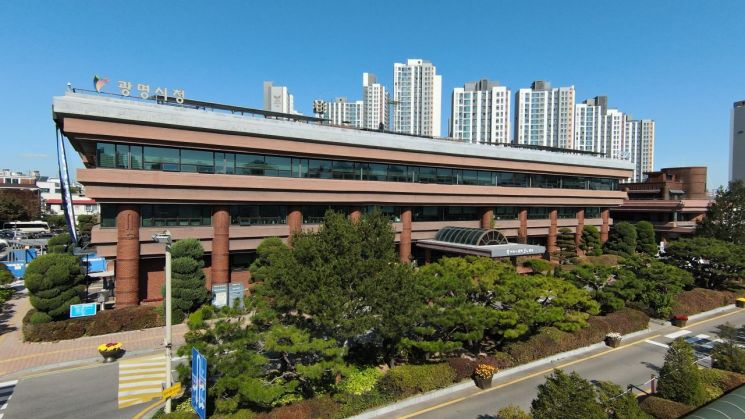
Gwangmyeong City announced on the 14th that it recently promulgated and implemented an amendment to the 'Building Ordinance' that expands the scope of the relaxed 'building-to-building distance' applied previously only to urban-type residential housing.
'Building-to-building distance (Indonggan-gyeok, 隣棟間隔)' refers to the distance between buildings or structures, with standards set by the Building Act and local government ordinances. The existing city ordinance stipulated that buildings must be spaced at least 0.8 times the building height in a perpendicular direction from the wall with daylight windows, but as an exception, urban-type residential housing was allowed a relaxed standard of 0.5 times.
Through this ordinance amendment, the city added the following to the scope of relaxed building-to-building distance: redevelopment and reconstruction projects under the Urban and Residential Environment Improvement Act, small-scale housing maintenance projects under the Special Act on Vacant Houses and Small-scale Housing Maintenance, and apartment remodeling projects under the Housing Act. Accordingly, redevelopment and reconstruction complexes applying for project plan approval will now be subject to the relaxed regulations.
The city expects that this regulatory relaxation will allow for more diverse building layouts in maintenance or remodeling projects. Kim Su-jeong, head of the Architecture Division of Gwangmyeong City, said, "The existing building-to-building distance standard was an excessive regulation that restricted the formation of diverse skylines in apartment complexes, so we relaxed the regulation," adding, "Even with the relaxed standards for super high-rise apartments, the absolute distance will still be large, so concerns about excessive privacy invasion raised by some are unfounded."
The amended ordinance also relaxed the standard for cases where the entrance of a tall building faces a lower building in the east or west direction, reducing the required distance from 1 times the height of the lower building, with a minimum of 10 meters, to 0.5 times.
Along with this, the city also amended the 'Gwangmyeong City Building Management Ordinance' to relax the criteria for permit requirements during building demolition. Previously, buildings within 20 meters of the site boundary required a permit for demolition, but this criterion was changed to within 20 meters from the outer wall of the building to be demolished. Among adjacent facilities requiring permits, 'crosswalks' were narrowed to 'crosswalks equipped with pedestrian traffic signals.' This improvement addresses the unreasonable situation where permits were required even if the building to be demolished was set back from the site boundary and did not pose a risk to pedestrians or others.
Park Seung-won, mayor of Gwangmyeong City, said, "With this ordinance amendment, it will be possible to plan building layouts more flexibly in housing maintenance projects," and added, "This will enable efficient space utilization and contribute to improving the residential environment."
© The Asia Business Daily(www.asiae.co.kr). All rights reserved.

















