The 35th Energy Committee Meeting Held
The government has revised its emergency response plan for energy supply and demand for the first time in 13 years, reflecting the rapidly increasing electricity demand and the more frequent climate disasters. In addition to adding heat, such as district heating, to the management targets, it strengthens crisis management for the power system, which has become more volatile due to the increase in renewable energy. Furthermore, when an emergency supply and demand situation occurs in two or more energy sources, a comprehensive emergency supply and demand headquarters will be formed to enable a comprehensive response.
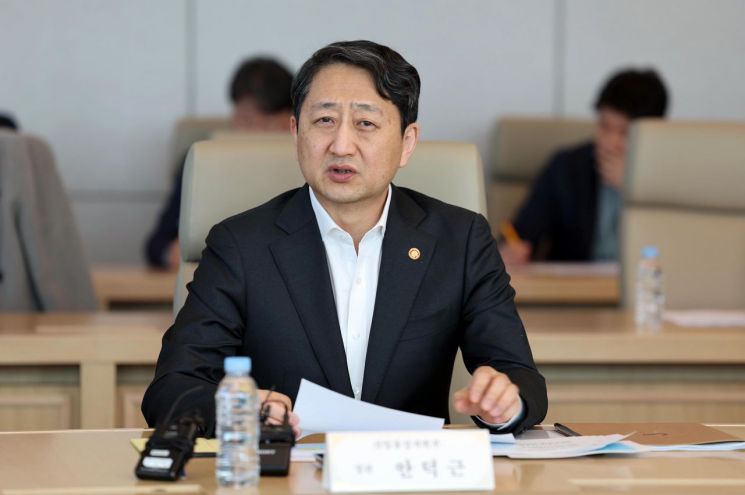
On the 14th, the Ministry of Trade, Industry and Energy announced that Minister Andeok Geun held the 35th Energy Committee meeting to review the emergency energy supply and demand plan, the 1st Basic Plan for Electrical Safety Management, and the 3rd Basic Plan for Gas Safety Management, which include these contents.
The government has been preparing for national-level rapid responses to emergencies such as disruptions in the supply and demand of energy including oil, gas, and electricity by establishing emergency energy supply and demand plans under the Energy Act. A Ministry of Trade, Industry and Energy official explained, "This plan manualizes emergency measures for various scenarios, considering significant changes in the energy supply environment due to recent electrification and expanded heat use, changes in the energy mix, intensified geopolitical uncertainties such as the Russia-Ukraine war, and the normalization of abnormal climate conditions like extreme heavy rain and persistent abnormal heat."
Through this plan, the management targets have been reorganized from the existing "electricity, crude oil, gas, coal" to "electricity, crude oil, gas, heat" to respond to changes in the energy mix such as decreased coal demand and increased heat demand. To address the increased volatility in the power system due to the rise in renewable energy, crisis management in the electricity sector has been subdivided from supply and demand to supply, demand, and system. In addition to individual energy source response systems, when supply and demand disasters occur simultaneously in two or more energy sources, depending on the severity of the situation, an "Energy Comprehensive Emergency Supply and Demand Headquarters" or an "Energy Comprehensive Central Accident Response Headquarters" will be formed to strengthen response capabilities.
At the Energy Committee meeting, the 1st Basic Plan for Electrical Safety Management was also reviewed. Reflecting the recent increase in electricity consumption due to the spread of high electricity-consuming facilities such as data centers and the trend of more complex and large-scale damage when electrical accidents occur, this is the first time a basic plan for electrical safety management has been established. The plan includes adding industries such as kids cafes and escape rooms to the "electrical safety inspection for facilities used by multiple people" category to strengthen safety management supervision. Additionally, for traditional markets and logistics warehouses, which are frequently used by many people, arc (spark discharge) protection devices will be prioritized for installation to prevent electrical fires. The plan also promotes the establishment of a real-time remote electrical safety monitoring system utilizing innovative technologies such as artificial intelligence (AI), big data, the Internet of Things (IoT), and information and communication technology (ICT).
The 3rd Basic Plan for Gas Safety Management includes the development of safety standards for new hydrogen technologies and the expansion of related infrastructure in preparation for the growth of the hydrogen economy. Considering the increase in aging gas facilities, the plan aims to actively utilize IT technology to transition to a digital-based continuous safety management system and innovate to strengthen private autonomous safety management.
Minister Andeok said, "Due to rapid changes in energy supply and demand conditions such as changes in the energy mix, intensified geopolitical uncertainties, and the normalization of abnormal climate conditions, we have revised the emergency energy supply and demand plan for the first time in 13 years. We will also continuously innovate the safety management system in the gas and electricity sectors to match changes such as the growth of the hydrogen economy and increased electricity demand from advanced industries, so that the public can use energy with peace of mind."
© The Asia Business Daily(www.asiae.co.kr). All rights reserved.
![Clutching a Stolen Dior Bag, Saying "I Hate Being Poor but Real"... The Grotesque Con of a "Human Knockoff" [Slate]](https://cwcontent.asiae.co.kr/asiaresize/183/2026021902243444107_1771435474.jpg)















