Copper Prices Expected to Surge Amid Trump Tariff War
Forecasts Predict $10,000 per Ton Within Three Months
Raw Material Price Fluctuations Reflected in Contracts
Wire Companies May See Increased Sales
Recently, as forecasts of a sharp rise in copper prices due to the imposition of tariffs by the United States have continued, tension is spreading within the domestic wire industry. However, the industry believes that the actual impact will not be significant because there is an 'escalation (cost-linked) clause' that automatically adjusts the contract amount when raw material prices rise. This clause acts as a kind of protective shield.
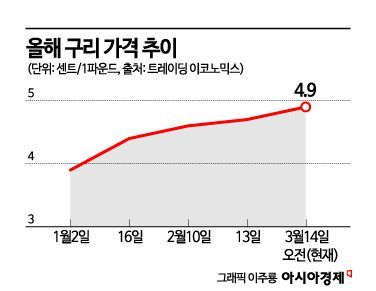
According to foreign media and industry sources on the 14th, experts predict that international copper prices will rise to $10,000 per ton (about 15 million KRW) within the next three months. This forecast originated from a report released the previous day by the major U.S. bank Citigroup. Analysts including Max Layton from the bank sent a report via email to clients stating, "The shortage of raw materials outside the U.S. is expected to continue until May or June." They explained that before U.S. tariffs targeting copper are fully imposed, movements to send copper to the U.S. are spreading, increasing the scarcity of copper outside the U.S., which will cause prices to rise sharply.
The sharp rise in copper prices could directly burden the wire industry, but the actual impact on the ground is expected to be minimal. A representative from the wire industry explained, "There is an 'escalation clause' that automatically reflects raw material price fluctuations in the contract amount during import and export contracts, so even if copper prices rise, it is not a big problem."
Escalation is a clause that stipulates that if the price of materials changes, the unit price of the goods involved in the transaction will also change accordingly. It is named after an escalator, where different people standing on steps of different heights move up or down together, symbolizing that material prices and product unit prices rise and fall together.
In the wire industry, this clause is typically included in contracts by mutual agreement when making transactions. Since the prices of raw materials like copper and auxiliary materials frequently fluctuate, companies that manufacture and supply products face the risk of severe losses if manufacturing costs rise but they sell at the same price. This clause can also be seen as a mechanism to share risk by passing some of the burden to the purchasing side.
Thanks to the escalation clause, there is also analysis that wire companies' sales may actually increase. As the rise in raw material prices is automatically reflected in the contract amount, a sales increase effect may occur. A power equipment industry official said, "If tariffs are imposed on specific products like transformers, the story would be different, but the measures on copper are item tariffs," adding, "Because product prices rise due to the escalation clause, there is an effect of increased sales revenue, and the asset valuation of copper already secured may also increase."
However, given the unpredictability of the Trump administration in the U.S., which continues to impose tariff measures one after another, and the resulting market uncertainty, companies are preparing for any eventuality. A representative from company B, which manufactures transformers, said, "Since unexpected variables may arise in the raw material market, we are continuously monitoring price fluctuations through regular meetings."
© The Asia Business Daily(www.asiae.co.kr). All rights reserved.
![Clutching a Stolen Dior Bag, Saying "I Hate Being Poor but Real"... The Grotesque Con of a "Human Knockoff" [Slate]](https://cwcontent.asiae.co.kr/asiaresize/183/2026021902243444107_1771435474.jpg)















