China's Soybean Imports Account for 60% of Global Grain Trade Volume
Average Protein Content at 10%, 2 Percentage Points Higher Than Regular Corn
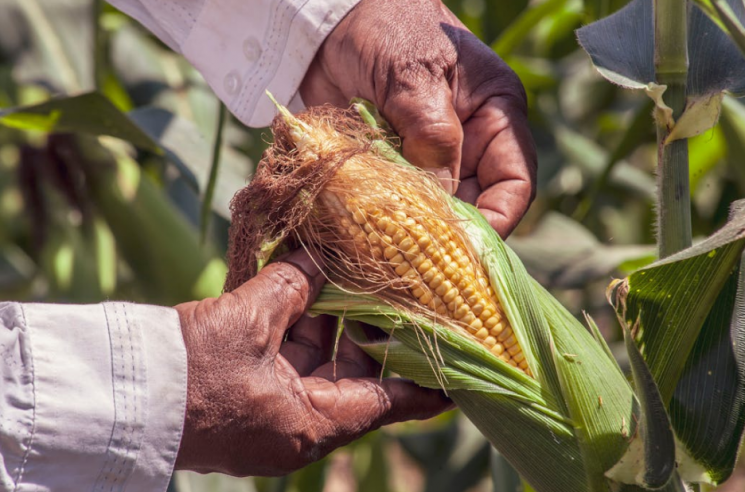
As a high-protein corn variety that can replace soybeans has been developed in China, attention is focused on whether it can reduce imports of U.S. soybeans.
Hong Kong's South China Morning Post (SCMP) reported on the 13th that Yan Jenbing, a member of the Chinese People's Political Consultative Conference and president of Huazhong Agricultural University, stated in an interview during the recently concluded Two Sessions (the National People's Congress and the Chinese People's Political Consultative Conference) that several new corn varieties with increased protein content have been developed to replace soybeans used for animal feed.
The newly developed corn has an average protein content of 10%, which is 2 percentage points higher than regular corn. President Yan explained that the cultivation area already exceeds 10 million mu (1 mu is approximately 667 square meters).
He added, "Usually, corn serves as an energy source in feed, and soybean meal (a byproduct left after extracting oil from soybeans) is the protein source. China's total corn production last year was 290 million tons, so even increasing the protein content of corn by just 1% would add 2.9 million tons of protein." If utilized well, this could reduce soybean imports by 7 to 8 million tons.
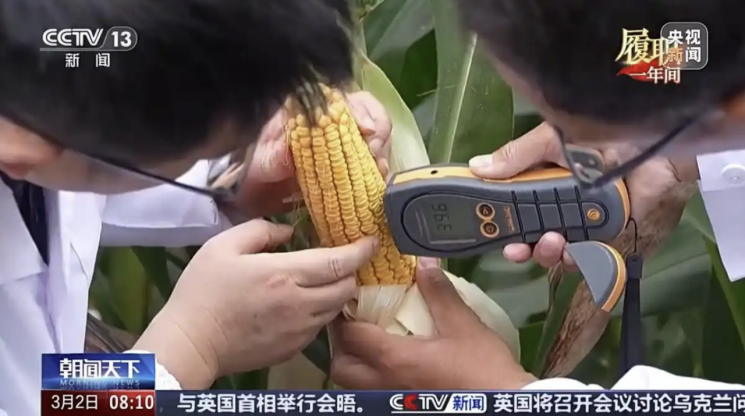
Yan Jenbing recently discovered a key gene that reduces the moisture content of corn kernels, which, according to Guangming Daily, allowed for rapid dehydration of corn kernels during harvest, significantly improving the efficiency of mechanical harvesting.
SCMP pointed out that as China's dependence on imported agricultural products increases, posing a threat to food security, and especially amid the intensifying U.S.-China trade war where agricultural products could become a potential point of contention, this new corn variety could be a "game changer."
In China, as demand for meat and dairy products rises, large quantities of soybeans for livestock feed such as pigs are imported. Last year, China's soybean imports amounted to 150 million tons.

China's soybean imports account for 60% of the world's grain trade volume. The United States and Brazil are the main suppliers. Ten years ago, China imported 40% of its soybeans from the U.S., but due to U.S.-China tensions, it has sought to diversify its import sources in recent years. However, U.S. soybeans still make up more than 20% of China's soybean imports.
This dependence on the U.S. is a potential strategic weakness for China's food security, while also serving as a "double-edged sword" that can be used as leverage against the U.S.
Recently, when former U.S. President Donald Trump pushed for a "10+10%" tariff increase, China imposed retaliatory tariffs of 10 to 15% on U.S. agricultural and livestock products, including soybeans. Earlier, during Trump's first term in 2018, China also halted imports of U.S. soybeans, dealing a blow to the U.S.
© The Asia Business Daily(www.asiae.co.kr). All rights reserved.
![Clutching a Stolen Dior Bag, Saying "I Hate Being Poor but Real"... The Grotesque Con of a "Human Knockoff" [Slate]](https://cwcontent.asiae.co.kr/asiaresize/183/2026021902243444107_1771435474.jpg)

















