Monthly Fiscal Trends March Issue by the Ministry of Economy and Finance
It was revealed that the managed fiscal balance recorded a surplus in January this year. This was because total expenditures significantly decreased due to fewer business days during the Lunar New Year holiday in January.
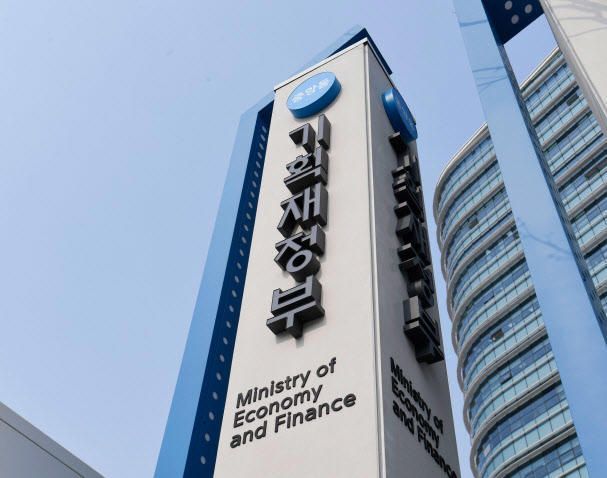
According to the "Monthly Fiscal Trends March Issue" published by the Ministry of Economy and Finance on the 13th, the cumulative managed fiscal balance as of the end of January this year recorded a surplus of 11.5 trillion KRW. This is the third time since 2017 (12.7 trillion KRW) and 2018 (12.6 trillion KRW) that the managed fiscal balance recorded a surplus on a cumulative basis in January.
Hwang Hee-jung, Director of Fiscal Soundness at the Ministry of Economy and Finance, explained, "Total expenditures decreased due to fewer business days in January, and typically January is the month when value-added tax from the fourth quarter of the previous year is collected, which resulted in a surplus." He added, "Compared to January last year, the managed fiscal balance increased by 3.2 trillion KRW, so the surplus margin is relatively large."
The managed fiscal balance excludes the four major social security funds (National Pension Fund, Private School Teachers’ Pension Fund, Industrial Accident Compensation Insurance Fund, Employment Insurance Fund) from the integrated fiscal balance and is an indicator showing the government's net fiscal situation. Together with the integrated fiscal balance, it provides a comprehensive view of the nation's finances.
Total expenditures amounted to 52.7 trillion KRW, a decrease of 3.2 trillion KRW compared to the same period last year. The expenditure progress rate (7.8%) is the lowest since monthly statistics began in 2014. The Ministry of Economy and Finance explained that total expenditures decreased because the number of business days was 18, four days fewer than the previous year, due to the Lunar New Year holiday in January.
However, when calculating the "average daily total expenditure" through efforts for prompt execution, it was 2.9 trillion KRW, an increase compared to 2.5 trillion KRW in the same period last year. Director Hwang said, "Despite the decrease in business days, the average expenditure per business day increased." The integrated fiscal balance (total revenue minus total expenditure) for January also recorded a surplus of 13.5 trillion KRW.
As of the end of January, cumulative total revenue was 66.3 trillion KRW, a decrease of 9 billion KRW compared to the same period last year. National tax revenue was 46.6 trillion KRW, an increase of 7 billion KRW compared to the same period last year. By tax type, corporate tax and income tax each increased by 7 billion KRW, while value-added tax decreased by 8 billion KRW. Non-tax revenue was 1.7 trillion KRW, a decrease of 6 billion KRW compared to the same period last year. Fund revenue decreased by 9 billion KRW to 17.9 trillion KRW during the same period.
The scale of government bond issuance in February this year was 21.3 trillion KRW. The Ministry of Economy and Finance explained that government bond yields in February declined compared to the previous month, mainly for long-term bonds, due to expectations of interest rate cuts and safe-haven demand amid uncertainties in U.S. tariff policies. The total issuance of government bonds in January and February was 39.5 trillion KRW, which is 20.0% of the annual issuance limit.
© The Asia Business Daily(www.asiae.co.kr). All rights reserved.

















