There is an analysis from the securities industry that Homeplus's application for corporate rehabilitation proceedings (court receivership) will not have a significant impact on the overall credit market, unlike the past 'Legoland incident.' Meritz Financial Group, which lent a large amount of funds to Homeplus, is also evaluated to have no problems with recovery. However, concerns have been raised that this incident could spread caution in industries experiencing sluggish business conditions, including construction.
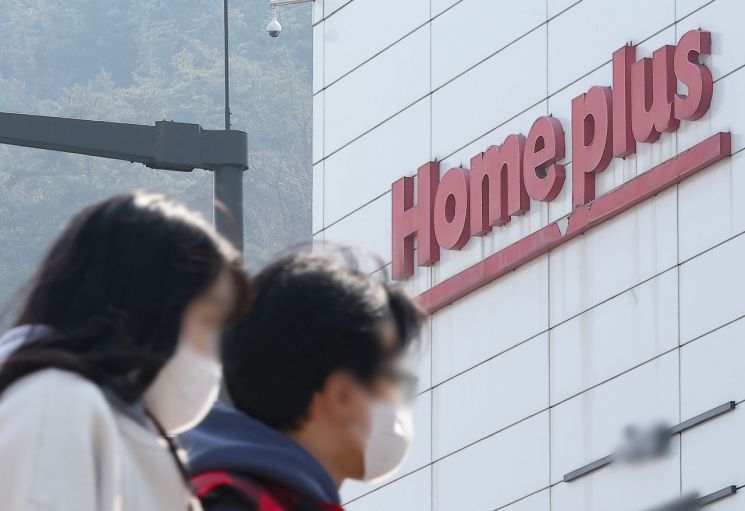
Kim Ki-myung, a researcher at Korea Investment & Securities, stated in a report titled 'Implications of Homeplus's Court Receivership Application' released on the 13th, "The possibility that Homeplus's court receivership application will affect the overall credit market is limited."
Excluding borrowings from the financial sector, the outstanding balance of financial bonds issued by Homeplus is estimated to be 570.9 billion KRW, including 169 billion KRW in commercial paper (CP) and short-term bonds, and 401.9 billion KRW in asset-backed short-term bonds (ABSTB) based on purchase-only card payments. Researcher Kim explained, "Investor damage is expected. Most of the bonds are presumed to have been sold retail to individual and corporate investors," but added, "Before the downgrade that triggered the court receivership application, the credit rating was A3 (mapped to BBB for long-term ratings), which is not a buyable grade except for high-yield funds, so institutional investors' damage will be limited."
In particular, Researcher Kim diagnosed that the impact of this situation is limited compared to the Legoland incident that shook the credit market in 2022. He said, "The Legoland incident was caused when Gangwon Province, a metropolitan local government with structurally excellent repayment ability, defaulted on its guarantee obligations for PF (Project Financing) ABCP (Asset-Backed Commercial Paper)," and explained, "Due to the unexpected default of local government guaranteed bonds, the credit bond market was inevitably shocked, with public corporation bonds such as Korea Electric Power Corporation and Korea Gas Corporation bonds also failing to be sold."
On the other hand, Homeplus's court receivership application is "an event that occurred in a non-investment grade company within a vulnerable industry," and "for institutional investors, it is not a buyable grade, so it is not an event that will affect the overall credit market," he evaluated. However, he added, "Among high-interest non-investment grade credit bonds preferred in retail, if the industry in which the issuing company like Homeplus operates is sluggish or financial stability deteriorates, caution may rise and demand could shrink."
Regarding Meritz Financial Group, which provided a secured loan with a limit of 1.3 trillion KRW to Homeplus, he also judged, "Although there is a burden of deteriorating soundness, there will be no problem in recovery." He explained, "They provided the loan by securing the first-priority preferred beneficiary rights after placing 62 Homeplus stores (appraised at 4.8 trillion KRW) in a collateral trust," and "The trust property is not subject to the Debtor Rehabilitation and Bankruptcy Act, and even after the commencement of rehabilitation proceedings, collateral rights can be exercised, and the LTV (loan-to-value ratio) is only about 25%." He continued, considering employment issues realistically during collateral disposal and other processes, "the timing of debt recovery is uncertain," and added, "Secondary delinquency is inevitable, and as the delinquency period passes, credit soundness may be classified from 'watch' to 'fixed,' increasing the burden of provisioning."
Additionally, Researcher Kim forecasted that there will be "no major problems" with Lotte Card, which is owned by Homeplus's major shareholder MBK Partners, who acquired it in 2019, despite some market caution. He evaluated, "Comparing Homeplus and Lotte Card, Homeplus prioritized repayment of acquisition financing through store sales, whereas Lotte Card is pursuing an exit through management rights sale, so there is no outflow of company resources and overall management performance is at a good level." He also said, "Due to the nature of the industry, there is considerable incentive for smaller latecomer card companies to acquire Lotte Card," and "Although the 2022 sale attempt failed, if Lotte Card is put on the market at a reasonable price, finding a buyer will not be difficult."
In this report, Researcher Kim also pointed out that caution toward industries with sluggish business conditions such as construction and petrochemicals may rise due to Homeplus's court receivership application. In the construction industry, companies such as Shindong-A Construction, Daejeo Construction, Sambu Construction, Samjeong Enterprise, Angang Construction, Daewoo Shipbuilding & Marine Engineering Construction, and Byuksan Engineering have consecutively applied for court receivership this year. He diagnosed, "The financial pressure on construction companies is likely to continue," but added, "There will be differences in the ability to cope with financial pressure between standalone companies that are unlikely to expect shareholder support and group-affiliated companies that can receive shareholder support."
© The Asia Business Daily(www.asiae.co.kr). All rights reserved.

















