In a USTR Submission on the 11th
Calls for Removal of Non-Tariff Barriers and Expanded Access to New Markets
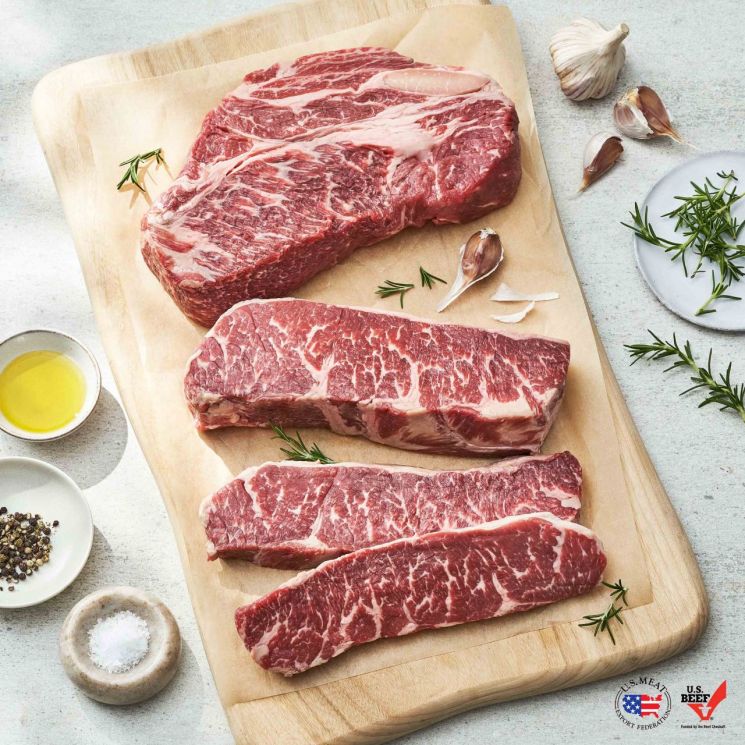
The U.S. livestock industry has urged President Donald Trump to eliminate trade barriers, including South Korea's restrictions on beef imports.
The North American Meat Institute (NAMI), based in Washington D.C., announced on the 11th (local time) that in a submission to the U.S. Trade Representative (USTR) regarding unfair trade practices by trading partners, it called for the removal of non-tariff barriers and expanded access to new markets, including the issues mentioned above.
The association cited the removal of existing beef-related restrictions under the full implementation of the Korea-U.S. Free Trade Agreement (KORUS) and the need to resolve other new issues as one of the major trade barriers. Currently, South Korea only allows imports of beef from cattle under 30 months of age. This is a result of long negotiations between the U.S. and South Korean governments in 2008 due to concerns over mad cow disease in U.S. beef.
Regarding China, it pointed out that China has not continued to implement the commitments made in the U.S.-China Phase One agreement, and there are concerns that retaliatory tariffs imposed by China are limiting the growth of U.S. meat exports.
It also highlighted issues such as Taiwan's ongoing regulations making it difficult to export U.S. beef and pork, and that trade barriers restrict access to emerging Southeast Asian markets. Additionally, it noted that policies of the European Union (EU) and the United Kingdom unfairly restrict exports of U.S. meat and poultry.
Julie Anna Potts, President and CEO of NAMI, said, "We welcome the opportunity to work with the Trump administration to promote U.S. meat, poultry, food, and agricultural trade, thereby revitalizing rural communities and supporting broad economic growth."
In the 'National Trade Estimate Report' (NTE) published last year, the USTR pointed out that although the agreement with South Korea on beef exports from cattle under 30 months was a "transitional measure," it has been maintained for 16 years, and processed meats such as ground beef patties, jerky, and sausages are still banned, indicating that import approval is effectively necessary.
The USTR collected opinions from various sectors from March 20th to the present, focusing on countries with large trade volumes and significant U.S. trade deficits. Under President Trump's directive, the USTR plans to submit a report identifying unfair trade practices by trading partners and proposing improvement measures to the President by April 1st. President Trump is expected to decide on appropriate actions, including imposing reciprocal tariffs on countries based on the report.
Meanwhile, the U.S. steel company Cleveland-Cliffs pointed out that South Korean steelmakers repeatedly dump products subsidized by their government into the U.S. market, and that South Korea's steel production capacity far exceeds domestic demand, relying heavily on exports to the U.S. It also claimed that South Korea's value-added tax system adversely affects U.S. exports and that South Korea's unfair and non-reciprocal practices cause $3.3 billion in annual damage to the U.S. economy. The company demanded that the Trump administration impose at least a 25% additional tariff on South Korean steel.
The Motion Picture Association (MPA) raised concerns about South Korea's content-related regulations. In particular, it strongly opposed the network usage fee currently being discussed in the South Korean National Assembly, stating that it could impose additional burdens on U.S. companies.
The U.S. Soybean Association and the Soybean Export Council identified South Korea as one of the major export markets and argued that the approval process for exporting genetically engineered crops is lengthy and burdensome, and that the tariff-rate quota (TRQ) procedures under the Korea-U.S. Free Trade Agreement (FTA) need improvement.
© The Asia Business Daily(www.asiae.co.kr). All rights reserved.

















