'AIMer' Recognized as Official Quantum-Resistant Cryptography for Digital Signatures
Selected in the 'KpqC Contest' for Next-Generation Security in Quantum Computing
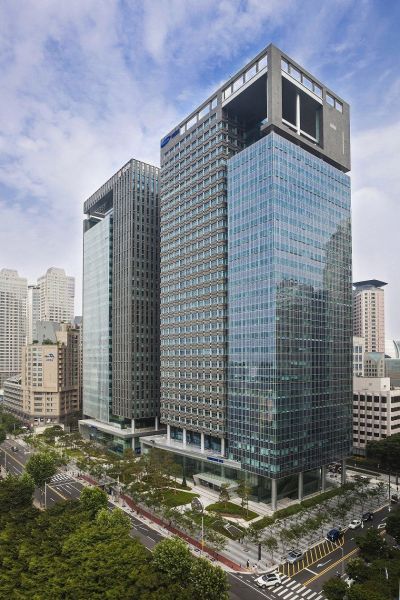
The 'AIMer' algorithm, developed through industry-academic collaboration between Samsung SDS and KAIST, has been selected as the next-generation Korean cryptographic technology. On the 11th, Samsung SDS announced that AIMer was chosen as the final algorithm in the 'Quantum-Resistant Cryptography Algorithm for Digital Signatures' category of the national competition 'KpqC Contest.'
Quantum-resistant cryptography is a more secure encryption technology developed to prepare for the possibility that future quantum computers could break current cryptographic systems. The AIMer algorithm selected this time uses a 'one-way function' method, which makes it impossible to restore the original data once encrypted, providing security even in quantum computing environments.
In particular, AIMer is 6.35 times faster and has a signature size 2.9 times smaller than FIPS 205, the quantum-resistant cryptographic standard algorithm of the U.S. National Institute of Standards and Technology (NIST), making it easily applicable to small devices such as smartphones and IoT devices.
Samsung SDS has already pilot-applied quantum-resistant cryptography to its cloud platform (SCP) and plans to expand its use further. Additionally, it is developing technology (S-CAPE) to convert existing system cryptography into quantum-resistant cryptography.
Kwon Young-jun, Head of Research at Samsung SDS (Vice President), said, "Being selected in the national competition reaffirms Samsung SDS's security technology capabilities. We will continue to apply quantum-resistant cryptography technology to cloud services to provide safer services."
© The Asia Business Daily(www.asiae.co.kr). All rights reserved.
![Clutching a Stolen Dior Bag, Saying "I Hate Being Poor but Real"... The Grotesque Con of a "Human Knockoff" [Slate]](https://cwcontent.asiae.co.kr/asiaresize/183/2026021902243444107_1771435474.jpg)















