Upgraded 62 Years After Being Designated as a Treasure in 1963
A pagoda bearing traces of a great monk from the Unified Silla period has been designated as a National Treasure. On the 11th, the Cultural Heritage Administration announced that the treasure "Gokseong Taeansa Jeokin Seonsa Pagoda" located at Taeansa Temple in Gokseong, Jeollanam-do, has been elevated to the status of a National Treasure.
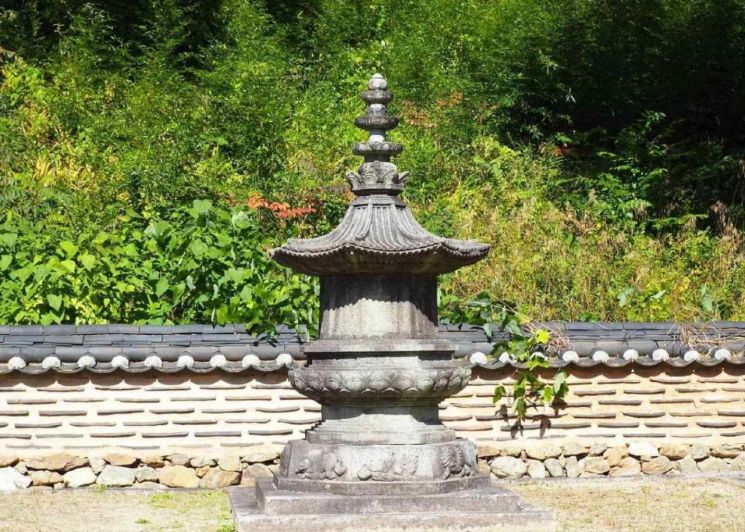
This upgrade comes 62 years after it was designated as a treasure in 1963. The Jeokin Seonsa Pagoda is a stone structure built to honor the deeds and enshrine the relics of Jeokin Seonsa Hyecheol (785?861), who established the Dongri Sanmun (桐裏山門). Dongri Sanmun was one of the nine mountain Zen sects (Gusan Seonmun) that taught Zen Buddhism during the Silla period, centered around Taeansa Temple.
The Taeansa Jeokin Seonsa Pagoda features a separately constructed pedestal assembled by fitting together several stone blocks, with carved lion statues and Four Heavenly Kings in various forms. Its overall proportions and sculptural beauty are outstanding, suggesting that it was constructed by the finest stonemasons of the time.
In particular, the roof stone (okgaeseok) modeled after the shape of wooden architecture’s roof has great artistic and technical value, realistically reproducing the eaves curves and wooden components of traditional Korean hanok houses. The four foundation stones remaining around the pedestal are also believed to be traces of a pagoda hall (tapjeon) facility for Buddhist rituals, making it the only pagoda from the Silla period known to have such a feature, thus holding significant historical and academic value.
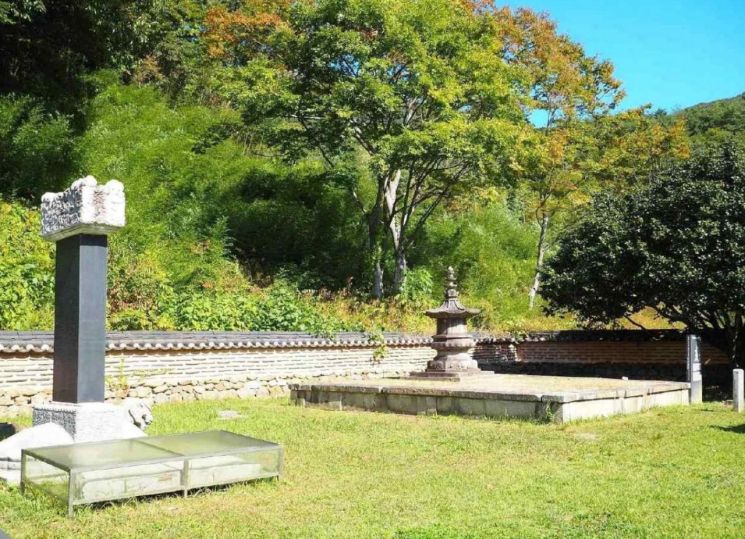
The inscription on the pagoda clearly states that it was built in 861, the year Jeokin Seonsa passed away. The Cultural Heritage Administration stated, "We will work systematically to preserve and manage it in cooperation with the owner, Taeansa Temple of the Jogye Order of Korean Buddhism, and Gokseong County."
© The Asia Business Daily(www.asiae.co.kr). All rights reserved.
![Clutching a Stolen Dior Bag, Saying "I Hate Being Poor but Real"... The Grotesque Con of a "Human Knockoff" [Slate]](https://cwcontent.asiae.co.kr/asiaresize/183/2026021902243444107_1771435474.jpg)
















