KDI Maintains Cautious Economic Outlook in March
Downside Risks Expand Amid Sluggish Construction and Weak Exports
Trade Conflicts Intensify, Heightening Global Uncertainty
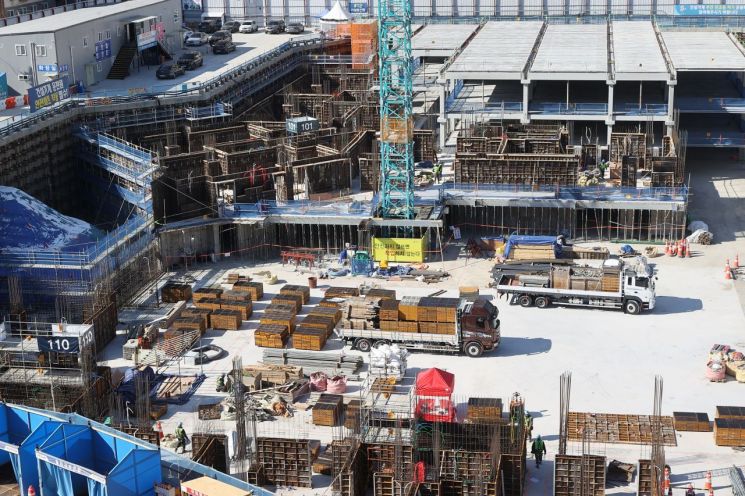
The government-funded research institute Korea Development Institute (KDI) recently assessed the economic situation, stating that "the impact of political instability is easing, but external conditions are worsening, increasing downside risks to the economy."
In the 'Economic Trends March Issue' released on the 10th, KDI noted, "Recently, our economy shows expanding downside risks due to sluggish construction and deteriorating export conditions," adding, "Trade conflicts, centered on the United States, are intensifying, raising concerns about a contraction in global trade." This assessment maintains the previous month's evaluation that "external conditions are worsening, increasing downside risks to the economy."
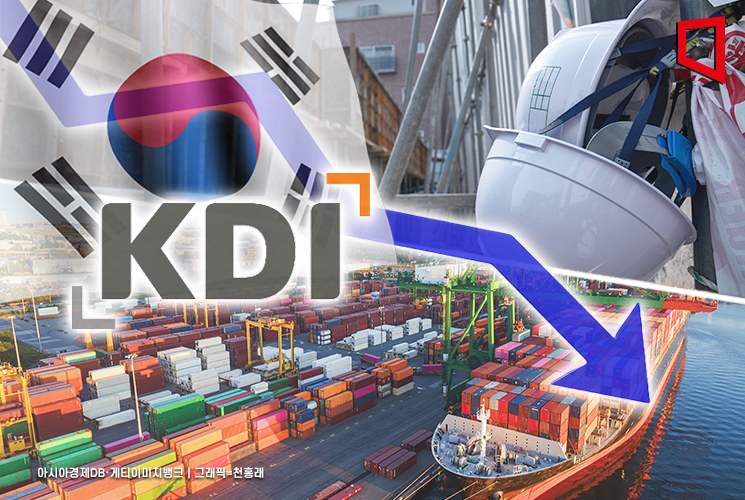
KDI continued its near-gray economic diagnosis in March following February. Although exports had supported the economy despite weak domestic demand, and production showed favorable trends, export indicators did not improve amid growing external uncertainties. The 'tariff war' triggered by the Donald Trump administration in the U.S. intensified trade conflicts, further increasing uncertainty.
KDI stated, "Manufacturing production maintained improvement centered on semiconductors, but construction investment remains sluggish, and export growth is also slowing." It also noted, "The export prices of major export items, such as semiconductors, are declining, and the impact of expanding external uncertainties has resulted in only modest export growth."
KDI paid particular attention to the continued sluggishness in construction investment. Construction production in January fell 27.3% compared to the same month last year, a much larger decline than December last year (-7.4%). This was due to a base effect from a surge in production in January last year caused by concentrated finishing works. KDI diagnosed, "The sluggishness in construction investment and construction employment continues, weakening the improvement in leading indicators."
Exports in February slowed down. On a daily average basis, the growth rate was -5.9%, lower than the previous month's 7.7%. This was influenced by falling prices of major export items such as semiconductors. The price of 128GB NAND flash dropped by 53.1%. By country, exports to China, which has a high proportion of general-purpose semiconductors, decreased by 8.2%, while exports to the U.S. also fell by 5.9%, leading to an overall export slowdown. KDI also noted, "The U.S. tariff increases may act as a downward pressure on exports going forward."
Employment conditions are also slowing. This is due to decreased labor demand in the sluggish construction and service sectors. In January, despite the government's resumption of job programs, the number of employed persons increased by only 135,000. In particular, retail and wholesale jobs, closely linked to domestic demand, decreased by 91,000, and construction jobs fell sharply by 169,000.
© The Asia Business Daily(www.asiae.co.kr). All rights reserved.
![Clutching a Stolen Dior Bag, Saying "I Hate Being Poor but Real"... The Grotesque Con of a "Human Knockoff" [Slate]](https://cwcontent.asiae.co.kr/asiaresize/183/2026021902243444107_1771435474.jpg)
















