KDCA: "Vaccination Required Before Traveling to Southeast Asia and Other Destinations"
As measles is spreading worldwide, the Korea Disease Control and Prevention Agency urged people to get vaccinated.
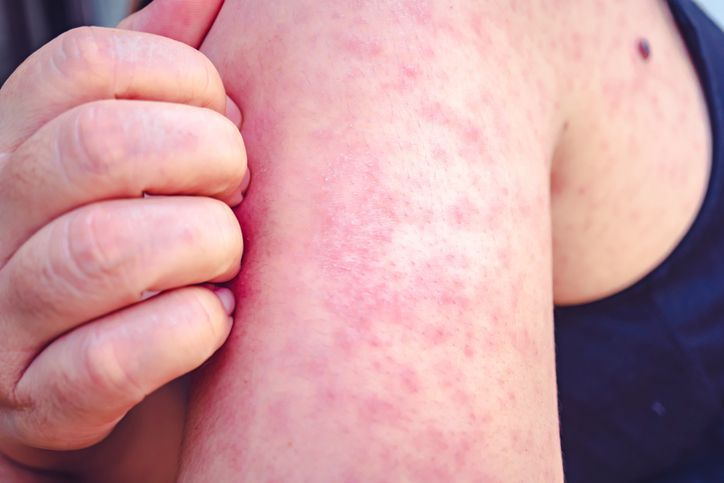
As of the 6th, 18 measles cases have been reported in South Korea. The Korea Disease Control and Prevention Agency advised, "Be sure to get vaccinated before traveling abroad, and if you experience fever or rash symptoms after traveling, suspect measles." Among the patients, 13 had visited Vietnam, a popular destination for many Koreans, and 5 contracted the disease through contact with patients domestically. Of the 13 measles patients who visited Vietnam, all but one had not been vaccinated against measles. Their stay in Vietnam ranged from 5 days to about a month and a half, and after returning, they showed symptoms such as fever, cough, and runny nose before developing a rash.
The World Health Organization (WHO) reported that as of February 11, there were approximately 330,000 measles cases worldwide, with the highest numbers in Europe, the Middle East, and Africa. Countries favored by Koreans for travel, such as the Philippines (4,001 cases), Malaysia (3,753 cases), Vietnam (2,105 cases), and China (1,026 cases), are also experiencing many cases, so it is necessary to double-check vaccination status and exercise caution.
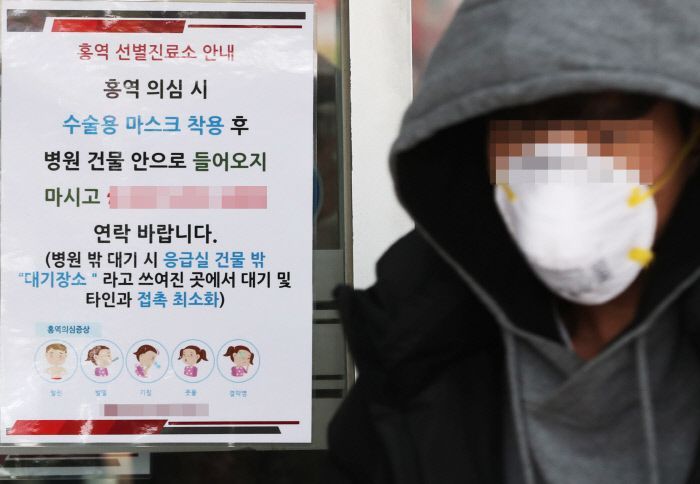 At the entrance of a hospital in Ansan-si, Gyeonggi-do, notices about measles prevention guidelines and screening clinic information are posted. Photo by Yonhap News
Measles is a highly contagious respiratory infection transmitted through the air by coughing and sneezing. Symptoms include fever, rash, and Koplik spots (gray-white spots inside the mouth). Infants under one year old with vulnerable immune systems are especially at high risk of complications such as pneumonia, otitis media, and encephalitis if they contract measles. It is advised to avoid visiting countries where measles is prevalent, and if travel is unavoidable, vaccination should be done before departure, considering the time needed to develop immunity (usually two weeks). People with insufficient immunity who come into contact with measles patients have over a 90% chance of infection. Vaccination does not guarantee 100% prevention but provides 93% protection after the first dose and 97% after the second dose. The measles vaccine (MMR) must be administered twice: once between 12 and 15 months of age and again between 4 and 6 years of age.
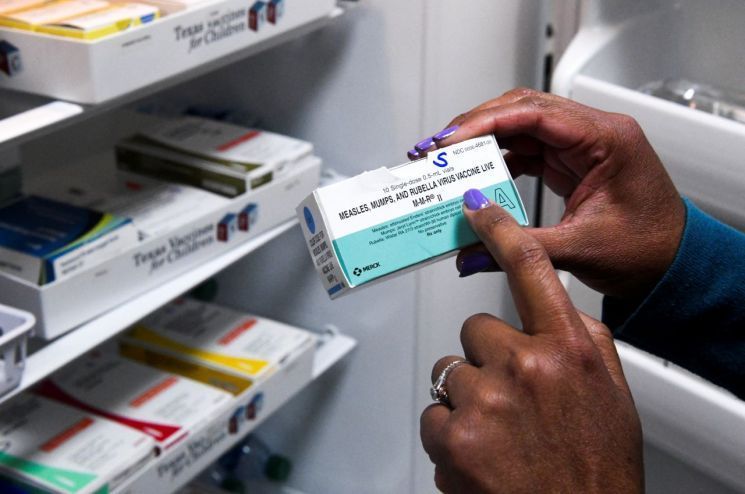 On March 6, 2025, Dr. Anna Montanes pointed to the measles, mumps, and rubella (MMR) vaccine with her finger in Lubbock, Texas, USA, where measles is spreading. Photo by Yonhap News
Meanwhile, the United States is also on alert with over 200 measles cases reported. There have been two deaths. Most measles patients are children and adolescents under 17 years old, and 96% of all patients had not been vaccinated. The deceased were also unvaccinated.
The United States had nearly eliminated measles due to high vaccination rates in the past, but in recent years, the spread of vaccine safety concerns has led to a resurgence of measles. The claim that vaccines cause autism was raised over 20 years ago but has since been scientifically and medically disproven. However, the U.S. Centers for Disease Control and Prevention (CDC) has announced plans for a large-scale study to examine the potential link between vaccination and autism, sparking controversy. Robert Kennedy Jr., the U.S. Department of Health and Human Services (HHS) Secretary, has long advocated the claim that vaccines cause autism. Additionally, Dave Weldon, a former congressman and physician nominated by President Trump as CDC director, has made similar claims.
© The Asia Business Daily(www.asiae.co.kr). All rights reserved.
![Clutching a Stolen Dior Bag, Saying "I Hate Being Poor but Real"... The Grotesque Con of a "Human Knockoff" [Slate]](https://cwcontent.asiae.co.kr/asiaresize/183/2026021902243444107_1771435474.jpg)

















