Former Governor of the Central Banks of Canada and the United Kingdom
Canada will elect its next prime minister on the 9th (local time) amid tariff threats from the U.S. Donald Trump administration.
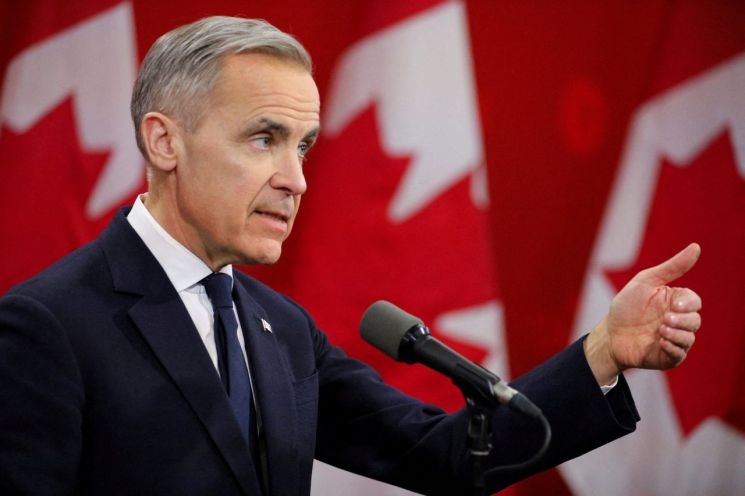
According to foreign media such as the AP News, the ruling Liberal Party of Canada will select a new leader through a secret ballot of 140,000 party members and plans to announce the results that evening. The elected leader of the Liberal Party, which forms a majority coalition in the parliament, will become Canada's new prime minister.
This election campaign began after current Prime Minister Justin Trudeau announced his intention to resign in January. The candidates for party leader include Mark Carney, former Governor of the Bank of Canada; Chrystia Freeland, former Deputy Prime Minister and Minister of Finance; Karina Gould, former Speaker of the House of Commons; and former Member of Parliament Frank Baylis.
Among the four contenders, the most likely candidate to become the next Liberal Party leader is Mark Carney, former Governor of the Bank of Canada. Carney, who previously worked at the U.S.-based global investment bank Goldman Sachs, is regarded as a leading 'economic expert' politician within the Liberal Party.
He took office as Governor of the Bank of Canada in February 2008 and is credited with relatively successfully defending against the U.S.-originated subprime mortgage crisis and the ensuing global financial crisis that intensified from September of that year. Based on this achievement, he served as chairman of the Financial Stability Board (FSB), established by the G20 agreement, and was Governor of the Bank of England from 2013 to 2020. He was the first foreigner to hold the position of Governor of the Bank of England.
Having positioned himself as the most suitable candidate to confront the Trump administration's tariff barriers and trade war, Carney has consistently maintained a lead in various opinion polls. Shortly after President Trump decided to largely exempt Canada from the '25% tariff' for about a month, he again pulled out the 'retaliatory' mutual tariff card. Mocking remarks about making Canada the 51st state of the U.S. have increased anti-American sentiment among Canadians.
Even if a new prime minister emerges from the election of the new ruling party leader, Canada is expected to quickly shift to an early general election system. Whether the Liberal Party, which has formed a coalition government without securing a majority of parliamentary seats, declares an early election or the opposition coalition submits a no-confidence motion against the cabinet, a new general election must be held.
© The Asia Business Daily(www.asiae.co.kr). All rights reserved.
![Clutching a Stolen Dior Bag, Saying "I Hate Being Poor but Real"... The Grotesque Con of a "Human Knockoff" [Slate]](https://cwcontent.asiae.co.kr/asiaresize/183/2026021902243444107_1771435474.jpg)
















