17 Metropolitan and Provincial Governments Use ChatGPT, No DeepSeek from China
Yang Bunam: "Security Measures Needed to Prevent Public Document and Information Leaks"
It has been tallied that, over the past year, local governments across the country have spent nearly 400 million won subscribing to generative artificial intelligence (AI) programs such as ChatGPT for work purposes.
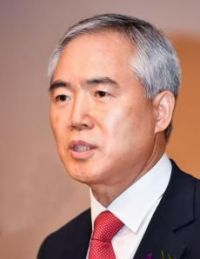
According to an analysis by Yang Bunam, a member of the Democratic Party of Korea (Gwangju Seo-gu Eul), based on data submitted by 17 metropolitan and provincial governments, local authorities spent a total of 391,686,165 won on generative AI subscription fees from January last year to January this year to support public officials' work and related tasks.
By local government, Jeju spent the most at approximately 68.71 million won, followed by Seoul (56.34 million won), Gyeonggi (46.75 million won), Jeonnam (44.54 million won), and Chungnam (43.13 million won).
The number of generative AI users in local governments was 3,687, excluding Gyeonggi Province, which stated that the figure was "not available." Chungnam had the highest number of users at 1,274, followed by Gangwon (858), Seoul (440), and Daejeon (275).
The most subscribed program was ChatGPT. The conversational AI service developed by OpenAI in the United States was reportedly used by all 17 metropolitan and provincial governments. In addition, "Claude" developed by the startup Anthropic and "Midjourney," an AI program that generates images from text prompts, were each subscribed to by five local governments.
"Gamma," which supports the creation of presentation materials and websites, was used by four local governments. Other subscribed services included "Suno," a music production tool; "Perplexity," an AI-based search service; "Naver Clova Dubbing," which converts text to speech for video synthesis; and "Bluedot," a video compression service.
Seoul and Gyeonggi subscribed to the largest number of programs, with each using 10 different services. No local government subscribed to "DeepSeek," a generative AI from China that had previously raised security concerns and led to access blocks by the central government and local authorities.
Yang stated, "While the use of generative AI has clear benefits in improving work efficiency, there needs to be a system to prevent its use for non-work purposes," adding, "As seen in the recent DeepSeek controversy, thorough management and security measures must be established to prevent the leakage of public documents or personal information."
© The Asia Business Daily(www.asiae.co.kr). All rights reserved.
![Clutching a Stolen Dior Bag, Saying "I Hate Being Poor but Real"... The Grotesque Con of a "Human Knockoff" [Slate]](https://cwcontent.asiae.co.kr/asiaresize/183/2026021902243444107_1771435474.jpg)














