35 Trillion Won in Borrowings Due for Repayment This Year
Power Infrastructure Investment Execution Rate Remains at 91%
Korea Electric Power Corporation (KEPCO) succeeded in returning to profitability last year for the first time in four years, thanks to electricity rate hikes and other factors, but its total debt increased by more than 2.7 trillion won.
According to the power industry on the 9th, KEPCO's consolidated total debt at the end of last year was recorded at 205.181 trillion won, an increase of 2.731 trillion won from the previous year, marking an all-time high. The 205 trillion won is equivalent to five times the market capitalization of Hyundai Motor Company (41.1 trillion won) as of the closing price on the 7th.
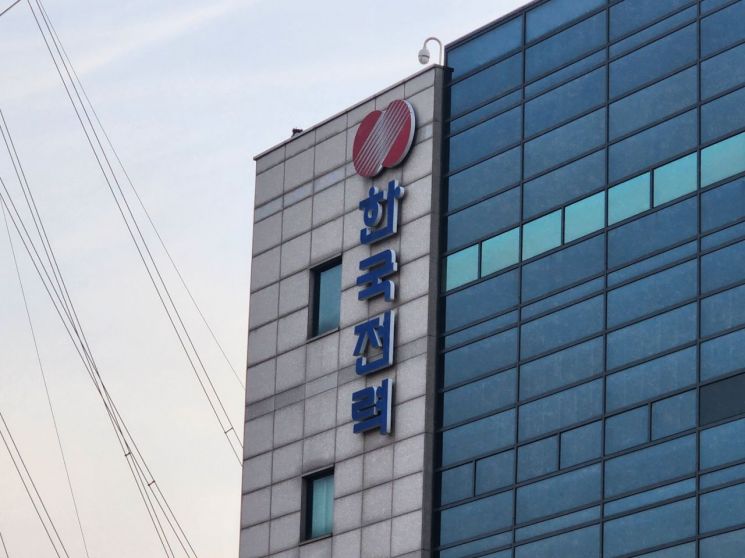
KEPCO, which posted operating losses for three consecutive years from 2021 to 2023, turned a profit last year with operating income in the 8 trillion won range. Despite this, the increase in debt was largely due to the already massive accumulated liabilities. KEPCO paid 4.45 trillion won in interest in 2023 and is estimated to have borne about 5 trillion won in interest last year alone.
Additionally, related to the completion of Shin Hanul Nuclear Power Plant Unit 2 last year, a provision liability of about 2 trillion won was newly reflected for post-nuclear power plant decommissioning and restoration, which also contributed to increasing KEPCO’s debt.
KEPCO’s severe financial crisis began in earnest as it supplied electricity below cost despite the sharp rise in international energy prices from 2021 to 2023, triggered by the Russia-Ukraine war. KEPCO posted a cumulative operating loss of about 43 trillion won during 2021-2023. Although the operating profit last year slightly reduced the deficit, the cumulative operating loss since 2021 still amounts to 34.7 trillion won, which is comparable to Naver’s market capitalization (33.7 trillion won).
Due to the shock during this period, KEPCO’s total debt, which was around 130 trillion won in 2020, surged by more than 70 trillion won by last year. Especially when excluding subsidiaries and looking only at the parent company KEPCO, most of the money earned from electricity sales is used to pay interest. On a separate basis, KEPCO posted operating income of 3.1749 trillion won last year, but net income was only 835.9 billion won after deducting non-operating expenses such as interest.
KEPCO has been unable to reduce its large-scale debt and is mostly "rolling over" its debt as it matures to survive. Of the total debt of 205 trillion won, 132.5 trillion won is borrowings raised through corporate bond issuance and other means. Among this, repayments of 35.4 trillion won and 26.1 trillion won are scheduled for this year and next year, respectively.
Concerns have been steadily raised that KEPCO’s poor financial condition will affect investment execution, including the construction of transmission and distribution networks, which are core to the national power infrastructure. In fact, KEPCO’s investment execution performance last year was 16.8 trillion won in total, including 5.4 trillion won for transmission and distribution network construction costs, achieving only 91% of the planned execution rate.
According to the 10th Long-Term Transmission and Substation Facility Plan, the total length of transmission lines in South Korea must be increased by about 1.64 times compared to 2021 by 2036, which is expected to cost approximately 56 trillion won.
© The Asia Business Daily(www.asiae.co.kr). All rights reserved.
![Clutching a Stolen Dior Bag, Saying "I Hate Being Poor but Real"... The Grotesque Con of a "Human Knockoff" [Slate]](https://cwcontent.asiae.co.kr/asiaresize/183/2026021902243444107_1771435474.jpg)















