55% of Contracts in January-February Were "Rising Transactions"
Seocho-gu Tops the List with 71%
This year, the volume of apartment transactions in Seoul has increased, and the proportion of transactions at higher prices compared to the end of last year has also expanded. The area with the highest proportion of rising transactions was Seocho-gu, accounting for more than 70%.
On the 9th, an analysis of Seoul apartment transaction cases reported to the Ministry of Land, Infrastructure and Transport's actual transaction price system, conducted together with Real Estate R114, showed that 55% of apartments contracted between January and February this year and reported by the 7th of this month were sold at prices higher than those of transactions in November-December last year. This represents a 5 percentage point increase compared to the 50% proportion of rising transactions in November-December compared to October-November last year, based on the same criteria.
Prices were compared by analyzing the average actual transaction prices for each period when at least one transaction occurred for the same housing type during the survey periods.
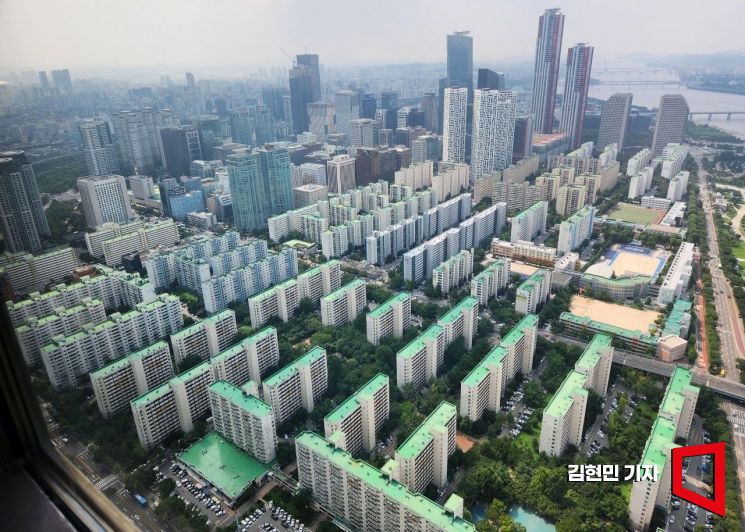
The Seoul apartment sales market saw a decline in transaction volume and prices last year as commercial banks suppressed mortgage loans and jeonse loans under the pretext of managing household debt. However, this year, with commercial banks resuming loans and Seoul Mayor Oh Se-hoon announcing the lifting of land transaction permit zones in the Gangnam area in mid-January, the upward trend in apartment prices is spreading from Gangnam to other areas. Last month’s Bank of Korea base rate cut has also contributed to price increases through lower loan interest rates.
Among districts, Seocho-gu had the highest proportion of rising transactions. In January and February, 71% of transactions in Seocho-gu were at prices higher than those of the previous two months. Except for rapid integrated planning reconstruction complexes, general apartments in Seocho-gu are excluded from the land transaction permit zone, leading to soaring actual transaction prices centered on new riverside complexes such as Banpo Raemian One Bailey. The proportion of rising transactions was 63% in November-December last year compared to the previous two months, but it has expanded this year.
Following Seocho, the districts with the second highest proportions of rising transactions were Gwanak-gu at 69%, Gwangjin-gu (68%), Mapo-gu (65%), Jung-gu (64%), Songpa-gu (63%), and Gangnam and Seongdong-gu (58%).
In contrast, some northern districts including Nodogang (Nowon, Dobong, Gangbuk-gu) saw increased transaction volumes in February, but mainly through urgent sales below market prices, resulting in relatively low proportions of rising transactions. Nowon-gu had the lowest proportion of rising transactions this year at 40% among the 25 districts, followed by Seongbuk and Geumcheon-gu (43%), Eunpyeong-gu (43%), Dobong-gu (48%), and Dongdaemun-gu (49%), all below half.
Currently, with a surge in transaction reports following the lifting of the land transaction permit system in February, the proportion of rising transactions is likely to increase further. As of the 9th, the number of reported apartment transactions in Seoul for February (based on contract dates) totaled 3,859, surpassing both January’s volume (3,327) and October last year (3,844). If this trend continues, February’s transaction volume could mark the highest in six months since August last year (6,535), before the implementation of the second-stage stress DSR (Debt Service Ratio).
Yoon Ji-hae, senior researcher at Real Estate R114, said, "Due to positive factors such as the lifting of the land transaction permit zone in Gangnam, popular areas like the three Gangnam districts and 'Mayongseong' have seen many transactions at prices higher than previous deals this year. However, northern areas like Nodogang, which had accumulated urgent sales due to last year’s loan restrictions, have seen transactions starting with cheaper properties this year, resulting in a relatively low proportion of rising transactions."
Meanwhile, as apartment prices have risen this year, the proportion of direct transactions has decreased. The proportion of direct transactions in Seoul apartments increased to 6% in November and 11% in December last year due to the second-stage stress DSR implementation and loan restrictions by commercial banks, which increased urgent sales and lowered prices. However, it decreased to 3% in both January and February this year. Direct transactions are contracts made directly between individuals or corporations without intermediaries, often for low-priced transfers with gift purposes. Under current inheritance and gift tax laws, if the reported price does not deviate beyond the lesser of 30% below the recent three-month actual transaction price or 300 million KRW, it is considered a normal transaction and gift tax is not imposed.
© The Asia Business Daily(www.asiae.co.kr). All rights reserved.
![Clutching a Stolen Dior Bag, Saying "I Hate Being Poor but Real"... The Grotesque Con of a "Human Knockoff" [Slate]](https://cwcontent.asiae.co.kr/asiaresize/183/2026021902243444107_1771435474.jpg)















