“Cryptocurrencies Deemed 'Digital Gold'... Strategic Stockpiling of Bitcoin Announced”
Conflict of Interest Controversy... Allegations of Trump Family Involvement in Cryptocurrencies
U.S. President Donald Trump has instructed the strategic stockpiling of cryptocurrencies, drawing attention to whether virtual assets, which have so far remained outside the institutional framework, will become official assets of the U.S. government. This move has sparked analysis suggesting both questions about its effectiveness and underlying political motives.
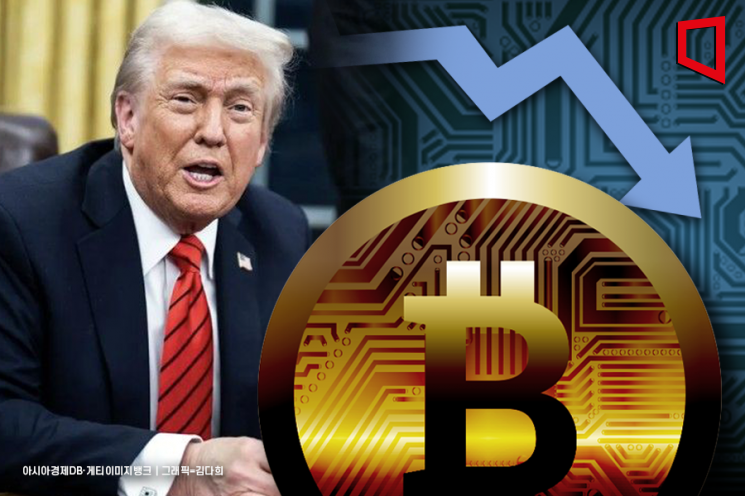
On the 6th (local time), the Trump administration referred to cryptocurrencies as "digital gold," emphasizing their role as a store of value. David Sacks, the White House AI and cryptocurrency czar, stated on X (formerly Twitter) that "the government will never sell the cryptocurrencies it stocks, and they will serve to preserve value."
He added that the stockpiled cryptocurrencies will be strictly managed like the U.S. gold repository "Fort Knox," and that Bitcoin (BTC), Ethereum (ETH), Ripple (XRP), Solana (SOL), and Cardano (ADA) have been designated as strategic reserves. This could be interpreted as a government-level move to recognize virtual assets as a kind of reserve currency.
However, some assessments argue that this falls short of a substantive change. The Trump administration is not allocating a separate budget to directly purchase cryptocurrencies but is only stockpiling assets seized during criminal investigations. Currently, the U.S. government holds about 200,000 Bitcoins, valued at approximately 25 trillion won. Compared to the amount of gold held in the global financial market, this is a negligible amount, and there are limitations to rapidly increasing the stockpile.
Despite the news of the government's strategic stockpiling, market reactions have been disappointing. When the U.S. government announced it would not directly purchase cryptocurrencies, Bitcoin prices briefly plunged by 5%, falling below $85,000 (about 123 million won) per coin, before partially recovering to around $88,000.
Charles Edward, founder of Bitcoin-focused hedge fund Capriol Investment, described the announcement as "a disappointing result far below expectations," adding, "If the government does not actively buy, this is merely renaming existing holdings."
On the other hand, the cryptocurrency industry responded positively. J.P. Richardson, CEO of Exodus Movement, said, "This will be a turning point for the cryptocurrency industry," noting, "Unlike the Biden administration, which was hostile to cryptocurrencies, the Trump administration is showing a policy move to recognize this market."
There is also analysis suggesting that political calculations underlie President Trump's push to promote cryptocurrencies. While the Democratic Party has been tightening cryptocurrency regulations following the FTX scandal, President Trump is pursuing a strategy to attract large capital from the industry through pro-virtual asset policies.
In fact, although President Trump was skeptical of cryptocurrencies during his first term, he actively changed his stance during last year's presidential campaign to gain industry support. In July last year, he proposed a Bitcoin strategic reserve at a Nashville rally, and shortly after taking office this year, he issued an executive order to investigate the feasibility of a cryptocurrency strategic reserve. On the 7th, the White House plans to hold its first "Cryptocurrency Summit."
Bloomberg News evaluated, "The announcement just before President Trump invited about 20 cryptocurrency industry executives to the White House is tantamount to giving them a gift."
Whether the cryptocurrency strategic reserve promoted by President Trump will be effective remains uncertain, but there are criticisms that it is politically motivated, along with emerging conflicts of interest.
President Trump's sons have ties to cryptocurrency-related companies, and the operator of Truth Social, the social media platform founded by Trump, has invested significant assets in cryptocurrencies. Earlier this year, President Trump and his wife released "meme coins" named $TRUMP and $MELANIA, sparking controversy.
Moreover, it cannot be ruled out that President Trump might change his stance in the future and pursue a policy of directly purchasing cryptocurrencies at the government level. However, concerns have been raised that such a move could result in enormous profits for specific cryptocurrency holders.
It remains uncertain whether the current cryptocurrency strategic reserve policy will bring tangible benefits to the American people or simply serve as a political show by the Trump administration.
The Financial Times (FT) pointed out, "President Trump has earned at least $350 million (about 500 billion won) from his meme coins," noting that "such conflicts of interest will further intensify controversies surrounding the cryptocurrency strategic reserve policy."
© The Asia Business Daily(www.asiae.co.kr). All rights reserved.

















