Blow Comes Right After 5% Growth Target Announcement
US Tariffs Expected to Have Full Impact
China's export growth rate for January-February this year has slowed significantly more than expected, making the impact of the US-China trade war more visible.
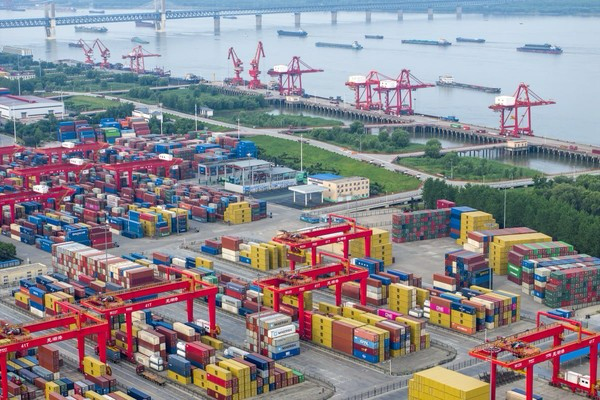
According to the General Administration of Customs of China on the 7th, China's export value for the first two months of this year was $539.94 billion (approximately 780 trillion won), marking only a 2.3% increase compared to the same period last year. This figure is a sharp decline from last year's growth rate during the same period (7.1%) and December of last year (10.7%), and it fell short of Reuters' (5%) and Bloomberg's (5.9%) forecasts.
As trade tensions with the United States reignited, China's exports to the US also increased by only 2.3%. This is a significant slowdown compared to the same period last year (5.0%) and December (15.6%). Experts analyzed that a greater impact is expected from next month when the effects of additional US tariffs will be fully reflected.
Not only exports but imports also showed a declining trend. Imports for January-February amounted to $369.43 billion (approximately 534 trillion won), down 8.4% year-on-year, marking the largest decrease since July 2023. The main causes were identified as the delayed recovery of China's real estate market and a slowdown in domestic demand, which reduced import demand.
Gary Ng, Chief Economist at Natixis, told SCMP, "The recovery of China's real estate market has been slow, government infrastructure support has been limited, and expensive foreign products have been replaced by Chinese-made products, leading to a decrease in import volumes."
Despite this trend, China's trade surplus expanded to $170.5 billion (approximately 246 trillion won), up from $125.1 billion during the same period last year. By region, trade with the United States and ASEAN increased, while trade with the European Union (EU), South Korea, and Russia decreased.
Meanwhile, the People's Bank of China, the country's central bank, increased its gold reserves for the fourth consecutive month to prepare for economic uncertainties. As of the end of February, gold reserves stood at 73.61 million ounces (approximately 2,289.53 tons), up 160,000 ounces (about 4.98 tons) from the previous month.
Experts forecast that amid ongoing US-China trade tensions, China's exports will face greater damage starting next month when the additional US tariffs begin to have a full impact.
© The Asia Business Daily(www.asiae.co.kr). All rights reserved.

















