Eight Out of Ten Adults Are Interested in Healthy Diets
Gluten-Free Foods as an Alternative
Seven Out of Ten Say "I Have Tried Them"
As interest in health management and healthy foods continues to rise, it has been found that general consumers increasingly recognize that while they want a healthy life, they cannot give up the pleasure of eating. As a result, preferences for 'gluten-free' foods made from grains other than wheat, such as rice, corn, and potatoes, are also increasing.
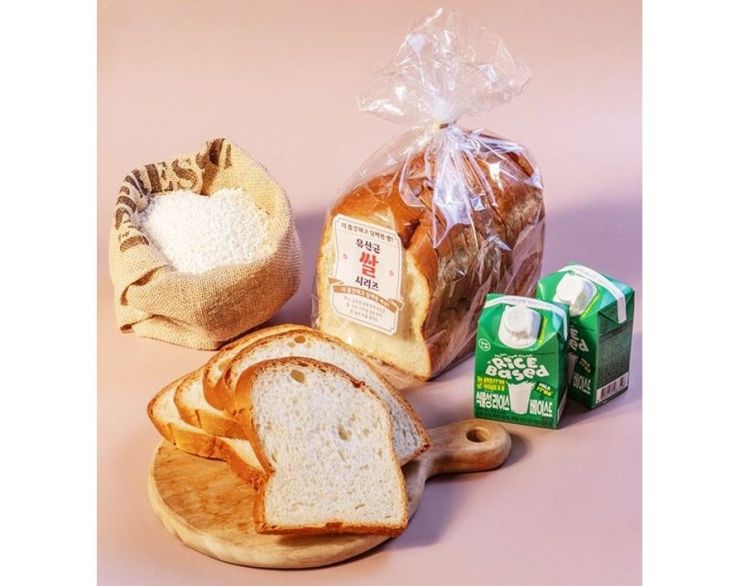 Shinsegae Food's 'Lactic Acid Bacteria Rice Bread' made by kneading dough with gluten-degrading probiotics
According to a gluten-free food survey conducted by market research firm Embrain on June 7, targeting 1,000 adult men and women aged 19 to 69 nationwide, 76.1% of all respondents said they are very interested in health management.
For health reasons, 68.1% answered that they 'restrain salt, sugar, etc. as much as possible,' and 62.0% said they 'need to give up what they want to eat,' indicating that they consider maintaining healthy eating habits important. As attitudes toward managing health in daily life become clearer, 66.8% responded that a healthy diet is necessary to maintain physical balance.
However, despite valuing the importance of a healthy diet, the perception that they cannot give up delicious food was prominent. 71.1% agreed that 'these days, it is possible to manage health while eating sufficiently tasty food,' and 65.7% believed that 'for health, you can eat what you want deliciously and exercise hard.' This suggests a strong tendency to reduce the burden of health management and maintain it by balancing both taste and health. Consequently, preferences for foods that satisfy both taste and health, such as low-calorie foods (45.5%, multiple responses allowed), low-sugar foods (45.3%), and low-sodium foods (39.1%), were also high.
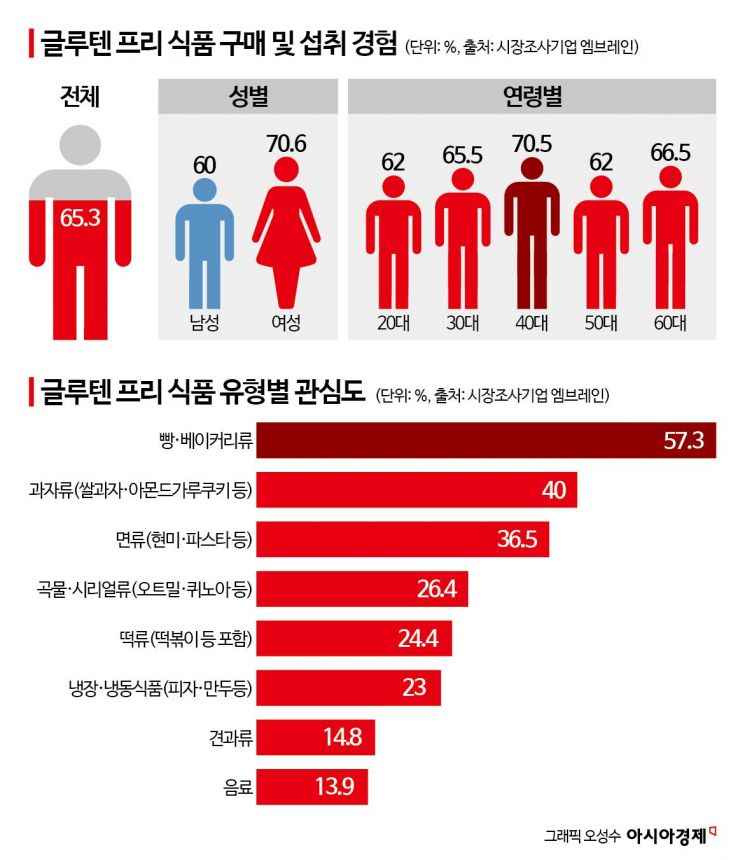
As the tendency to prefer both health management and the pleasure of eating becomes clearer, interest in gluten-free foods is also increasing. Gluten-free foods are made from grains other than wheat, such as rice, corn, and potatoes, and 65.3% of respondents said they have purchased or consumed gluten-free foods.
Interest was especially higher among women (70.6%) than men (60%), and more than 70% of people in their 40s had experience purchasing gluten-free foods. The main reasons for purchasing and consuming gluten-free foods were 'because it seems to help with health management' (46.9%), followed by 'because it seems healthier than regular foods' (31.4%) and 'because it seems helpful for dieting' (22.4%).
Among types of gluten-free foods, interest was highest in bread and bakery products at 57.3%, followed by snacks (40.0%) and noodles (36.5%), showing high interest in foods with reduced carbohydrate content. Since excessive carbohydrate intake can cause problems such as weight gain and increased blood sugar levels, gluten-free foods appear to be preferred as alternative foods to control this.
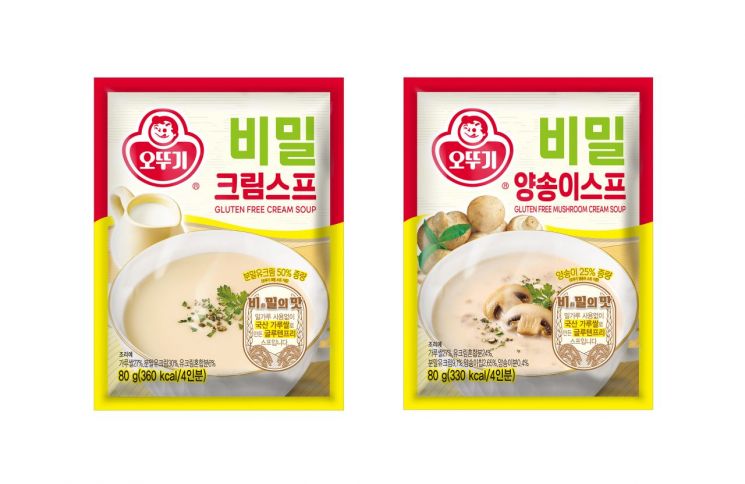
As gluten-free foods act as an element that provides reassurance beyond a simple diet choice by helping maintain health, consumer demand for related products is likely to increase further in the future. In fact, 76.0% of all respondents said they intend to purchase gluten-free foods in the future, and 61.3% said they would be interested in products with a gluten-free option if the product is the same.
However, since the variety of gluten-free foods in Korea is still limited compared to North America and Europe, there were strong voices saying 'the variety of gluten-free foods needs to increase in the future (70.7%)' and 'there should be more gluten-free foods that combine taste and health (67.3%),' confirming that the importance of product diversification is highly valued.
© The Asia Business Daily(www.asiae.co.kr). All rights reserved.
![Clutching a Stolen Dior Bag, Saying "I Hate Being Poor but Real"... The Grotesque Con of a "Human Knockoff" [Slate]](https://cwcontent.asiae.co.kr/asiaresize/183/2026021902243444107_1771435474.jpg)

















