Deputy Minister Lut Issues Statement on Position
Concerns Over Possible Chinese Retaliation... Impact on Thai Livelihoods Feared
The Thai government has defended its recent forced repatriation of Uighurs to China, which has drawn international criticism, as the best choice for national interests.
According to Yonhap News Agency's report on the 7th citing Reuters, Lut Charichan, Deputy Foreign Minister of Thailand, stated in a press release the previous day, "Sending Uighurs to a third country could face Chinese retaliation that may affect the livelihoods of many Thais," adding that "repatriation to China was the 'best choice.'"
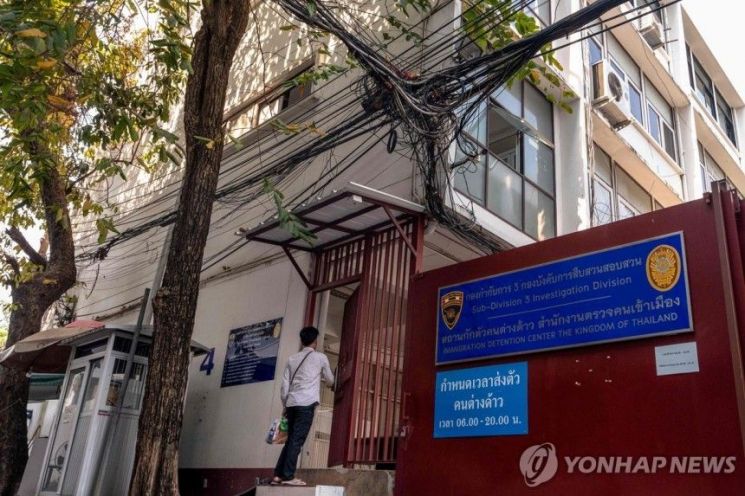
Deputy Minister Lut revealed that some countries had offered to accept Uighurs detained in Thailand. This marks a change from the Thai government's previous stance, which denied any third-country acceptance offers.
However, he said, "Such offers are unrealistic because sending Uighurs to a third country would not protect Thailand from potential problems with China."
He did not disclose which countries proposed resettlement of the Uighurs, nor did he specify the retaliatory measures China might take.
Earlier, Reuters reported that the United States, Canada, and Australia had expressed willingness to accept Uighurs. However, on the 5th, it was reported that Thailand did not respond due to concerns about angering China.
In this regard, Prawit Wetchayachai, Deputy Prime Minister and Minister of Defense of Thailand, stated that no third country had officially declared willingness to accept the Uighurs. Thai authorities forcibly repatriated 40 Uighurs, who had been detained for 11 years, to China on the 27th of last month.
These individuals are part of over 300 Uighurs who were caught in Thailand while attempting to seek asylum in Turkey after fleeing China in 2014. Thailand forcibly repatriated 109 of them to China the following year and sent 173 to Turkey.
The Uighurs are a Muslim minority primarily residing in the Xinjiang Uygur Autonomous Region of China. Western countries, including the United States, and human rights organizations that have accused China of persecuting the Uighurs have condemned the Thai government, stating that the Uighurs returned to China face danger.
Tourism accounts for a significant portion of Thailand's economy, with foreign tourists' spending making up about 12% of the country's gross domestic product (GDP). Among the approximately 35 million foreign visitors to Thailand last year, 6.7 million were Chinese, the largest group. Amid the trade war with the United States, as companies relocate production bases from China to Southeast Asia, Chinese investment in Thailand, especially in electric vehicles and electronics, is also increasing.
© The Asia Business Daily(www.asiae.co.kr). All rights reserved.
![Clutching a Stolen Dior Bag, Saying "I Hate Being Poor but Real"... The Grotesque Con of a "Human Knockoff" [Slate]](https://cwcontent.asiae.co.kr/asiaresize/183/2026021902243444107_1771435474.jpg)











