After Lifting Land Transaction Permit System, "Price Boosting" Emerges
Songpa-gu Rises 0.68% in Just One Week
Concerns Grow Over "Market Anxiety"
The rise in apartment prices in the Gangnam area of Seoul has accelerated. Since the lifting of the land transaction permit zone, prices have steadily increased, with the weekly rise rate in Songpa-gu, Seoul, reaching the highest level in over seven years since February 2018. Due to previous restrictions such as mandatory residence, transactions were difficult, but with the removal of the permit system, demand for apartments surged instantly through gap investments and relocations, driving prices up. However, both the Seoul city government and related authorities have a strong sentiment of "let's wait and see," so this upward trend is expected to continue for some time.
According to the weekly apartment price trend data released by the Korea Real Estate Board on the 6th, as of the 3rd of this month, apartment prices in Seoul rose by 0.14%. This is an increase from the previous week's 0.11%, showing an expanding rise. While apartment prices fell mainly in local areas such as Daegu-Gyeongbuk and Busan-Gyeongnam, the nationwide average recorded a slight decline of 0.01%.
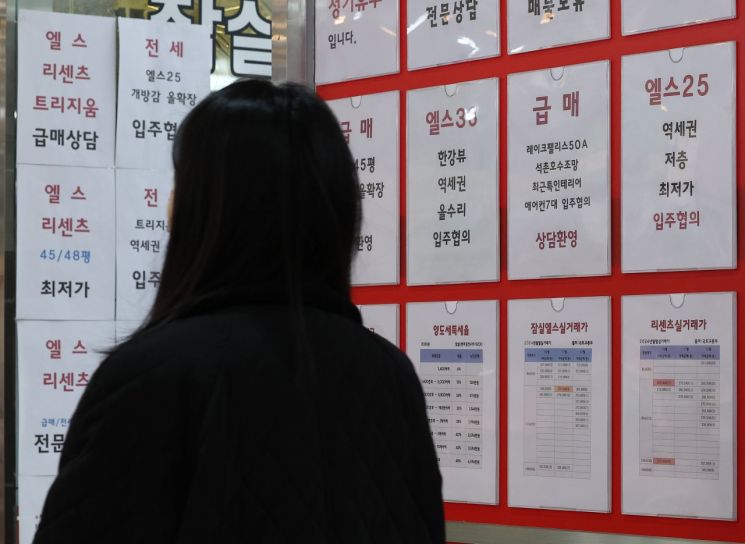 An information notice related to real estate sales is posted at a real estate office in Songpa-gu, Seoul. Yonhap News
The increase was most pronounced around the Gangnam area of Seoul. Songpa-gu rose by 0.68% in just one week, marking the largest increase since February 2018. The cumulative increase compared to the beginning of the year reached 2.08%, contrasting with the slight decline during the first two months of last year.
Seocho-gu (0.49%) and Gangnam-gu (0.52%) showed similar trends. The southeastern Seoul area, including Gangdong-gu, recorded a rise of 0.48%. Significant increases were centered around Jamsil and Sincheon-dong, Cheongdam and Apgujeong-dong, Banpo and Jamwon-dong. These areas were previously designated as land transaction permit zones, making sales difficult.
The Real Estate Board explained, "In major preferred complexes, asking prices have risen, leading to contracts at higher prices," and "while some regions or complexes show buyer hesitation, the overall upward trend in Seoul has continued."
In the Gyeonggi area, except for some regions such as Gwacheon and Suji in Yongin, the general trend is downward. Incheon fell by 0.03% compared to the previous week. In local areas, prices continued to decline, especially centered around the five major metropolitan cities.
An expert who wished to remain anonymous analyzed, "The interest rate cuts have increased investment capacity, combined with a learning effect that house prices will rise if the regime changes after impeachment, and concerns about supply reduction over the next 2-3 years, all of which seem to have stimulated market anxiety."
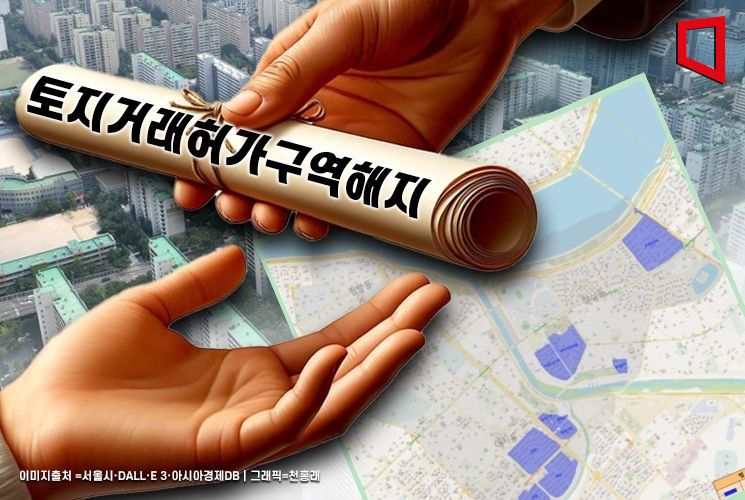
As signs of housing price instability were detected mainly in the Gangnam area of Seoul, authorities also took action. However, there is some discrepancy with the on-site atmosphere. Seoul City released an analysis on the 28th of last month, after reviewing transaction details in major areas since the lifting on the 12th, stating that while transaction volume increased, average prices fell. Although asking prices rose in some large complexes, the gap between desired purchase prices and asking prices was large, so actual transactions were not frequent.
Additionally, the Real Estate Market and Supply Situation Monitoring Task Force, composed of vice ministers from central government ministries and the Seoul city vice mayor, agreed at a meeting on the 5th to "thoroughly monitor the housing market situation and respond strictly to market disruption activities." They plan to conduct planned investigations throughout the first half of this year to prevent false reporting and submission of false data, while conducting on-site inspections in major Seoul areas including Gangnam.
Park Won-gap, Senior Real Estate Specialist at KB Kookmin Bank, said, "Since urban housing has actual residence demand, even if designated as a land transaction permit zone, the price decline effect is not significant, and it was reasonable to assume a similar reaction when the zone was lifted." However, he added, "The market's interpretation of the policy is completely different." While individuals may selectively accept information that suits their preferences and judge it rationally, at the crowd level, this can lead to irrational trends, and he believes that this is currently unfolding.
© The Asia Business Daily(www.asiae.co.kr). All rights reserved.
![Clutching a Stolen Dior Bag, Saying "I Hate Being Poor but Real"... The Grotesque Con of a "Human Knockoff" [Slate]](https://cwcontent.asiae.co.kr/asiaresize/183/2026021902243444107_1771435474.jpg)
















