① Let the State Shoulder the Burden of Caregiving Expenses
② Build Residential Infrastructure for Caregiving-Vulnerable Groups
③ Introduce a 24/7 Day and Night Caregiving System
④ Turn Caregiving Jobs into Quality Employment
Gyeonggi Province Governor Kim Dong-yeon proposed the introduction of a ‘National Caregiving Responsibility System’ in which the state takes responsibility for caregiving expenses.
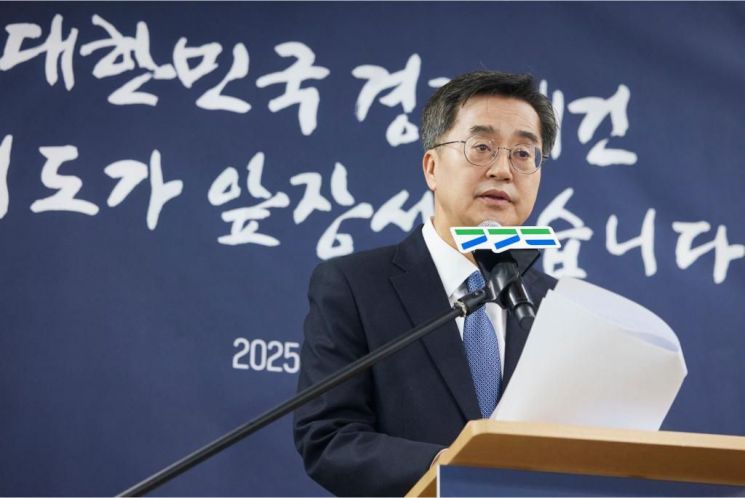
On the 7th, at Gyeonggi Provincial Office during the ‘Vision Presentation for a World Without Caregiving Worries: National Caregiving Responsibility System,’ Governor Kim said, "Care is a fundamental duty of the state to protect the lives of its citizens," and criticized, "However, the Yoon Seok-yeol administration has driven the people into a survival-of-the-fittest jungle, let alone providing care."
He particularly pointed out, "The promise to create a ‘country without caregiving expense worries’ was just words," adding, "Over the past two years, the integrated nursing and caregiving service has not progressed beyond the ‘pilot project,’ and the caregiving system centered on spinal diseases or rehabilitation wards has not provided practical help to severely ill patients."
He then stated, "Starting this year, Gyeonggi Province will launch the ‘Caregiving SOS Project,’ the first of its kind by a local government," and explained, "We aim to share the burden of care in our society by supporting caregiving expenses up to 1.2 million KRW per person annually."
Governor Kim proposed the ‘Four Major Strategies for the National Caregiving Responsibility System’ on this day.
First, he argued, "The burden of caregiving expenses must now be borne by the state," and said, "‘Caregiving benefits’ should be included in the National Health Insurance medical benefits, caregiving expenses should be gradually covered by insurance, and support should be provided according to the patient’s level of need to reduce the caregiving expense burden on patients and their families."
He also said, "The ‘Integrated Nursing and Caregiving Wards’ should be significantly expanded, allowing their operation in all wards from tertiary general hospitals to general hospitals, and increasing beds where professional nursing staff can provide care to reduce individual caregiving expenses," explaining, "Utilizing the accumulated 30 trillion KRW in health insurance reserves, it is already possible to expand integrated nursing and caregiving wards sufficiently."
Governor Kim also emphasized the establishment of residential infrastructure for caregiving-vulnerable groups.
He said, "There are 1.83 million elderly people who have difficulty with daily living living with us. It is necessary to improve their living environment so they are not left in inconvenient housing conditions," and proposed, "Let’s renovate 800,000 houses to remove stairs and thresholds, and expand more than 200,000 ‘Shared Caregiving Support Housing’ units at half price that can be sufficiently afforded with national pension and basic pension benefits."
Shared Caregiving Support Housing is a communal residence where an elderly individual or couple lives in an independent space, and a caregiver resides 24/7 to provide care.
Governor Kim also mentioned the introduction of a 24/7 caregiving system.
He said, "Let’s expand 1,000 day and night care facilities by 2028. There should be more care facilities operating 365 days regardless of day or night. The short-term care usage days for elderly long-term care recipients should also be significantly increased from the current 9 days to 20 days," and added, "We need to establish a ‘24-hour emergency care hotline’ and a ‘home medical care network.’"
Furthermore, he said, "A system must be in place so that primary doctors and emergency medical staff can visit immediately in emergencies," and added, "Let’s build a ‘Smart Caregiving System’ that can reduce the burden of care."
Governor Kim also emphasized, "Although there is high demand for caregiving care, the treatment is poor. As of 2022, two out of three caregivers are insecure non-regular workers, receiving a low monthly wage of 1.2 million KRW while working in an excessive labor environment," and stressed, "To provide high-quality caregiving services, the wages and treatment of caregivers must be improved, and the state should lead the training and management of care workers."
© The Asia Business Daily(www.asiae.co.kr). All rights reserved.
![Clutching a Stolen Dior Bag, Saying "I Hate Being Poor but Real"... The Grotesque Con of a "Human Knockoff" [Slate]](https://cwcontent.asiae.co.kr/asiaresize/183/2026021902243444107_1771435474.jpg)















