Debate Hosted by Lim Kwang-hyun
Earned Income Tax Revenue Up by 61 Trillion KRW in Four Years
Basic Deduction Adjustment Expected to Cost 1.9 Trillion KRW
"Concerns Raised Over Reduced Fiscal Policy Flexibility"
At a debate hosted by the Democratic Party of Korea, a proposal was made to raise the personal basic deduction amount for income tax from the current level of 1.5 million KRW to a maximum of 1.8 million KRW.
On the 6th, Chae Eun-dong, a research fellow at the Democratic Research Institute, stated at the "Policy Debate on Seeking Rationalization of Taxation through Income Tax Inflation Indexation," held at the National Assembly under the supervision of Democratic Party lawmaker Lim Kwang-hyun, "It is necessary to increase the basic deduction to adjust the rising income tax burden ratio due to inflation."
Researcher Chae explained, "While the personal basic deduction for income tax has been fixed at 1.5 million KRW for 16 years, the Consumer Price Index increased by 40%, from 85.4 points in January 2009 to 115.7 points in January 2025," adding, "Considering the 40% increase in the price index over 15 years, a deduction amount of around 2.1 million KRW would be appropriate, but given the difficult fiscal environment, 1.7 to 1.8 million KRW is reasonable."
Assuming a deduction amount of 1.7 million KRW, the annual fiscal cost was estimated at 1.5 trillion KRW for earned income tax and 2 trillion KRW for comprehensive income tax. Researcher Chae explained, "Since the income deduction structure benefits increase with the number of people eligible for the basic deduction and vary according to the applicable tax rate, it is advantageous for families with more members and higher income."
Along with raising the basic deduction, Researcher Chae also proposed strengthening tax incentives for health promotion and expanding the monthly rent tax credit. He advised, "The ratio of health-related taxes to GDP in Korea was 0.4% in 2022, which is half the OECD average of 0.74%, ranking fifth lowest among 38 OECD countries, indicating a tax system that is not health-friendly. It is necessary to operate the tax credit for sports facility use (with a 5% deduction rate) independently by applying income deductions as tax credits."
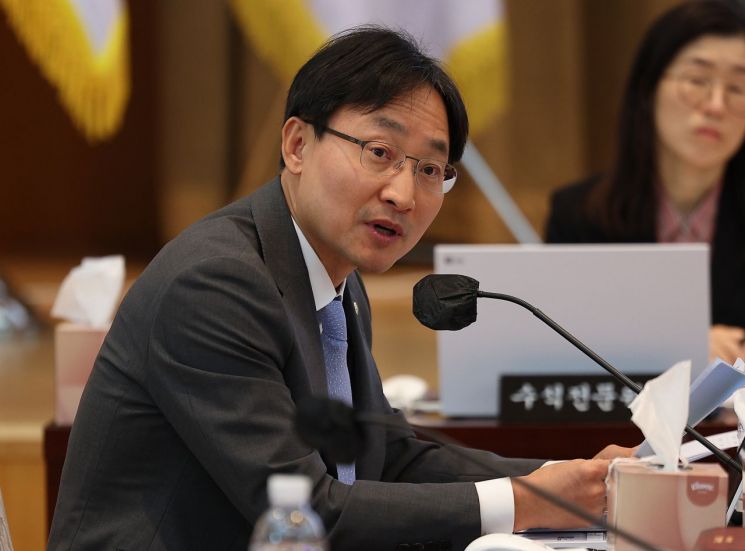
Concerns were also raised about the potential reduction in fiscal flexibility due to decreased income tax revenue. Lim Jae-beom, an investigator at the National Assembly Legislative Research Office, pointed out, "The introduction of an inflation indexation system can be considered as a measure to alleviate the real tax burden increase on taxpayers by reflecting inflation in income tax. However, if such a system is introduced, the proportion of income tax-exempt taxpayers may increase further, potentially undermining vertical equity and reducing tax revenue, which could constrain fiscal policy flexibility." He emphasized the need to comprehensively assess the appropriate level of income tax burden, including effective tax rates by income level.
Professor Kim Hyun-dong of the Department of Business Administration at Paichai University stressed, "Considering the repeatedly downward economic growth forecasts for Korea and the impact of the Trump administration's trade policies, it is essential to consider the effects on fiscal revenue, such as tax revenue shortfalls."
Lim Kwang-hyun, the lawmaker who chaired the debate, said, "Compared to the total increase in earned income tax revenue over the past 16 years and the 61 trillion KRW increase in earned income tax revenue over the last four years, although a 19 billion KRW reduction in tax revenue will occur due to the adjustment of the basic deduction, I believe it is a necessary adjustment. Since the benefits go to families with multiple children, it is also timely to consider this in the era of low birth rates."
© The Asia Business Daily(www.asiae.co.kr). All rights reserved.

















