'Donggukisang-gukjeonjip Volumes 18-22, 31-41' Designated as Treasures
The Cultural Heritage Administration announced on the 6th that it will designate the 'Buyeo Muryangsa Mireukbul Gwaebuldo (扶餘 無量寺 彌勒佛 掛佛圖)' as a National Treasure and 'Donggukisang-gukjeonjip Volumes 18?22, 31?41' as Treasures. They plan to finalize the designation after collecting opinions from various sectors for a month and undergoing a review by the Cultural Heritage Committee.
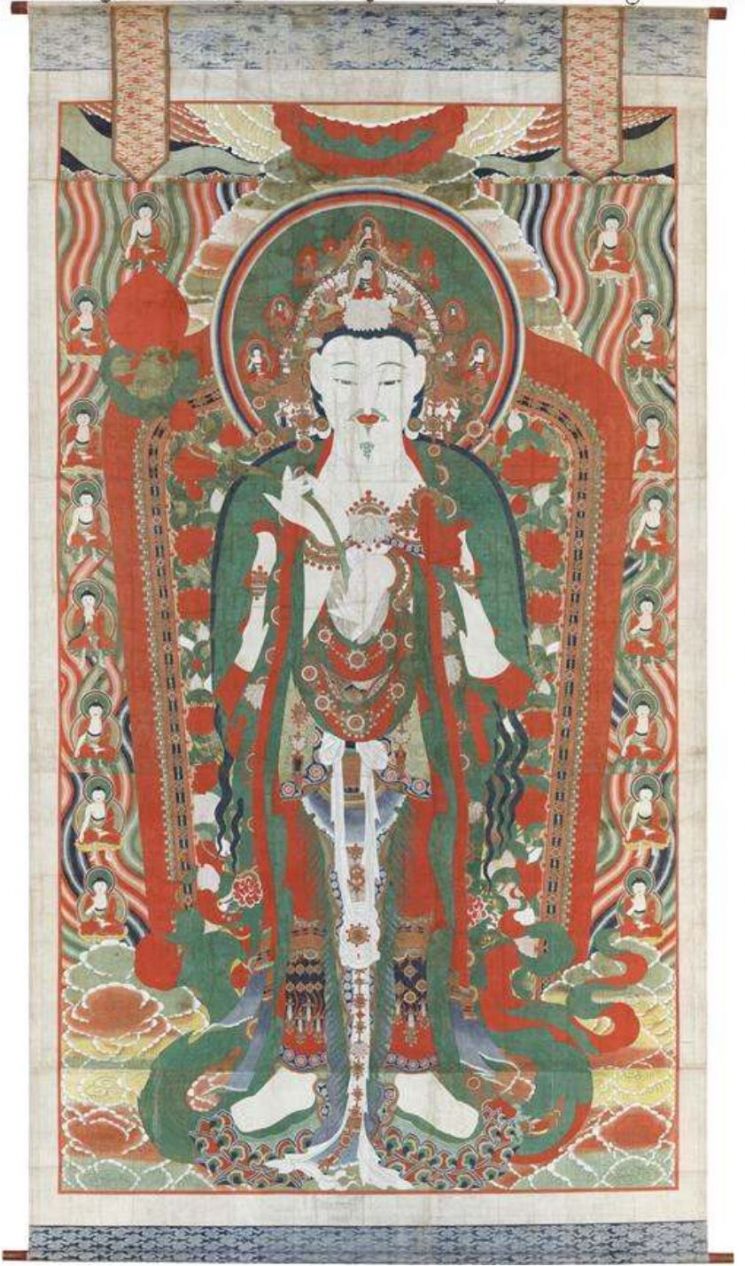
The Buyeo Muryangsa Mireukbul Gwaebuldo, created in the late Joseon period, is a colossal work measuring 14 meters in length. It depicts a standing Buddha adorned with a splendid crown on the head and beautifully decorated body. It is considered the starting point of the Jang-eomshin (莊嚴身; the Buddha in the Gwaebul painting wearing a splendid crown and beautifully decorated body) Gwaebul and is highly valued in art history. A Cultural Heritage Administration official explained, "Despite its enormous size, the balanced posture and proportions, the striking contrast of red and green colors, and the harmonious use of bright and gentle intermediate tones effectively embody the sublimity and grandeur of religious painting."
This is the first time since 1997, when seven Gwaebul paintings were simultaneously elevated, that a Gwaebuldo has been designated as a National Treasure, marking about 30 years. In Korea, there are approximately 120 Gwaebul paintings, including seven National Treasures such as the Chiljangsa Obulhoe Gwaebul and fifty-five Treasures including the Jukrimsa Sejon Gwaebul. The Cultural Heritage Administration considers three major factors when designating a National Treasure: the inscription (畵記; records at the bottom of Buddhist paintings detailing production date, enshrinement location, purpose, donors, and creators), pioneering iconography, and artistic and technical excellence.
The Buyeo Muryangsa Mireukbul Gwaebuldo’s inscription confirms the creators?Buddhist painters Beopgyeong (法?), Hyeyun (慧允), Inhak (仁學), Heesang (熙尙)?and the production year of 1627. The name of the principal Buddha, 'Mireuk (彌勒),' is also specified, indicating that this Gwaebuldo was created based on the tradition of Mireuk Daebul faith that was popular in the Chungcheong region. A Cultural Heritage Administration official stated, "It significantly influenced the production of later Gwaebul paintings with similar iconography," adding, "It can be seen as playing an important role in the spread and development of Korean Gwaebuldo."
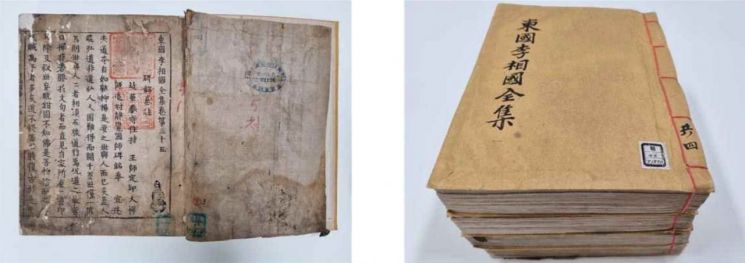
The Donggukisang-gukjeonjip Volumes 18?22, 31?41, announced as Treasures, is a collection of writings by the mid-Goryeo scholar Yi Gyubo (1168?1241), held by the National Library of Korea. Although only 16 volumes out of the complete 41-volume set remain, this surviving copy is the oldest and most abundant among existing materials. A Cultural Heritage Administration official noted, "It is a rare and bibliographically important resource from the Goryeo period, primarily consisting of Buddhist texts compiled and printed, and it is also the personal collection of Yi Gyubo."
Yi Gyubo himself never saw the completed book. The chronology in the 'Donggukisang-gukjeonjip' records, "He passed away on September 3, 1241, before the publication of the collection was completed." In the urgent situation of publishing the collection, it is highly likely that the set was printed first using metal movable type, which is faster than woodblock printing. Indeed, the collection lacks boundary lines (界線; lines separating rows of text) and is formatted with 10 lines of 18 characters each. In contrast, the later collection of missing poems and writings includes boundary lines and is arranged with 12 lines of 18?19 characters, showing a different layout.
The hastily published Donggukisang-gukjeonjip contained many errors and omissions, so in 1251, Yi Gyubo’s grandson, Yi Ikbae, who was serving as the magistrate of Hadong County, corrected and republished it at the Bunsadaejangdogam. The Donggukisang-gukjeonjip Volumes 18?22, 31?41 designated as Treasures this time were published at that time, and through Yi Ikbae’s postscript (跋文; a general commentary and production background at the end of the work) and colophon (刊記; records of publication date, place, and publisher at the end of the book), the background of the carving and the persons responsible for the work can be confirmed.
© The Asia Business Daily(www.asiae.co.kr). All rights reserved.


















