EU Unveils "Rearmament Plan"
Suspension of Fiscal Rules That Hinder Increased Defense Spending
Germany Leads the Shift by Emphasizing Higher Defense Budgets
"We are in an era of rearmament."
Ursula von der Leyen, President of the European Commission, said this in a statement sent to the press on the 4th (local time) in Brussels, emphasizing the need for increased defense spending in the European Union (EU). This comes as the security crisis in Europe is escalating due to U.S. President Donald Trump aligning closely with Russia rather than Western allies.
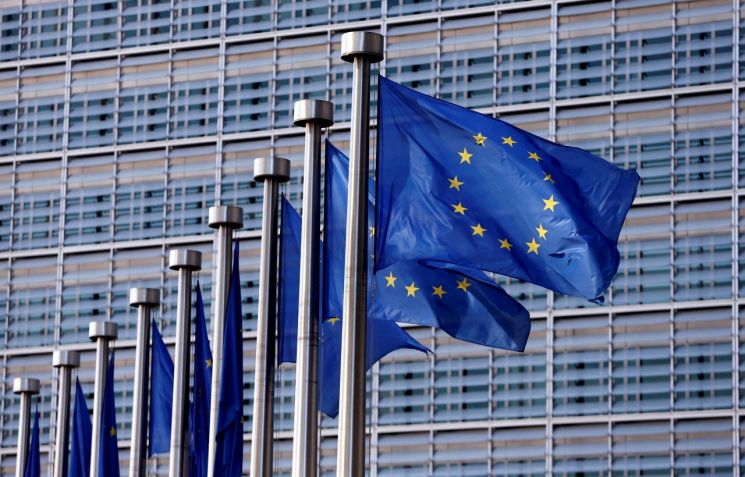
As the alliance between the U.S. and European countries weakens and the U.S. has declared a complete halt to all military aid to Ukraine, Europe is rushing to help Ukraine in the short term and prepare to defend Europe from Russia in the long term. This is also why the EU announced a plan on the 4th to mobilize funds amounting to at least 800 billion euros (approximately 1,229 trillion won) to promote increased defense spending among member states.
On the same day in Brussels, Belgium, Ursula von der Leyen proposed the so-called "European Rearmament Plan" to the leaders of the 27 member states. The Wall Street Journal (WSJ) explained, "This plan signals a significant policy shift at a moment when European leaders are panicking over Trump's demands."
The Commission also proposed activating a national escape clause to temporarily suspend the application of EU fiscal rules, allowing individual member states to actively mobilize public funds for the defense sector. According to fiscal rules, member states must keep their fiscal deficits and national debt below 3% and 60% of GDP, respectively, and face EU-level sanctions if violated; this proposal would exempt them from such penalties.
However, even if the EU Council approves the escape clause, it remains uncertain whether individual countries will decide to increase spending and deficits. Defense spending can vary depending on each country's fiscal capacity, and increasing defense budgets would require cutting expenditures in areas such as healthcare and social services. The New York Times (NYT) noted, "Even if the EU Council approves this escape clause, it is unclear whether individual countries will decide to increase spending and deficits."
The rearmament plan proposed by the EU also includes providing defense-related loans to EU member states. These funds can be used for various investments such as air defense and missile defense, artillery, drones and anti-drone systems, cyber technology, and infrastructure projects. A senior official from the European Commission stated that funding for this program will be raised from capital markets.
Foreign media pointed out that Germany is behind the consensus among European countries, which had been slow to increase defense and security budgets, to support the rearmament plan. Earlier, Friedrich Merz, Germany’s next Chancellor, amended the German constitution on the 4th to exempt defense and security spending from fiscal expenditure limits. He stated he would "do whatever it takes" to defend the country and urged Europe to strengthen its defense.
Bloomberg News interpreted, "Germany’s decision challenges the 26 other EU member states as they gather on the 6th to discuss how to increase military spending across the EU," adding, "This announcement will change the landscape of European defense."
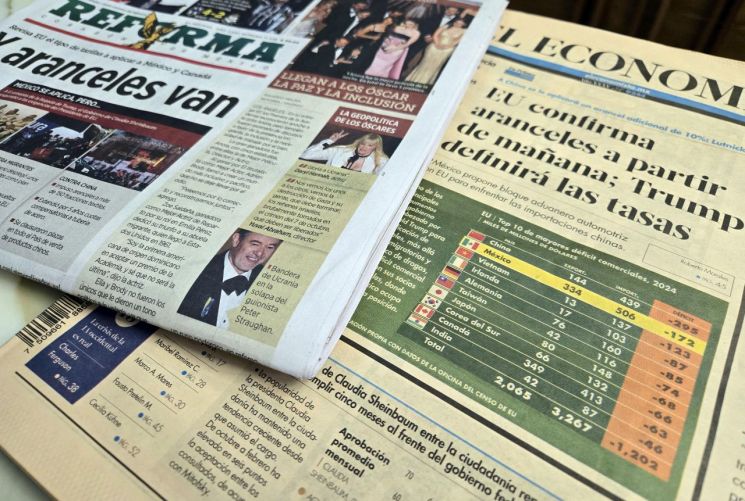
The change in Germany was driven by none other than President Trump. He imposed tariffs mercilessly on allies Canada and Mexico and announced additional tariffs on China. He also threatened tariff attacks on the EU. Following the tariff bombshell, he ignited a security crisis on the European continent. After a failed summit and a verbal clash with Ukrainian President Volodymyr Zelensky, Trump declared a halt to military aid to Ukraine, deepening the worries of European countries anxious about Russia’s rise.
Lars Klingbeil, leader of Germany’s Social Democratic Party (SPD), said, "Looking at what happened last Friday between President Zelensky and President Trump, it became clear that much more money is needed for Europe’s defense and security."
Meanwhile, as Europe decided to relax fiscal rules and increase defense spending, the euro surged to its highest value this year. This is interpreted as expectations that plans such as increased defense spending will have a stimulative effect on the economy. According to the foreign exchange market, the euro traded above $1.055 per euro on the afternoon of the 4th (local time), up more than 0.6% from the previous session. This is the highest level in three months since December 10 last year. As of 8:58 a.m. on the 5th, it was trading around $1.062 per euro.
© The Asia Business Daily(www.asiae.co.kr). All rights reserved.
![Clutching a Stolen Dior Bag, Saying "I Hate Being Poor but Real"... The Grotesque Con of a "Human Knockoff" [Slate]](https://cwcontent.asiae.co.kr/asiaresize/183/2026021902243444107_1771435474.jpg)

















