An international organization that scientifically analyzes the impacts of climate change has laid the foundation for a report to be published in 2028. The report will be used to assess how well the world is implementing the Paris Agreement on climate change.
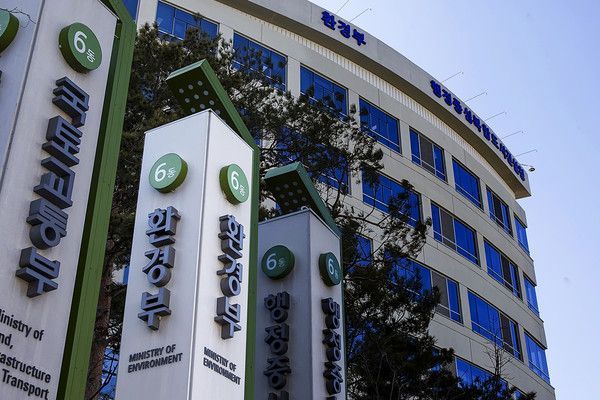
According to the Ministry of Environment on the 5th, the Intergovernmental Panel on Climate Change (IPCC) held its 62nd plenary session from the 24th to the 28th of last month in Hangzhou, China, where it approved the outline of the Working Group assessment report. The IPCC was established in 1998 under the leadership of the World Meteorological Organization and the United Nations Environment Programme. It evaluates the impact of human activities on the climate and submits reports every 5 to 7 years. These reports provide important scientific evidence for governments and institutions worldwide to formulate climate change response policies.
At this plenary session, the detailed structure and drafting direction of the report to be submitted in 2028 were decided. This report will be used for the ‘Second Global Stocktake’ of the Paris Agreement to be conducted in 2028. Subsequently, the IPCC report is expected to serve as a basis for various international climate change negotiations. The Ministry of Environment evaluated that “this report is suitable for preparing integrated climate change response measures that break down barriers between sectors.”
The IPCC-approved reports consist of three types: ‘Assessment of the Scientific Basis of Climate Change,’ ‘Assessment of Impacts, Adaptation, and Vulnerability to Climate Change,’ and ‘Assessment of Climate Change Mitigation.’ All reports must include when climate change tipping points occur, climate change phenomena and scenarios including temperature thresholds, solar radiation changes, losses, damages, and finance.
The Assessment of the Scientific Basis of Climate Change report includes a section forecasting the effectiveness of policies. The need for sophisticated climate services was emphasized, and the causes of climate change are addressed at the community level. When assessing the impacts of climate change, mental health as well as physical health are included, and the necessity of finance is highlighted as a means to mitigate extreme weather events.
Participating countries at the plenary also discussed methodologies for removing carbon dioxide or capturing carbon. Several countries including South Korea, Japan, Chile, Norway, and the United Kingdom advocated recognizing tidal flats and seaweed as new carbon sinks called ‘Blue Carbon.’ A separate report on carbon dioxide is scheduled to be approved at the plenary session later this year.
Meanwhile, about 400 delegates from member countries participated in this plenary session. From South Korea, Kim Hyun-kyung, Director General of Climate Science at the Korea Meteorological Administration, attended as the chief delegate. The delegation included officials from the Ministry of Environment, Ministry of Oceans and Fisheries, and experts from specialized institutions.
© The Asia Business Daily(www.asiae.co.kr). All rights reserved.
![Clutching a Stolen Dior Bag, Saying "I Hate Being Poor but Real"... The Grotesque Con of a "Human Knockoff" [Slate]](https://cwcontent.asiae.co.kr/asiaresize/183/2026021902243444107_1771435474.jpg)











