Last year, Seoul's total fertility rate rebounded for the first time in nine years.
Among the 25 autonomous districts of Seoul, Seongdong-gu had the highest total fertility rate. Mapo-gu attracted attention with a 13.2% increase in its total fertility rate.
These two districts attribute the high fertility rates to their respective measures to increase birth rates.
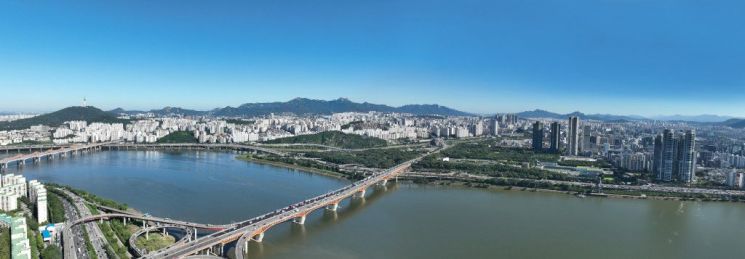
Seongdong-gu's Total Fertility Rate at 0.71, the Highest Increase Among Seoul's Districts
217 More Births Compared to Previous Year, Birth Increase Rate 14.63%...948 Billion KRW Allocated for 64 Projects in 4 Major Areas under 2025 Low Birthrate Response Plan
Seongdong-gu (Mayor Jung Won-oh) has drawn attention by ranking first among all 25 districts of Seoul in the total fertility rate for 2024, regaining the 0.7 range after two years and firmly establishing itself as a truly 'childbirth and child-rearing friendly Seongdong.'
According to the population trend survey released by Statistics Korea on the 26th of last month, the number of births in Seongdong-gu in 2024 was 1,700, an increase of 217 from 1,483 in 2023, marking a growth rate of 14.63%.
Notably, the total fertility rate in 2024 rose from 0.639 in 2023 to 0.711, an increase of 0.071, showing the highest growth among Seoul's districts. This is 0.131 higher than Seoul's citywide total fertility rate of 0.580. Compared to Seoul's slight increase of 0.028 and the national increase of 0.029 from the previous year, Seongdong-gu's rise is significantly greater.
Seongdong-gu had maintained a top-tier total fertility rate in the 0.7 range until 2022, experienced a dip to 0.639 in 2023, but successfully rebounded to 0.71 in 2024.
This is analyzed as the high birth increase rate in Seongdong-gu leading to the rebound in the total fertility rate. Particularly, Seongdong-gu's significant rise in births is notable as it occurred without introducing cash birth incentives or large-scale population inflow due to new apartment constructions.
Since the 6th local government term, the district has continuously promoted childbirth and child-rearing policies that residents can feel, such as expanding public childcare infrastructure and the Seongdong-style household care service. These proactive policies unique to Seongdong-gu have been a major factor driving the increase in births. For example, continuous efforts to expand public daycare centers have resulted in operating a total of 81 public daycare centers, with a utilization rate of 70.3%, maintaining the highest public childcare rate in Seoul. The district plans to open three more centers this year as a result of focused efforts since 2015.
The 'Teacher-to-Child Ratio Improvement Project,' which reduces the number of children per childcare teacher, has been expanded to include preschool classes for children aged four and above, supporting a total of 92 daycare centers in the district. Additionally, differentiated 'Seongdong-style childcare service support' projects are operated, including special activity program support, daycare center visiting nursing services, and newly established daycare center accounting operation monitoring, creating a childcare environment that parents can trust.
Moreover, in June 2020, Seongdong-gu became the first district in Seoul to introduce and operate a household care service for pregnant women. Starting this year, the service frequency has increased from 4 hours per day, 7 times usage to 7 times for single-fetus families and 10 times for multiple-fetus families, enhancing convenience. An online rapid reservation system was also established, eliminating the hassle of pregnant women having to visit the community service center to apply.
Comprehensive elementary school care support policies are also underway. Seongdong-gu is running the nation's largest 'Working School Bus' project, with a total of 124 traffic safety instructors protecting students from traffic accidents and various crimes on 43 routes covering all schools in the district. The district also operates 15 after-school elementary care centers called 'Ikkumnuriter,' making special efforts to build a whole-community care system.
Additionally, the 'Our Child Safe Companion Center' operates one-stop 'hospital accompaniment services' and 'bedside care services,' providing essential customized care services for vulnerable groups such as dual-income parents.
Seongdong-gu has established a low birthrate response plan this year with the goal of implementing a 'Seongdong-style' low birthrate policy that residents can feel, budgeting 94.8 billion KRW for 64 low birthrate response projects across 12 core projects in 4 major areas. The district plans to continue the trend of low birthrate rebound through meticulous public care and life-centered low birthrate response policies that residents can experience, differentiating itself from other local governments. Mayor Jung Won-oh of Seongdong-gu said, “It is very encouraging and welcome news that Seongdong-gu has recovered the total fertility rate to the 0.7 range with the highest increase among Seoul's districts, especially in a time when the low birthrate issue is serious across society,” adding, “We will continue to promote customized childbirth, child-rearing, and care policies that increase residents' satisfaction and build a seamless public care system.”
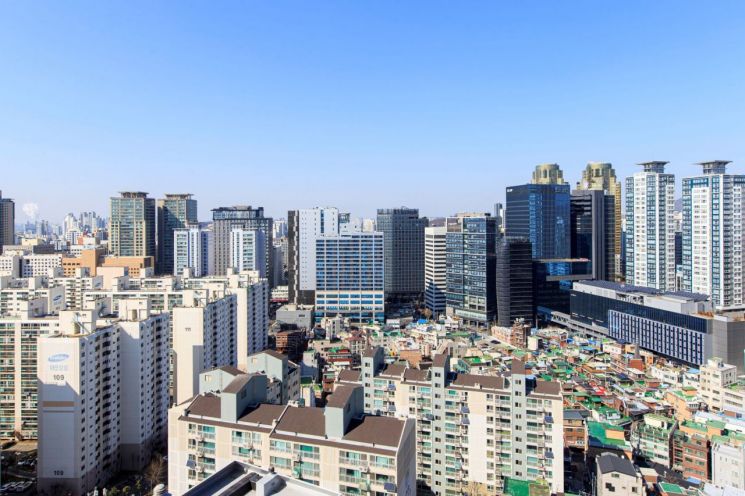
Mapo-gu's Birth Rate Up 13.2%, Far Exceeding National Average of 3.6% and Seoul Average of 5.4%
'Sunlight Center,' 'Cheokkeut Center,' and 'Babysitter House' Contributed to Birth Rate Increase
Mapo-gu (Mayor Park Gang-su) is gaining attention as a leading area addressing the low birthrate issue by significantly increasing the number of births through user-centered one-stop support policies for pregnancy, childbirth, and child-rearing.
According to the '2024 Population Trend Birth and Death Statistics' released by Statistics Korea, the number of births in Mapo-gu was 1,778, an increase of 207 from 1,571 the previous year, marking a 13.2% growth rate.
This figure far exceeds the national average of 3.6% and Seoul's average of 5.4%, presenting a new model for birth rate increase.
The increase in births in Mapo-gu is largely attributed to the 'Sunlight Center,' which opened in July 2023, and the 'Cheokkeut Center,' a support center for unmarried mothers that began operations in November.
The 'Sunlight Center' provides a one-stop service covering all processes from pregnancy preparation to postpartum care, operating various programs such as support for infertile couples, health management for pregnant women, prevention of prenatal and postpartum depression, and home visits to childbirth families, receiving great responses.
The number of medical expense supports for infertile couples residing in Mapo-gu, including artificial insemination procedure fees and medication costs, increased by about 95%, from 1,353 cases in 2023 to 2,639 cases in 2024.
Additionally, mental health screenings for prenatal and postpartum depression were conducted on 1,837 individuals, and high-risk cases were linked to related institutions such as mental health welfare centers for intensive management.
Postpartum care expenses, providing vouchers of 1 million KRW per newborn, were supported in 2,999 cases, aiding proper postpartum recovery.
Furthermore, a total of 157 educational sessions were held in 2024, including pregnancy preparation classes, Saturday expectant parent classes, and childbirth preparation classes, with 2,285 participants receiving significant help in preparing for childbirth and child-rearing.
Mapo-gu also operates the 'Cheokkeut Center' to provide comprehensive support for unmarried mothers from start to finish. The center offers a comfortable environment for unmarried mothers to receive care, with professional nurses providing counseling, pregnancy registration and health management, mental health counseling, and medical expense support.
After childbirth, the center supports child-rearing expenses, education costs, and helps low-income single-parent families maintain stable lives through vocational training and public rental housing support.
To help parents comfortably care for their babies after birth, Mapo-gu runs unique projects such as the 'Babysitter House' and 'Mom Cafe.' The 'Babysitter House' utilizes existing public daycare centers to provide a trustworthy childcare environment, offering useful childcare services for dual-income families and parents who work late. It serves children aged 0 to 5 with extended hours from 7 a.m. to 10 p.m., balanced meals, and spacious, comfortable childcare facilities.
The 'Mom Cafe' is a space where mothers raising children can relieve depression and stress while their children are at childcare facilities or school. It includes karaoke facilities, reading spaces, and shared kitchens, allowing mothers to laugh, communicate, and enjoy healthy healing together. Mayor Park Gang-su of Mapo-gu said, “It is very encouraging that Mapo-gu recorded a high birth rate increase of 13.2% amid the serious low birthrate issue,” adding, “We will continue to build a public care system supporting childbirth through child-rearing to make Mapo-gu a great place to have and raise children.”
© The Asia Business Daily(www.asiae.co.kr). All rights reserved.
![Clutching a Stolen Dior Bag, Saying "I Hate Being Poor but Real"... The Grotesque Con of a "Human Knockoff" [Slate]](https://cwcontent.asiae.co.kr/asiaresize/183/2026021902243444107_1771435474.jpg)
















