Ministry of Land, Infrastructure and Transport Expands Autonomous Vehicle Pilot Operation Zones Nationwide
Freight Transport Services to Begin Soon; Nearly 15-Fold Increase in Pilot Routes
Autonomous vehicles can now be pilot-operated on all sections of nationwide expressways. Previously, this was only possible on limited sections of certain expressways, but the pilot operation zones have been expanded in response to industry feedback.
The Ministry of Land, Infrastructure and Transport (MOLIT) announced on the 5th that the Autonomous Vehicle Pilot Operation Zone Committee (hereinafter referred to as the Committee) held a meeting and deliberated and approved an agenda reflecting this content. The Committee is co-chaired by Ha Seong-yong, President of the Korean Society of Automotive Safety Engineers (Professor at Joongbu University), and the Minister of MOLIT, with vice-minister level officials from various ministries and private experts as members. According to this decision, authorized operators can pilot autonomous vehicles on 44 expressway routes nationwide, covering 5,224 km, including junctions, interchanges, auxiliary facilities, and connecting roads.
Including the 143 km of connecting roads linking interchanges to logistics facilities, the total applicable section amounts to 5,367 km. When the pilot operation zones were designated last December, autonomous vehicle operation was only possible on limited sections of four expressways: Gyeongbu Line, Yeongdong Line, Seoul Metropolitan Area 1st Ring Expressway, and Jungbu Line (332 km, or 358 km including connecting roads). This represents nearly a 15-fold increase.
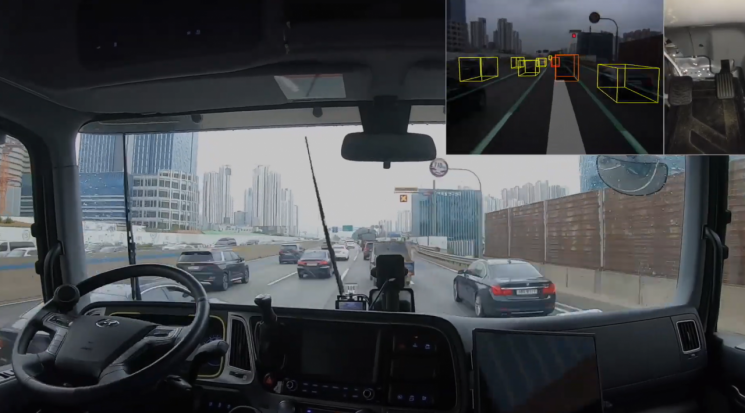
MOLIT explained, "There were opinions from the autonomous driving industry that there were limitations in changing transport routes according to traffic conditions and establishing new routes due to new transport demands," and added, "The Committee judged that expressways, unlike general roads, are continuous traffic roads without pedestrians or traffic lights, and that operation is similar across sections."
Another reason for the expansion of the pilot zones is the assessment that there would be no problems in expanding to all expressway sections, considering the highway safety management capabilities of the Korea Expressway Corporation, which is the entrusted agency for operating the autonomous vehicle pilot zones.
With the expansion of the pilot zones, MOLIT also announced that paid freight transport services will soon begin. Freight transport is expected to start before passenger transport. Autonomous driving technology development and transport companies, MasAuto, plans to apply for paid freight transport service this month, and RideFlux is expected to apply around May. MOLIT stated that after receiving applications, it plans to grant approval quickly following pre-tests for high-speed driving.
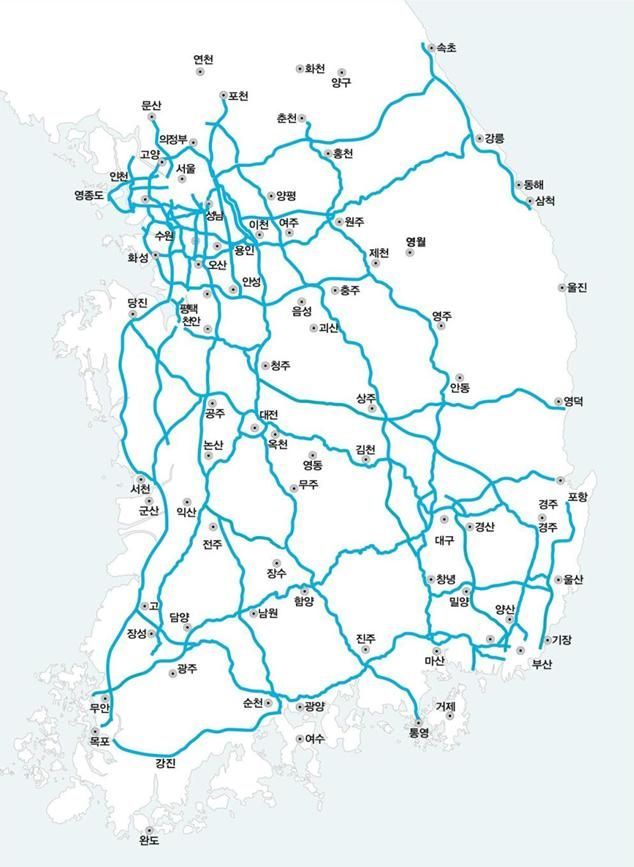 Highway Autonomous Vehicle Pilot Operation Zone Route Map. Provided by the Ministry of Land, Infrastructure and Transport.
Kim Hong-mok, Director of the Mobility Vehicle Bureau at MOLIT, said, "Introducing autonomous driving in the freight transport sector will create a safe transport environment without speeding or fatigue and contribute to reducing transport costs through improved fuel efficiency," adding, "We will actively support research and demonstrations within the expressway pilot operation zones so that Korean autonomous driving companies can secure leadership in the global autonomous freight transport market."
© The Asia Business Daily(www.asiae.co.kr). All rights reserved.
![Clutching a Stolen Dior Bag, Saying "I Hate Being Poor but Real"... The Grotesque Con of a "Human Knockoff" [Slate]](https://cwcontent.asiae.co.kr/asiaresize/183/2026021902243444107_1771435474.jpg)

















