A Total of 1,173 Blood Donations Every Two Weeks for 63 Years
Held Antibodies to Prevent Hemolytic Disease of the Newborn
A man in Australia who saved 2.4 million lives through rare blood donations has passed away at the age of 88.
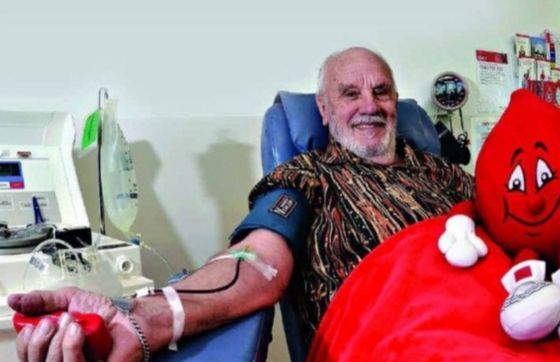 James Harrison donating blood during his lifetime. Photo captured from the Australian Red Cross Blood Service website.
On the 3rd (local time), the British BBC reported that James Harrison died on the 17th of last month at a nursing home in New South Wales, Australia. He was known in Australia as the "Man with the Golden Arm." He was one of the world's most prolific blood donors because he had rare blood.
Harrison's blood contained the rare antibody Anti-D, which is necessary for treating hemolytic disease of the fetus and newborn. Hemolytic disease of the newborn occurs when the mother's red blood cells are incompatible with the fetus's red blood cells, causing the mother's immune system to recognize the fetus's blood cells as a threat and attack them. For example, if an Rh-negative woman carries an Rh-positive baby, during childbirth the baby's red blood cells may come into contact with the mother's blood, causing the mother to develop Anti-D antibodies. If this mother becomes pregnant again with an Rh-positive baby, her Anti-D antibodies can cross the placenta and bind to the baby's Rh-positive red blood cells, causing severe jaundice or anemia, symptoms of "hemolytic disease of the newborn." To prevent this, "Rh immunoglobulin" made from the plasma of Rh-negative donors like Harrison who have Anti-D antibodies is administered to Rh-negative mothers who do not have Anti-D antibodies. Before the Anti-D treatment was developed in the mid-1960s, hemolytic disease of the newborn was so severe that one out of two diagnosed babies died.
Harrison decided to live a life of donating blood to others after receiving a blood transfusion during chest surgery at the age of 14. He began donating plasma at 18 and continued donating blood about every two weeks until he was 81, totaling 1,173 donations. He never missed a donation even while on vacation. For these contributions, he was awarded a medal by the Australian government in 1999. In 2005, he set the world record for the most plasma donations, a record that stood until 2022.
Harrison's daughter, Tracy Mellowship, and two grandchildren also benefited from the Anti-D treatment. Mellowship said, "My father was very proud of saving many lives."
Meanwhile, the Australian Red Cross Blood Service stated that there are about 200 Anti-D plasma donors like Harrison in Australia. They save approximately 45,000 mothers and babies each year.
© The Asia Business Daily(www.asiae.co.kr). All rights reserved.

















