Total Fertility Rate in Seongdong-gu Recovers to 0.7 After Two Years,
Highest Increase Among Seoul Districts with a Rise of 0.071 Compared to Last Year
948 Billion KRW Allocated for 64 Projects Across Four Key Areas
to Sustain the Upward Trend in Response to Low Birth Rates in 2025
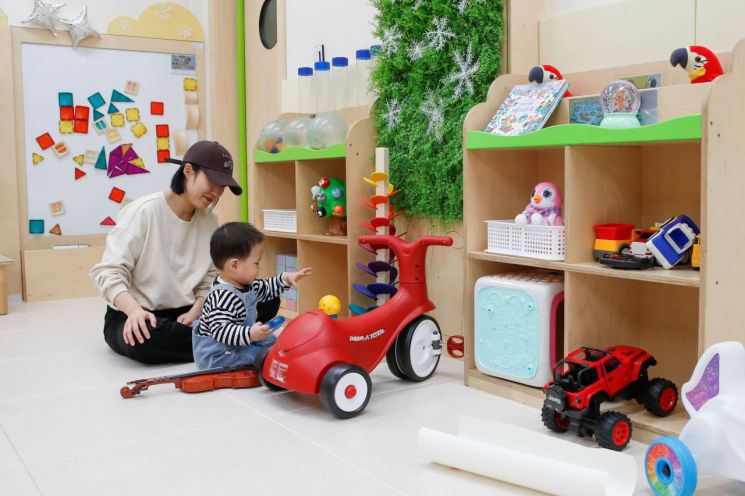
Seongdong-gu (Mayor Jung Won-oh) recorded the highest total fertility rate among all 25 autonomous districts in Seoul for 2024.
After two years, it recovered to the 0.7 range, firmly establishing itself as a truly ‘childbirth and child-rearing friendly Seongdong.’
According to the population trend survey announced by Statistics Korea on the 26th of last month, the number of births in Seongdong-gu in 2024 was 1,700, an increase of 217 from 1,483 in 2023, marking a growth rate of 14.63%.
In particular, the total fertility rate in 2024 rose from 0.639 in 2023 by 0.071 to 0.711, showing the highest increase among Seoul’s autonomous districts. This is 0.131 higher than Seoul’s total fertility rate of 0.580, and compared to Seoul’s slight increase of 0.028 and the national increase of 0.029 from the previous year, Seongdong-gu’s rise was significantly greater.
Seongdong-gu had maintained a top-tier total fertility rate in the 0.7 range until 2022, experienced a slight decline to 0.639 in 2023, but successfully rebounded to 0.71 in 2024.
This is analyzed as the high birth increase rate in Seongdong-gu leading to the rebound in the total fertility rate. Notably, Seongdong-gu attracted attention as the number of births rose significantly without the introduction of cash birth incentives or large-scale population inflow due to new apartment constructions.
Since the 6th local government administration, the district has continuously promoted childbirth and child-rearing policies that residents can feel, such as expanding public childcare infrastructure and the Seongdong-style household care service, which played a major role in driving the increase in births through proactive and unique policies.
For example, as a result of continuous efforts to expand public daycare centers, the district currently operates a total of 81 public daycare centers, maintaining the highest public childcare utilization rate in Seoul at 70.3%. Concentrating administrative capabilities on expanding public daycare centers since 2015, the district plans to open three more centers this year.
The ‘Teacher-to-Child Ratio Improvement Project,’ which reduces the number of children per childcare teacher, has also been expanded to preschool classes for children aged four and above, supporting a total of 92 daycare centers in the area. Additionally, differentiated ‘Seongdong-style childcare service support’ projects are operated, including support for special activity programs, daycare center visiting nursing services, and the introduction of daycare center accounting operation monitoring, striving to create a childcare environment that parents can trust.
Moreover, in June 2020, Seongdong-gu became the first autonomous district in Seoul to introduce and operate a household care service for pregnant women. Starting this year, the service frequency has increased from 4 hours per day, 7 times usage to 7 times for single-fetus families and 10 times for multiple-fetus families, enhancing convenience. An online rapid reservation system was also established to eliminate the inconvenience of pregnant women having to visit the community service center to apply.
Comprehensive elementary school care support policies are also underway. Seongdong-gu is running the nation’s largest ‘Working School Bus’ project, where a total of 124 traffic safety instructors protect students from traffic accidents and various crimes on 43 routes covering all schools in the district. The district also pays special attention to building a whole-community care system by operating 15 after-school elementary care centers called ‘Ai Kkum Nuri-teo.’
Furthermore, the ‘Our Child Safe Companion Center’ operates one-stop ‘hospital accompaniment services’ and ‘bed care services,’ providing essential customized care services for vulnerable groups such as dual-income parents.
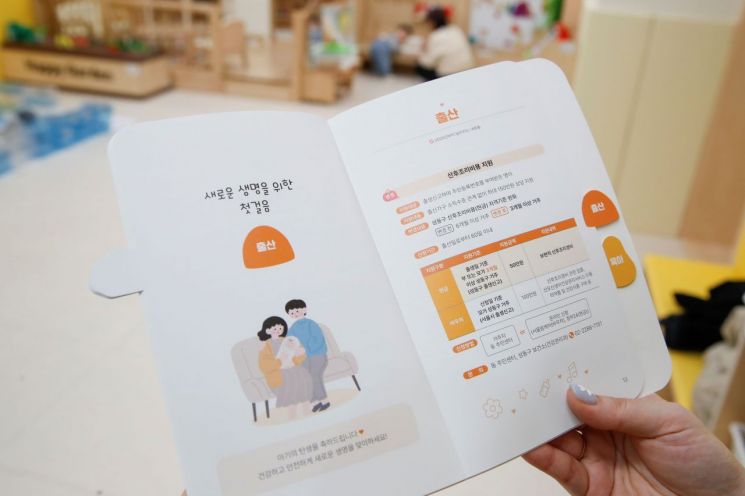
Seongdong-gu has established a low birth response plan this year with the goal of implementing a ‘Seongdong-style’ low birth policy that residents can feel, budgeting 94.8 billion KRW to promote 64 low birth response projects across 12 core projects in 4 major areas. The district plans to continue the trend of low birth rebound through meticulous public care and life-centered low birth response policies that residents can experience, differentiating itself from other local governments.
Jung Won-oh, Mayor of Seongdong-gu, said, “It is very encouraging and welcome news that Seongdong-gu has recovered to the 0.7 range in total fertility rate with a high increase, ranking first among Seoul’s autonomous districts, especially in a time when the low birth problem is serious across society. We will continue to promote customized childbirth, child-rearing, and care policies that increase residents’ satisfaction and awareness, and build a seamless public care system.”
© The Asia Business Daily(www.asiae.co.kr). All rights reserved.
![Clutching a Stolen Dior Bag, Saying "I Hate Being Poor but Real"... The Grotesque Con of a "Human Knockoff" [Slate]](https://cwcontent.asiae.co.kr/asiaresize/183/2026021902243444107_1771435474.jpg)
















