Kim Dae-sik Discloses Status of 2025 Elementary School Entrants by Region
21.8% Decrease in Prospective Students, 49 Elementary, Middle, and High Schools to Close, Sharp Decline in Births
In South Korea, facing a demographic cliff, the number of new students and schools is rapidly disappearing.
The number of elementary school freshmen has decreased to one-fifth compared to 10 years ago. Consequently, 49 elementary, middle, and high schools will close this year. Despite confronting the demographic cliff, there is no way to rescue the declining number of children.
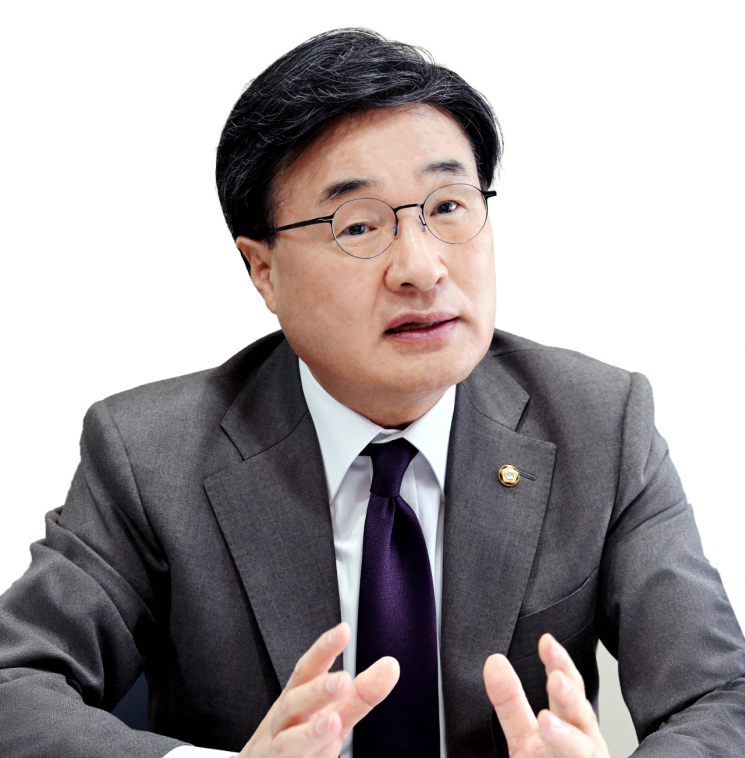
Kim Dae-sik, a member of the National Assembly's Education Committee (People Power Party, Sasang District, Busan), disclosed on the 28th the data on "Trends in Elementary School Entrants by City and Province over the Past 10 Years" and "Number of Children Expected to Enroll by Region for the 2025 Academic Year," submitted by the Ministry of Education.
According to the data, the number of children expected to enroll as first graders in elementary schools nationwide for the 2025 academic year is 356,258, which is about 21.8% (99,421 children) less compared to 10 years ago. The decrease in the school-age population due to low birth rates by region is intensifying, accelerating the phenomenon of school closures in elementary, middle, and high schools.
The low birth rate issue appears even more severe. According to Statistics Korea, the number of births in 2004 was 476,958, but after 20 years, in 2024, the number of births is 238,300, showing a decrease of about half. Accordingly, the decline in the school-age population is expected to accelerate further, and school consolidations by region are emerging as a significant problem.
Starting March 4, all elementary, middle, and high schools nationwide will open, and 356,258 children who received enrollment notifications will enter about 6,300 elementary schools across the country. However, compared to the number of elementary school entrants in 2015, 10 years ago, there is a decrease of 99,421 students, facing the issues of low birth rates and declining school-age population.
Analyzing the data received from the Ministry of Education, Representative Kim found that the region with the largest decrease in entrants over the past 10 years was Jeonbuk (36.6% decrease, from 16,314 to 1,348), followed by Gyeongbuk (33.3% decrease, from 22,955 to 15,311), and Gyeongnam (31.7% decrease, from 31,980 to 21,842).
Additionally, according to the number of births by city and province, comparing 2024 to 2004, Jeonbuk (60.6% decrease, from 17,257 to 6,800), Gwangju (59.3% decrease, from 14,729 to 6,000), and Seoul (58.3% decrease, from 99,828 to 41,600) have seen a sharp decline in births.
In this situation, in 2025, 49 elementary, middle, and high schools nationwide (27 main schools and 22 branch schools) are scheduled to close due to declining student numbers and school consolidations. In the past five years (2020?2024), 137 elementary, middle, and high schools nationwide have closed for the same reasons.
Representative Kim Dae-sik pointed out, "The low birth rate problem and the decline in the school-age population are not recent issues, and if this trend continues, the number of schools closing could increase rapidly. Especially, small schools with few students face a greater risk of closure, which could also affect students' right to learn."
He added, "The decline in the school-age population inevitably has a significant impact on community collapse and the entire public education system, so urgent attention and measures from our society as a whole are necessary."
© The Asia Business Daily(www.asiae.co.kr). All rights reserved.

















