Negative Trend Continues in Construction Industry
Impact Also Felt in Construction-Related Manufacturing Sectors
The number of employees at business establishments turned to a decline last month for the first time in 46 months. This is the result of a combination of demographic changes and sluggish domestic demand. In particular, the decrease in employees was prominent in the construction industry due to the worsening construction market, and the manufacturing sector, which is heavily influenced by construction, also saw a reduction in workers.
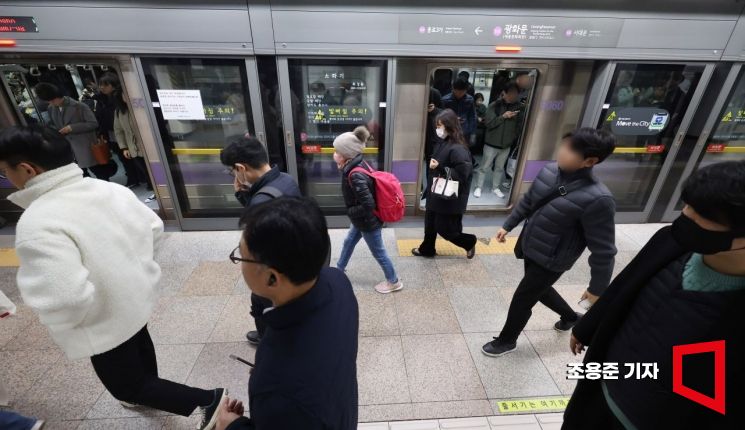
According to the 'January 2025 Business Establishment Labor Survey' released by the Ministry of Employment and Labor on the 27th, the number of employees at business establishments with one or more employees was 19,895,000 last month, a 0.1% (22,000 people) decrease compared to the same month last year. By employment status, regular workers increased by 0.1% (12,000 people), but temporary and daily workers decreased by 1.0% (19,000 people), and other workers decreased by 1.2% (14,000 people).

This is the first decrease in the number of employees at business establishments in 46 months since March 2021. Kim Jae-hoon, head of the Labor Market Survey Division at the Ministry of Employment and Labor, said, "There was a significant decrease in the construction and wholesale and retail sectors due to the recent downturn in the construction market and weakened consumer sentiment." He explained that after a decrease of over 100,000 during the COVID-19 outbreak, the trend turned to an increase in March 2021, but the impact of sluggish domestic demand caused it to decline again.
In fact, the number of employees increased in health and social welfare services (3.6%), professional, scientific and technical services (1.4%), and real estate (4.2%), but decreased in construction (-7.8%), wholesale and retail trade (-1.5%), and manufacturing (-0.3%). Construction has been declining for seven consecutive months, and wholesale and retail trade for nine months. Kim said, "In manufacturing, non-metallic mineral products and primary metals decreased, which are closely related to construction," and analyzed, "The decrease occurred more in construction-related areas than in the core manufacturing sector."
The number of new hires last month was 1,040,000, a 9.6% (110,000 people) decrease compared to the same month last year. The number of separations was 1,125,000, a 3.0% (35,000 people) decrease. The hiring rate (5.6%) fell by 0.6 percentage points, and the separation rate (6.0%) fell by 0.2 percentage points.
As of December last year, the total wage per worker at business establishments with one or more regular employees was 4,608,000 KRW, a 4.0% increase compared to the same month last year. The real wage, reflecting the price level, was 4,010,000 KRW, up 2.0%. On an annual basis, the average monthly nominal wage was 4,079,000 KRW, and the average monthly real wage was 3,573,000 KRW, increasing by 2.9% and 0.5%, respectively.
© The Asia Business Daily(www.asiae.co.kr). All rights reserved.


















