About 1,635 Individual Research Projects to Be Newly Announced by the End of March
Professor Hye-Won Jeong of the Korea Advanced Institute of Science and Technology (KAIST), who has been researching machine learning using incomplete data since 2021 with an interest in data efficiency, has been selected for the government's 'First New Project of the 2025 Basic Research Program' under the 'Leap Research' category, receiving approximately 250 million KRW annually in support. Accordingly, Professor Jeong will be able to further advance her research achievements under the theme of 'Developing Superior Learning Models with Only Small Amounts of Data Learning,' deepening her previous research.
Professor Sung-Hoon Noh of Seoul National University concluded his previous project last year. However, based on the analysis method developed using cryo-electron microscopy from the previous project, he was able to establish new questions and core hypotheses, allowing him to continue follow-up research evolving into 'Cytoskeleton Regeneration Research.' Professor Noh was also selected for the government's 'First New Project' and will receive research funding.
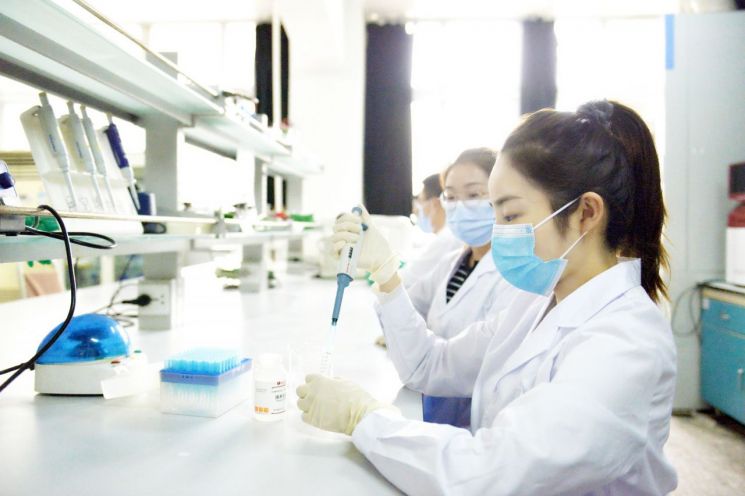
The Ministry of Science and ICT announced on the 26th that, following the announcement and evaluation of the first new projects of the 2025 Basic Research Program, 1,880 projects (408.1 billion KRW) including mid-career research, focused basic research, and early-career research were selected and will be supported starting from the 1st of next month, as exemplified by the cases of the two professors.
This year's Basic Research Program was announced early on November 6 last year, shortening the project plan finalization by two months compared to the previous year, and the selection evaluation involved about 9,300 experts.
The Ministry of Science and ICT paid close attention to enabling project commencement from March 1, the start date of university accounting, to prevent research gaps in university laboratories. Additionally, for the first time since the COVID-19 pandemic, nationwide briefing sessions (five times) were held to enhance understanding of the new projects on the ground.
Notably, starting this year, exceptions allowing alignment of basic research with the fiscal year accounting are possible. Unlike last year, when new project announcements were concentrated only in the first half of the year, a significant number of new projects (approximately 1,635 individual research projects) can be additionally announced in the second half, which is expected to greatly enhance the research safety net for researchers.
In the past, projects starting in the second half of the year received only six months of research funding, but from this year, regardless of the project start time, 12 months of funding will be provided, enabling more stable and efficient research execution.
The evaluation for the first new projects of this year's Basic Research Program focused on selecting projects faithful to the fundamental purpose of basic research: exploration → accumulation → expansion of knowledge. For the newly established 'Leap Research' category, the evaluation was greatly simplified based on previous research achievements to allow researchers who have produced excellent results to continue their research steadily on the same topic.
The Ministry of Science and ICT plans to promptly execute 1.36 trillion KRW in research funding for 2025 in February for the 1,880 newly selected projects and about 5,700 ongoing projects, aiming to improve predictability amid difficult economic conditions and research field challenges. This accounts for 58.2% of this year's basic research budget of 2.34 trillion KRW.
Furthermore, projects starting on June 1, such as group research (leading research centers, basic research laboratories), and projects supported from the second half of the year (creative research, pioneering research, national agenda basic research, Sejong Science Fellowship (overseas training track)) will be announced and selected by the end of March and carried out without delay.
Lee Chang-Yoon, First Vice Minister of the Ministry of Science and ICT, emphasized, "Predictability and stability are key values in supporting basic research," adding, "We will continue to fulfill our role as a partner so that our researchers can boldly embark on the journey of creating new knowledge."
© The Asia Business Daily(www.asiae.co.kr). All rights reserved.
![Clutching a Stolen Dior Bag, Saying "I Hate Being Poor but Real"... The Grotesque Con of a "Human Knockoff" [Slate]](https://cwcontent.asiae.co.kr/asiaresize/183/2026021902243444107_1771435474.jpg)















