"If adoption rate is below 15%, special grants will be cut," claim arises
Gwangju Superintendent: "Discussing countermeasures with related offices of education"
Ministry of Education: "Finalizing projects as policy changes"
With about a week left before the start of the school term, claims have been raised that the Ministry of Education cut special grants (teukgyo) to metropolitan and provincial offices of education with low adoption rates of AI digital textbooks. The Ministry of Education denied the claims, stating that they are "collecting opinions from metropolitan and provincial offices of education."
The Korean Teachers and Education Workers Union (KTU) held a press conference on the morning of the 26th in front of the Government Seoul Office, condemning, "The Ministry of Education informed at a meeting with supervisors in charge of AI textbooks that special grants would be cut for metropolitan and provincial offices of education with AI textbook adoption rates below 15%."
The KTU criticized, "Digital-related special grants are used not only for AI textbooks but also for digital devices, infrastructure construction, and digital tutor support budgets in each metropolitan and provincial office of education. Forcing Ministry of Education policies through budgets is an undemocratic abuse of power that undermines educational autonomy."
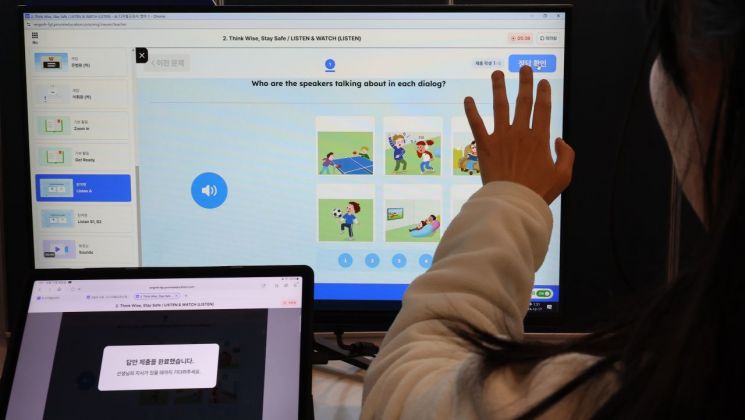
Metropolitan and provincial offices of education nationwide with AI textbook adoption rates below 15% include Gwangju, Sejong, Ulsan, Incheon, Gyeongnam, and Jeonnam. Lee Jeong-seon, Superintendent of Gwangju Metropolitan Office of Education, posted on Facebook, "When offices of education with adoption rates below 15% actually appeared, the Ministry of Education belatedly said it would impose disadvantages linked to special grants for digital tutors and digital leading schools projects. They plan to cut 50% of the digital tutor special grants and reduce the budget per leading school from 30 million won to 10 million won." He added, "We have discussed countermeasures through video conferences with the affected offices of education." A Gwangju Metropolitan Office of Education official said, "We are preparing a joint petition with the affected offices of education, plan to submit the agenda to the Council of Superintendents of Metropolitan and Provincial Offices of Education, and request a meeting with Lee Ju-ho, Deputy Prime Minister for Social Affairs and Minister of Education."
However, the Ministry of Education clarified that it is not uniformly cutting special grants for metropolitan and provincial offices of education with low AI textbook adoption rates. As the use of AI textbooks has changed to 'autonomous selection,' adjustments are needed for some special grant projects, and the Ministry is in the process of collecting opinions from the offices of education. Special grants from local education finance allocations are divided into ▲national policies ▲regional issues ▲disaster safety ▲digital education innovation. Digital innovation special grants are used for related teacher training and digital tutors. Digital leading schools utilize national policy special grants.

Regarding digital innovation special grants, the Ministry of Education explained, "Digital tutors are responsible for support tasks to help schools smoothly utilize AI textbooks, so personnel will be assigned to support schools that have selected AI digital textbooks in all offices of education. However, in offices of education with higher selection rates, where student and teacher support demand is greater, this will be taken into account when assigning digital tutors."
Regarding digital leading schools, the Ministry stated, "From 2025, the project was announced last year on the premise of mandatory use of AI textbooks in applicable grades and subjects, and it was proposed as a 'draft' to support digital-based educational innovation in grades and subjects outside AI textbook application. As the use of AI textbooks changed to autonomous selection by schools, opinions from responsible officials in the offices of education were collected during the project finalization process, and plans will be finalized after reviewing the results."
A Ministry of Education official said, "Even within the digital innovation special grants, the budget for large-scale teacher training will be finalized as before."
© The Asia Business Daily(www.asiae.co.kr). All rights reserved.


















