The Seoul High Court Criminal Division 6-2 (Presiding Judges Choi Eun-jung, Lee Ye-seul, Jeong Jae-oh) will hold the second trial closing hearing for the public official election law violation case of Lee Jae-myung, leader of the Democratic Party of Korea, on the afternoon of the 26th. During the hearing, the prosecution will present its final opinion and sentencing recommendation, followed by the defense's final argument and Lee's final statement. Previously, the first trial sentenced Lee to one year in prison with a two-year probation, a sentence that results in loss of his parliamentary seat.
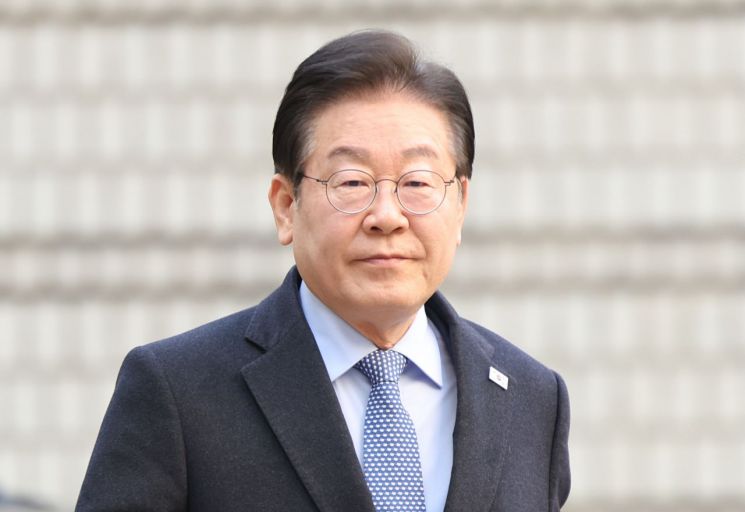
The prosecution maintains that Lee actively disseminated false information regarding the timing and circumstances under which he became acquainted with the late Kim Moon-gi, a key operative in the Daejang-dong development project. On the other hand, Lee's defense argues that the statements made at the time were expressions of Lee's subjective perception or memory and should not be considered false information dissemination. The appellate court has requested the prosecution to clearly specify which of Lee's statements are included in the charges, and the prosecution has amended the indictment accordingly.
Typically, sentencing occurs about a month after the closing hearing. Therefore, it is predicted that the appellate court's verdict will be announced around the end of March. If a sentence resulting in disqualification from election (a fine of 1 million KRW or more) is handed down again in the second trial, Lee is expected to appeal to the Supreme Court.
In legal circles, there is a widespread view that even if President Yoon's impeachment is accepted and an early presidential election is held in mid-May, it is unlikely that the Supreme Court's final ruling on Lee's election law case will be issued before then. This is due to the procedures and time required until the appellate decision is finalized. The defendant in the appellate trial can appeal within seven days from the sentencing date. Once the appeal is filed, the High Court must send the case records and evidence to the Supreme Court within 14 days of receiving the appeal. Then, the Supreme Court delivers a notice of receipt of the case records to the defendant, who must submit a written statement of appeal reasons within 20 days of receiving the notice. In other words, it takes at least more than a month until Lee submits his statement of appeal reasons. Lee himself has acknowledged this, stating that it is "impossible under the Criminal Procedure Act."
© The Asia Business Daily(www.asiae.co.kr). All rights reserved.
![Clutching a Stolen Dior Bag, Saying "I Hate Being Poor but Real"... The Grotesque Con of a "Human Knockoff" [Slate]](https://cwcontent.asiae.co.kr/asiaresize/183/2026021902243444107_1771435474.jpg)















