Last Summer's Residential Heating Fee Hike
and Last Month's Record Cold Wave Take Their Toll
"I wore a padded jacket and even sleep socks,
but the bill was 400,000 won... I thought it was a mistake"
"Usually it's in the mid-300,000 won range... This time, 650,000 won"
Insulation Is Key to Saving on Heating Costs
Minimize Heat Loss Through Windows and Door Gaps
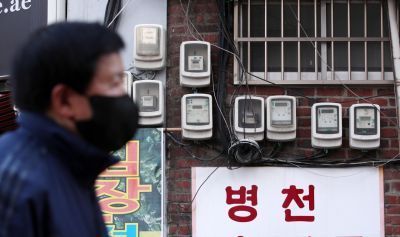
"I wore a padded jacket and even sleep socks at home to save on heating costs, but the bill came out to 400,000 won. I thought it was a mistake and checked again, but there was nothing wrong on the statement."
Households are reporting 'heating cost shocks' in January. Especially with the heating cost increase last summer combined with record-breaking cold waves, the 'heating cost shock' has become a reality.
On the 24th, a January utility bill for a 37-pyeong house was posted on X (formerly Twitter), drawing attention. The disclosed statement showed the utility bill due this month was 686,080 won.
In addition, many posts certifying January utility bill shocks appeared. X users commented, "Usually it comes out around the mid-300,000 won range, but this time it was 650,000 won," "I wore padded jackets and sleep socks at home to save heating costs, but it came out to 400,000 won. I thought it was a mistake," "The bill was too high in December, so I barely used the boiler, but this month it was even higher," "Our house got 720,000 won," "I fainted when I saw the bill," "So it wasn’t just my house," and there were many reports of receiving heating cost shocks.
Posts about heating cost shocks also appeared among local residents on mom cafes and other community sites. A, living in Suwon, Gyeonggi Province, said, "I live in a 20-pyeong apartment, and the January heating bill was more than double that of December," adding, "I thought it was a mistake, but it wasn’t. I just can’t understand it." B, living in Unjeong New Town, Paju, Gyeonggi Province, said, "I live in a 25-pyeong, three-room apartment, and last month’s heating bill was 350,000 won," expressing frustration, "Even during the cold wave, I never raised the temperature above 22 degrees, but the bill doubled."
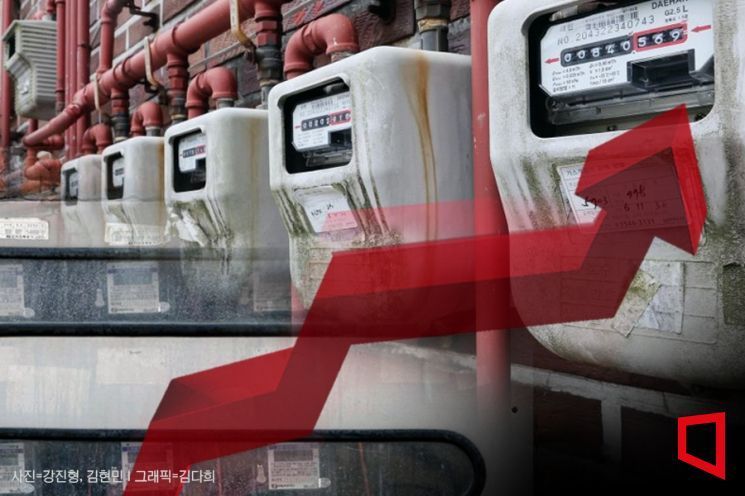
This 'heating cost shock' phenomenon appears to be a result of the 9.8% increase in residential heating usage fees last July. According to the Ministry of Trade, Industry and Energy, the residential heating usage fee increased from 101.57 won to 112.32 won per Mcal (megacalorie) as of July 1 last year, a 9.8% rise. For a family of four, this means an average monthly increase of about 6,000 won.
The strong cold wave that hit last month also affected heating costs. According to the Korea Meteorological Administration’s 'Climate Characteristics for January 2025' released on the 5th, the nationwide average temperature last month was -0.2 degrees Celsius, 1.1 degrees lower than the 0.9 degrees average in January last year, marking the 14th coldest record since the nationwide expansion of weather observation networks in 1973. Particularly, the number of days with snowfall nationwide last month was 9.7 days, ranking third all-time for January.
Meanwhile, with strong cold waves expected again this month and large temperature fluctuations anticipated, the fear of heating costs is likely to continue. The Korea Energy Agency suggests heating cost-saving measures such as ▲maintaining an appropriate indoor heating temperature of 20 degrees ▲switching the boiler to away mode when going out ▲using humidifiers ▲applying draft stoppers.
Experts agree that insulation is the most important factor for efficient heating cost savings. It is recommended to block windows and door gaps to minimize heat loss outside and maintain indoor temperatures at an appropriate level (18?20 degrees). Additionally, adjusting the usage time of heating devices and using auxiliary heating equipment alongside heaters or boilers can help use energy more efficiently. Checking energy-saving boilers and cleaning filters are also effective in improving heating efficiency and reducing costs.
© The Asia Business Daily(www.asiae.co.kr). All rights reserved.


















